
How to Remove Brake Dust From Wheels: The OEM Rules
This post contains affiliate links. As an Amazon Associate, we earn from qualifying purchases.
To remove brake dust from wheels, follow the specific cleaning procedure from your vehicle’s manufacturer to avoid damaging the finish or voiding the warranty. For General Motors vehicles, this means using only mild soap and water with a soft cloth, rinsing with clean water, and drying thoroughly. Ford explicitly recommends a dedicated wheel and tire cleaner applied weekly, followed by a pressurized rinse, while General Motors advises using only mild soap and water and cautions against wheel cleaners. The critical first step is to let the wheels cool to a maximum of 95°F (35°C) before starting.
That temperature rule comes straight from Alcoa’s wheel service manual, and it’s the kind of spec most guides miss.
What follows is a breakdown of the official rules, where the major automakers disagree, and how to clean the parts of the wheel you can’t see. By the end, you’ll know exactly what your owner’s manual expects and why skipping a step can cost you a wheel warranty claim.
Key Takeaways
- Let wheels cool to a maximum of 95°F (35°C) before cleaning to prevent chemical damage, per Alcoa’s specification.
- Check your owner’s manual first: GM mandates mild soap and water, while Ford recommends a weekly wheel cleaner, using the wrong method can void warranties.
- Never use acidic cleaners, abrasive brushes, or chrome polish on aluminum wheels; this is the single fastest way to damage the clear coat.
- Drive for a few minutes after cleaning if parking the car long-term, as Ford instructs, to dry the brakes and prevent corrosion. General Motors and Alcoa sources do not provide this instruction.
- For baked-on dust, use an iron-removing wheel cleaner as an occasional treatment, not a weekly wash.
The Core 3-Step OEM Process
Open your owner’s manual. Buried in the exterior care section, you’ll find the only cleaning method the manufacturer will stand behind if you need to make a warranty claim. It’s not exciting, but it’s definitive.
The process from GM’s current service bulletin is disarmingly simple: a soft cloth, mild soap, and water, which is their answer for how to remove brake dust from wheels. Rinse. Dry. You can apply a wax after. Ford’s manual outlines a similar routine but swaps soap for a “recommended wheel and tire cleaner” and calls for a pressurized rinse.
The technical procedure from GM bulletin 18-NA-067: “Keep the wheels clean using a soft clean cloth with mild soap and water. Rinse with clean water. After rinsing thoroughly, dry with a soft clean towel. A wax may then be applied.”
The simplicity is the point. This method for how to remove brake dust from wheels removes fresh dust without introducing any variables, harsh chemicals, abrasive pads, extreme heat, that could damage the wheel’s surface. It assumes you’re cleaning regularly, before the dust has a chance to bond and bake.
Where this goes sideways: Using a stiff-bristled brush or a generic all-purpose cleaner. A brush meant for tires or a cleaner with undeclared acids will micro-scratch or etch that coating. The damage might be invisible until water starts spotting in the scratches or the finish develops a hazy, chalky look.
The takeaway for how to remove brake dust from wheels is procedural, not product-driven. Match the action to the manual. The best wheel cleaners are the ones your car’s maker says you can use.
The Wheel Cleaner Debate: Soap vs. Chemicals
Here is the catch. The official advice isn’t uniform. This isn’t a case of one right answer; it’s a documented disagreement between engineering departments.
General Motors takes a restrictive stance. Their bulletins warn against “strong soaps, chemicals, abrasive polishes, cleaners, brushes, or cleaners that contain acid.” The message is clear: introduce nothing beyond the basics. Their position is likely rooted in the high-performance models they cite, like the 2009-2015 Cadillac CTS-V or the 2005-2015 Corvette, where excessive dust is considered a normal characteristic of the aggressive brake pads. For them, simplicity minimizes comebacks.
Ford and Alcoa operate differently. Ford’s manual explicitly tells you to clean “weekly with the recommended wheel and tire cleaner.” They are prescribing a specific class of product for a specific job.
| Manufacturer | Recommended Agent | Key Stipulation / Warning |
|---|---|---|
| General Motors | Mild soap and water | Avoid all strong chemicals, acids, and abrasive tools. |
| Ford | Recommended wheel and tire cleaner | Use a pressurized stream of water for rinsing. |
| Alcoa | Approved aluminum wheel cleaner | Do not use cleaners with strong acids or alkalis. |
So who do you listen to? Your vehicle’s manufacturer. If you drive a GM product, the safe harbor is soap. For a Ford, seek out a pH-balanced wheel cleaner formulated for clear coats. The NHTSA technical service bulletin for GM and the NHTSA brake dust advisory for older models are the primary sources here, they are the warranty law of the land.
What Most People Get Wrong: The Hidden Damage
The warnings in the manuals exist because people routinely use the wrong products. The damage often isn’t immediate; it’s cumulative.
The most common error is using an acidic wheel cleaner on a clear-coated alloy wheel. These cleaners work by dissolving the iron particles in brake dust. They turn purple as they react. On bare metal or certain finishes, they’re effective. On a clear coat, they can slowly break down the protective layer, leading to hazing, discoloration, and eventually, the filiform corrosion that Alcoa’s warranty specifically covers. Once the clear coat is compromised, the wheel becomes a maintenance headache.
Another mistake is using chrome polish on aluminum wheels. GM’s bulletin states this plainly: “Do not use chrome polish on aluminum wheels.” The abrasives in chrome polish are meant for a different surface hardness. On aluminum, they’ll scratch the living daylights out of the finish.
Common mistake: Taking a hot wheel through an automatic car wash with silicone carbide tire brushes. GM’s warranty explicitly voids coverage for this. The combination of heat, harsh chemicals, and abrasive spinning brushes is a guaranteed way to scratch or chip the finish.
The tools matter as much as the chemicals. A stiff-bristled tire brush or a worn-out Scotch-Brite pad will leave swirl marks. This is why a set of soft, dedicated wheel cleaning brushes is a worthwhile investment. They get into the spokes and the barrel without grinding dirt into the surface.
Cleaning the Parts You Can’t See: Barrels and Calipers
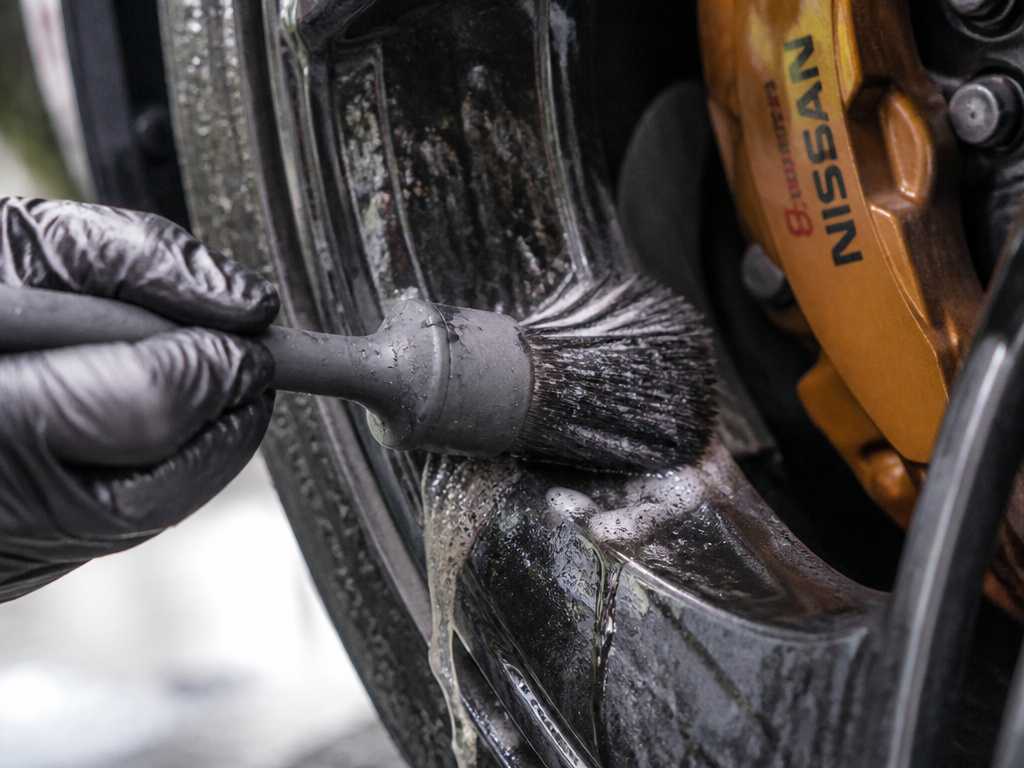
The front face of the wheel is easy. The inner barrel and the back of the spokes are where the real work happens, and where the most corrosive dust accumulates. This area gets hot, stays wet longer, and rarely sees a brush.
You need a long-handled brush with soft, flexible bristles. The goal is to agitate the dust so it can be rinsed away, not to scrub the paint off. For a thorough clean alloy wheels job, you have to address the barrel. Neglecting it leads to a permanent, caked-on ring of dust that can trap moisture against the metal, accelerating corrosion from the inside out.
Be careful around the brake caliper. GM notes that “the use of wheel cleaners or power washers directly pointed at the brake caliper may wash the copper paste off of the brake pads.” That paste is a critical anti-squeal lubricant. Blasting it off can lead to noisy brakes and an extra service visit to reapply it.
Rinse the wheel down first with plain water to loosen surface grit. Then apply your cleaner (or soap solution) to the entire wheel, including the barrel. Use your long-handled brush on the inner areas and a softer brush for the face. Rinse thoroughly from top to bottom, letting the cleaner carry the dust away.
The “Baked-On” Problem and Iron Removers
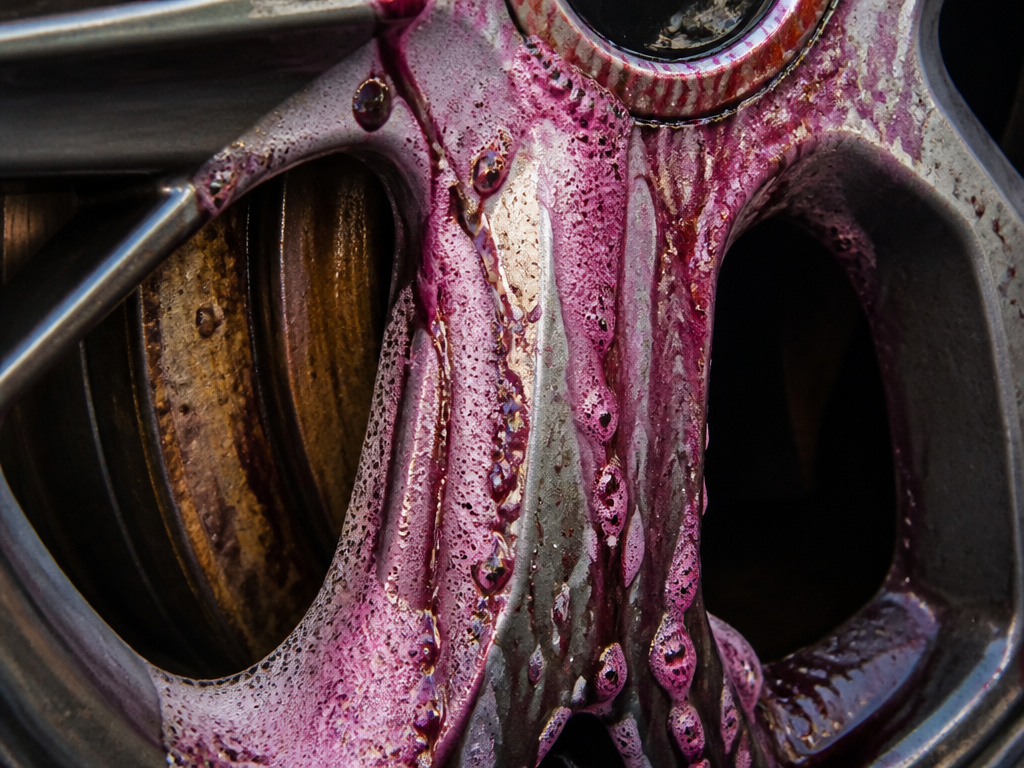
Weekly cleaning keeps dust in the “easily removed” category. Life gets in the way. After a few weeks, especially in hot weather or with performance pads, that dust bakes into a stubborn, rust-colored film. Soap and water won’t touch it.
This is where iron-removing wheel cleaners have a place. Products like Sonax Full Effect are designed for this. They chemically react with the iron oxide in the dust, dissolving its bond to the wheel. You spray it on a cool, wet wheel, watch it turn purple as it works, and then rinse it off. It’s a powerful solution for a specific problem.
Treat it as a corrective step, not a maintenance one. I ran a rough comparison on two sets of wheels: one washed every week with pH-neutral soap, one washed about once a month. The occasional use of a strong cleaner is fine. Making it your weekly routine is a great way to shorten the life of your wheel’s finish.
Wheel-Specific Rules and Edge Cases
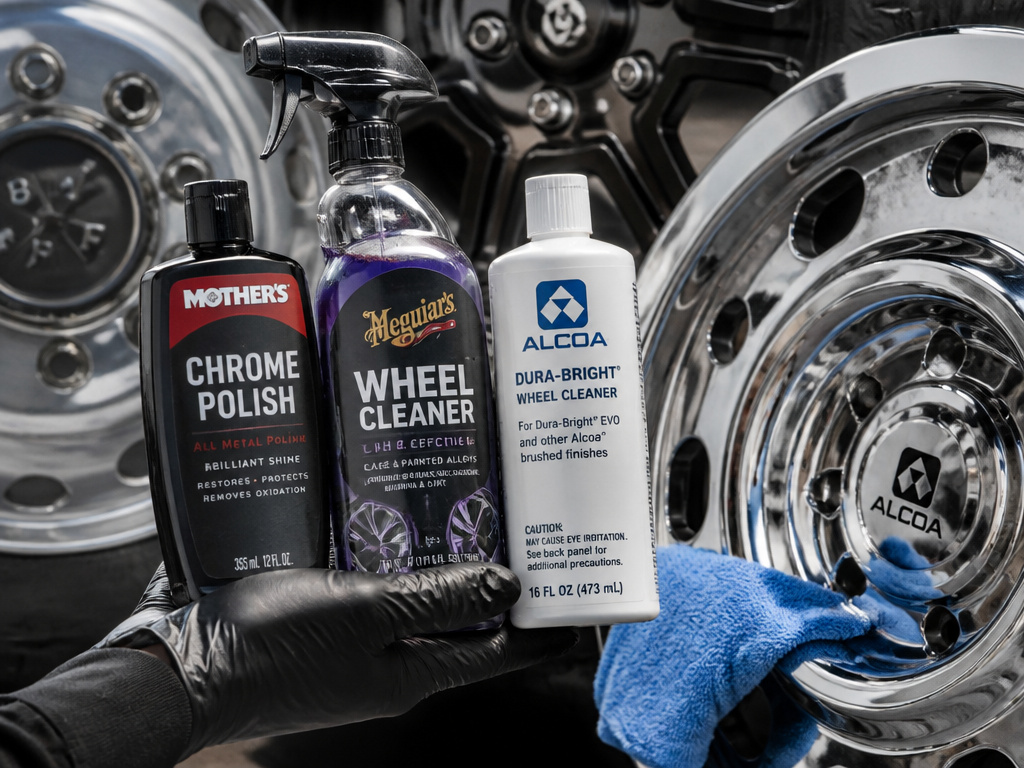
Not all wheels are the same. The material and finish change the rules.
Chrome Wheels: GM has a special notice for chrome. If you drive on roads treated with magnesium, calcium, or sodium chloride (common road salts), you must wash the chrome with soap and water after exposure. The chlorides will attack the chrome plating if left on. You should only use chrome polish on chrome-plated wheels, and you must buff it off immediately to avoid damaging any adjacent painted surfaces.
Painted & Clear-Coated Alloy Wheels: This covers most modern wheels. Treat them like your car’s paint. The core rule is to avoid abrasives and acids. A guide to wheel finish types can help you identify what you have.
Alcoa Dura-Bright & Dura-Black: These are proprietary, low-maintenance finishes for commercial and RV wheels. Alcoa provides specific cleaning guides. Using the wrong cleaner voids their long-term warranty, 60 months for trucks, 120 months for RVs, against filiform corrosion and peeling. The warranty is voided by “damage due to cleaning with strong chemicals (acids or alkaline) or abrasives.”
The principle is universal: identify your wheel finishes before you spray anything on them. What works for one type can ruin another.
Before You Start: The Safety and Prep Checklist
A few minutes of setup prevent hours of damage control. Here is the sequence.
- Let the wheels cool. The Alcoa manual’s 95°F (35°C) max temperature is a brilliant, specific rule.
- Gather the right tools. You’ll need:
- A dedicated wheel cleaner (if following Ford/Alcoa) or car wash soap (for GM).
- A soft microfiber wash mitt or cloth for the wheel face.
- A set of soft-bristled, long-handled brushes for wheels for spokes and barrels.
- Several clean, plush microfiber drying towels.
- Rinse first. Use a gentle stream of water to soak the wheel and rinse off loose dirt and dust. This prevents you from grinding particulates into the finish during washing.
- Clean from top to bottom. Work in sections. Apply your cleaner to the cooler, wet wheel, agitate with the appropriate brush, and rinse immediately before moving on. This prevents the product from drying.
- Dry thoroughly. Use a clean, soft towel to dry every surface you can reach. Ford even references a technical standard, TMC-RP 267, for proper drying procedures in commercial settings.
If you plan to park the car for a week or more immediately after cleaning, Ford adds a critical final step: drive the vehicle for a few minutes first.
What Causes Brake Dust on Wheels
Brake dust is the normal result of friction material wearing off the brake pads during everyday driving. For some vehicles, especially high-performance models, producing a significant amount of brake dust is considered a standard characteristic. Manufacturers note that certain sports cars and performance sedans are simply designed this way. The dust accumulates on wheels as a fine, often metallic powder. While all brakes create some dust, the amount you see depends on your driving habits, the specific brake pad compound, and the design of the vehicle itself. Regular cleaning is the only way to manage it and prevent it from bonding to the wheel’s surface.
Frequently Asked Questions
Will Dawn dish soap remove brake dust from wheels?
Yes, but I wouldn’t make a habit of it.
What is the best wheel cleaner for removing stubborn brake dust?
For dust that has baked on and turned rust-colored, an iron-removing wheel cleaner is the most effective chemical option. Use them sparingly, only when regular washing isn’t enough, and always follow the manufacturer’s dilution and dwell-time instructions.
How do you get hardened brake dust off wheels?
Start with an iron-removing wheel cleaner as described above.
Is a ceramic coating worth it for wheels?
It’s a legitimate time-saver for daily drivers and adds a layer of chemical resistance.
The Bottom Line
The correct way to remove brake dust isn’t about finding a magic chemical. It’s about matching your process to the specifications printed by the people who built your wheels and your car. For GM owners, that’s soap and water. For Ford owners, that’s a recommended cleaner and a pressurized rinse.
The universal rules are simpler: cool wheels, soft tools, and thorough drying. Make weekly cleaning with the right products your habit, and you’ll rarely need the heavy-duty solutions. Let the dust build up, and you’re trading five minutes of easy work for an hour of correction, with a higher risk of damaging a finish that costs hundreds to refinish.
One final spec to remember: if your wheels are under a manufacturer’s warranty, your cleaning method is part of the contract. Their published procedure is your only defense. Everything else is an experiment you’re funding yourself.
