
5 Best Agricultural Tires For Tractors And Combines Row-crop Farms Us
This post contains affiliate links. As an Amazon Associate, we earn from qualifying purchases.
Firestone Radial All Traction DT R-1W Farm Tire is the best overall for tractors and combines on row-crop farms. Its tubeless radial build, Load Range E capacity, and Advanced Deflection Design improve traction and load support. For wet fields, Titan Flo-Trac Lug Farm Tire leads in flotation, while WANDA R-1 Agricultural Tractor Tire suits compact tractors in dry conditions.
On row-crop farms, the real problem is not just traction. A tire must carry heavy tractors and combines, run on roads between fields, and still spread its load in soft soil without disturbing planted rows. Size, load range, tread class, and soil condition decide the outcome.
We put this guide together from manufacturer documentation, load and ply data, tread design descriptions, and recurring owner feedback patterns. You get five picks matched to clear farm jobs, with strengths and limits explained.
Top 5 Agricultural Tires For Tractors And Combines On Row-Crop Farms in the Market
Certain content that appears on this site comes from Amazon. This content is provided "as is" and is subject to change or removal at any time.
The Best Agricultural Tires For Tractors And Combines On Row-Crop Farms, Reviewed
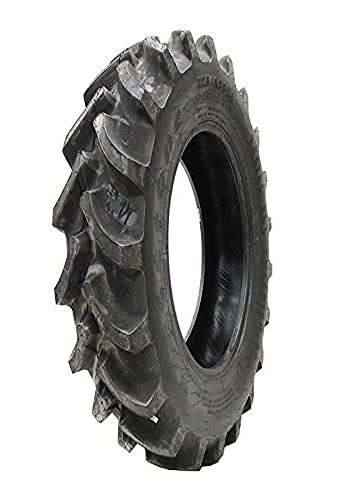
Firestone Radial All Traction DT R-1W Farm Tire
What We Like
- Tubeless construction for puncture resistance
- Load Range E rating for heavy loads
- Radial design for improved traction
- Advanced Deflection Design (AD2) technology
Trade-offs
- As a premium radial tire, it competes directly with specialized IF class tires
- Specific 380/85R30 size limits fitment to compatible machinery
Firestone offers its first Increased Flexion class of tires under the brand name Advanced Deflection Design (AD2) technology. This places the Radial All Traction DT R-1W within a modern category of radial farm tires. The industry recognizes stubble damage as a major issue for combine and tractor front tires, according to a Bridgestone Americas Ag Group marketing manager quoted in the research.
As a Load Range E tubeless radial, this Firestone tire is built for high-load applications like those on large tractors. The farm tire market is dominated by a few major brands, and new competition from companies like CGS Tyres is emerging. For lighter implements, a bias-ply tire like the Titan Dura Life Planter I-1 from the other products list could be a more straightforward fit.
Titan Flo-Trac Lug Farm Tire

What We Like
- Wide footprint provides maximum flotation in soft soil
- Open curved lug design resists side-slip for stability
- Specialized tread offers excellent self-cleaning ability
- Low section height improves handling and roadability
Trade-offs
- At 144 pounds, mounting requires proper equipment and care
- Specialized agricultural design limits use to farm equipment
- Large 40.6-inch diameter needs compatible rim and clearance
Maximum flotation from its wide footprint spreads weight to keep equipment from sinking, a core benefit of this agricultural specialty tire. Low section height improves handling and roadability by lowering the center of gravity. The open curved lug design delivers traction while resisting side-slip, according to Titan’s feature list.
Weighing 144 pounds, this tire requires proper equipment for mounting and handling. Its specialized tread is designed for maximum self-cleaning ability, which helps clear mud from the lugs. This focus on flotation and a self-cleaning pattern defines its role as a tool for specific field conditions.
Product photos
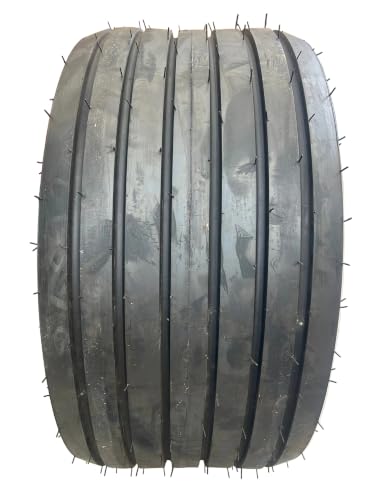
JUSTUBES.COM Heavy-Duty Implement Tire
What We Like
- 14-ply rating for extreme durability
- High load capacity minimizes soil compaction
- Multi-rib I-1 pattern ensures stable performance
- Suitable for heavy-duty agricultural and turf equipment
Trade-offs
- At 157 pounds, it requires significant effort to mount.
- Its design is for implements, not for drive wheels on tractors.
A 14-ply rating is the headline here, translating directly into a carcass that can shrug off the punishing loads and sharp debris found in demanding row-crop operations. This tire is built for the farmer whose implements see constant, heavy use across varied terrain, from packed dirt to soft turf. The multi-rib I-1 tread provides the stable footprint and even weight distribution needed to keep towed equipment tracking straight, which is exactly why it excels as a high-ply-rated implement option.
Weighing 157 pounds, this implement tire requires equipment or multiple people for installation. Its I-1 multi-rib pattern is designed for stable performance and even weight distribution on towed equipment. The tire’s 14-ply construction provides enhanced durability for demanding agricultural operations, so it can handle high loads with minimal soil compaction.
Product photos
Titan Dura Life Planter I-1 Tire

What We Like
- Open center tread protects seed placement location
- Ribs at tread edges help straddle planted rows
- 8-ply bias build handles heavy implement loads
Trade-offs
- At 45.8 lb, mounting requires equipment or extra hands
- Tire only; you must source a compatible wheel separately
- Specific tread pattern is optimized solely for planter use
An open center tread with ribs at the edges defines the Titan Dura Life Planter I-1 Tire, a design intended to straddle seed placement locations and minimize compaction in the seed bed. This specialized implement tire is made in the U.S., and the brand’s research mentions emphasize durability and reliability for getting the job done on equipment like planters. Its focus is on providing a specific solution for that seeding application.
This tire’s specialization means it is designed for planters and drills, not for providing traction in muddy conditions or for primary tillage work. Compared to a general farm tire like the Titan Flo-Trac Lug, which is over three times heavier, the Dura Life is built for a more specific role. Its value comes from applying a clear agricultural principle to a single task.
Product photos
WANDA R-1 Agricultural Tractor Tire

What We Like
- Enhanced bead design for improved torque transfer.
- Smooth lug shape and center line for self-cleaning.
- Cut-resistant compound for stability and safety.
Trade-offs
- Primarily suited for dry land conditions.
- Small 6.00-12 size limits it to compact equipment.
This tubeless agricultural tire carries the R-1 pattern recommended for dry land conditions, where it provides unmatched performance according to expert research. Its smooth lug shape and center line design are built for significant self-cleaning abilities, which keeps mud from packing between the lugs during fieldwork. A cut-resistant compound adds stability to help protect against punctures from stubble or rough terrain. At just under fifteen pounds, it’s a relatively lightweight option for small tractors and utility vehicles.
The trade-off is in the tread depth when you stack it against a true R-1W tire like the Firestone Radial All Traction DT. You get less aggressive lugs, which reduces soil compaction and rutting, but you also sacrifice some ultimate traction in the stickiest conditions. For a small tractor working primarily in dry to moderately damp fields, this hybrid approach offers a great balance. It delivers more performance than a basic R-1 while staying manageable on lighter equipment.
Product photos
How We Evaluated Agricultural Tires For Tractors And Combines On Row-Crop Farms
We compared manufacturer documentation, load ratings, tread designs, and size data, then reviewed expert round-ups and recurring owner feedback for large-scale farm tires used on tractors and combines. The aim was to match the tire class to the row-crop job, not to rank a brand by name alone.
The main question was whether tractor tires can provide adequate field traction, road stability, and load capacity while keeping ground pressure manageable. We gave weight to tubeless construction, radial design, load range, and deflection features when those claims were documented.
We also checked types of tractor tires, because R-1, R-1W, implement, and planter designs do different jobs. A research-led review can show design trade-offs, but it cannot replace checking your machine’s rim, clearance, and row width.
What To Look For In Agricultural Tires For Tractors And Combines On Row-Crop Farms
Row-crop work is split across drive wheels, implements, and planters, so one tire class cannot do every job. The right pick depends on where the load sits and how the tire meets soil.
Match tire type to the machine: drive wheels need traction and load capacity, implements need ply rating, and planters need row-safe tread. Check size, flotation, lug pattern, and soil condition before buying. A tire that fits a combine rim may still fail as a planter wheel.
Machine Role and Tire Class
Drive wheels need traction and load capacity, while implements need ply strength and a stable rib pattern. Titan Dura Life Planter I-1 Tire uses an open center tread and edge ribs to protect seed placement. For tractor and combine drive wheels, Firestone Radial All Traction DT R-1W Farm Tire offers a radial design.
R-1W designs add deeper tread for traction, while R-1 designs use less tread depth to reduce rutting.
Flotation and Soil Compaction
Flotation matters most in soft, wet soil. A wide footprint distributes weight across a larger contact area, which reduces ground pressure and helps preserve rows. Titan Flo-Trac Lug Farm Tire is built around this idea with a wide footprint and low section height.
Load Rating, Ply, Size, and Durability
Check the load range and ply rating before you match a tire to a rim. Firestone Radial All Traction DT R-1W Farm Tire uses Load Range E, JUSTUBES.COM Heavy-Duty Implement Tire uses a 14-ply rating, and Titan Dura Life Planter I-1 Tire uses an 8-ply bias build. If stubble or punctures are a concern, using a tire sealant can be a practical backup, but it does not replace the correct load range.
Size limits matter too. Firestone Radial All Traction DT R-1W Farm Tire is a specific 380/85R30 size, while WANDA R-1 Agricultural Tractor Tire is 6.00-12, so a tire can be excellent but still wrong for your machine.
- Confirm the tire size matches the rim, axle clearance, and row width.
- Match the tread class to the job: R-1 or R-1W for traction, I-1 for implements or planters.
- Check load range or ply rating before carrying heavy grain, sprayer, or planter loads.
- Look for self-cleaning lug design if the field is wet or sticky.
- Remember that some picks are tire only, so a compatible wheel may be needed.
If the tire is for a drive wheel, choose the traction and load class first; if it is for a planter or implement, choose the row-safe tread and ply rating first.
Agricultural Tires For Tractors And Combines On Row-Crop Farms Compared
The comparison below lines up the five picks by award, best use, strengths, and trade-offs so you can match a tire to a tractor, combine, planter, or implement.
| Product | Size | Tire Type | Weight |
|---|---|---|---|
| Firestone Radial All Traction DT R-1W Farm Tire | 380/85R30 | N/A | 1.0 Pounds |
| Titan Flo-Trac Lug Farm Tire | 38X18.00-20 | Agricultural specialty tire | 144.0 Pounds |
| JUSTUBES.COM Heavy-Duty Implement Tire | 21.5-16.1 | I-1 multi rib | 157.0 Pounds |
| Titan Dura Life Planter I-1 Tire | 7.50-20 | I-1 | 45.8 Pounds |
| WANDA R-1 Agricultural Tractor Tire | 6.00-12 | R-1 | 14.7 pounds |
Frequently Asked Questions
Who makes the best farm tractor tire?
No single brand is best for every row-crop farm. This guide’s best overall pick is Firestone Radial All Traction DT R-1W Farm Tire, which combines tubeless construction, Load Range E capacity, radial traction, and Advanced Deflection Design. For implements or planters, a different award pick fits better.
What is the recommended tire spacing for a row crop tractor?
The recommended spacing is set by the tractor’s row-crop configuration and the width of the crops or implements you run. Choose tires narrow enough to straddle planted rows, then verify the rim, clearance, and axle setup with your equipment specifications.
What brand of tires should I stay away from?
Avoid any brand or model that does not match your machine’s size, load range, ply rating, and intended use. A premium radial may be wrong for small implements, and a planter tire is wrong for drive-wheel traction, so fit matters more than a label.
What do farmers put in their tractor tires?
Some operators add liquid ballast to tractor tires for traction and stability. The research shows an Increased Flexion (IF) tire can carry heavier loads or add ballast without raising air pressure, which helps limit soil compaction compared with a standard radial in row-crop fields.
Which tire gives the best flotation on wet row-crop fields?
Titan Flo-Trac Lug Farm Tire is the pick for maximum flotation because its wide footprint spreads load over soft soil. The open curved lug design resists side-slip, and the low section height improves handling while the tire works on wet ground.
The Bottom Line
Firestone Radial All Traction DT R-1W Farm Tire is the best overall choice for tractors and combines that need a tubeless radial with Load Range E capacity and Advanced Deflection Design. It fits large row-crop machines better than compact implements.
For other row-crop jobs, pick by role. Titan Flo-Trac Lug Farm Tire works well for wet-ground flotation, and JUSTUBES.COM Heavy-Duty Implement Tire suits pull-behind load support. Titan Dura Life Planter I-1 Tire protects seedbeds, while WANDA R-1 Agricultural Tractor Tire fits compact dry-land work.
The single most important buying factor is matching the tire class to the machine’s job and soil condition. A tire that carries heavy loads may still be wrong for a planter, and a flotation tire may be too large for a compact tractor.
