
Should New Tires Go on the Front or Back: And When Not To
This post contains affiliate links. As an Amazon Associate, we earn from qualifying purchases.
Put the new tires on the rear axle. This is the consistent guidance from vehicle manufacturers like Hyundai and Tesla, tire makers like Goodyear and Bridgestone, and industry bodies like the Tire Industry Association when replacing two tires of the same size. It applies to front-wheel drive (FWD), rear-wheel drive (RWD), and all-wheel drive (AWD) vehicles when replacing two tires. The rule exists because deeper tread on the rear maintains vehicle stability in wet conditions, preventing a dangerous loss of control called oversteer.
The physics behind that one-line answer changes how you shop. It’s not about where the power goes; it’s about where a loss of grip is harder to recover from. Most drivers can correct a front-end slide (understeer). A rear-end slide (oversteer) often happens too fast to catch. This is why the common question ‘should new tires go on the front or back’ has a clear answer for most cars: the rear.
What follows: the specific tread depth measurements that trigger the rule, the three real-world exceptions that break it, and what to do when you’re only replacing one tire, which is a key part of the ‘should new tires go on the front or back’ discussion. We’ll also walk through the shop conversation you need to have to avoid a well-intentioned mistake.
Key Takeaways
- Mount newer tires on the rear axle, regardless of your vehicle’s drivetrain. This is the stated position from Hyundai, Tesla, Goodyear, and the Tire Industry Association.
- The safety rationale is hydroplaning and oversteer. Worn tires lose grip first; if they’re on the rear, the vehicle can spin.
- For a single new tire, pair it on the rear axle with the old tire that has the most tread remaining.
- Certain all-wheel-drive vehicles may require all four tires to be replaced at once to prevent drivetrain damage, check your manual first.
- Measure tread depth with a gauge. A difference of 2/32 of an inch (1.5 mm) or more between axles means the newer tires must go on the rear.
The Rear-Axle Rule (And the Physics Behind It)
When replacing only two tires of the same size and construction, fit the tires with the deepest tread depth on the rear axle. Placing greater traction on the rear axle is necessary to help prevent a possible oversteer situation and a loss of vehicle stability.
That quote is from Goodyear’s official Product Service Bulletin. It’s not a suggestion, it’s an engineering directive. Hyundai, Tesla, Bridgestone, and Uniroyal publish the same instruction. The reason for the ‘should new tires go on the front or back’ rule isn’t about power. It’s about water.
A tire evacuates water through its tread grooves. As tread wears down, its ability to channel water away diminishes. On a wet road, a worn tire will start to ride on a film of water, hydroplane, sooner than a new tire with deep grooves. If the tires with less tread are on the rear axle, the rear of the car loses grip before the front.
That imbalance is called oversteer. The back end of the car steps out, and for most drivers, it’s unrecoverable. It happens fast. Putting the better-gripping tires on the rear keeps the car’s tail planted, promoting understeer if anything. Understeer, where the front pushes wide in a turn, is slower to develop and easier to correct by simply slowing down. As the Tesla Model S manual puts it, “most drivers are better able to react to” understeer.
Numbers first, marketing later. This isn’t theoretical. The BFGoodrich safety poster states the rule applies to “FWD, RWD, and AWD vehicles.” The Tire Industry Association replacement guide is just as blunt: “If the new tires are installed on the front axle with worn tires on the rear, then the vehicle may be more likely to lose control.”
When You’re Only Replacing One Tire
This is where shop practice and the official guidelines often diverge. The instinct is to pair the new tire with the worn one on the same axle. That’s wrong, and it creates a dangerous mismatch.
The correct procedure is outlined by both Goodyear and the Tire Industry Association. A single new tire should be installed on the rear axle. It must then be paired with the old tire that has the most tread depth remaining out of the other three. You find this by measuring all three old tires with a tread depth gauge.
| Scenario | Correct Placement | Reason & Source |
|---|---|---|
| One new tire | On rear axle, paired with the old tire having most tread. | Prevents a traction imbalance on the rear axle. (Goodyear PSB, TIA) |
| Two new tires | Both on rear axle. | Maintains vehicle stability; newer/deeper tread always on rear. (Hyundai TSB, Tesla Manual) |
| Four new tires | Full set. | Ideal scenario. Allows for a proper tire rotation pattern going forward. |
Common mistake: Pairing a new tire with the most worn tire on the same axle. This creates a significant traction difference side-to-side, which can cause unpredictable handling during braking or cornering.
Why go through this trouble? Because a single new tire paired with a significantly worn one on the same axle creates a rolling diameter difference. The tire with less tread has a slightly smaller circumference. On a non-driven axle, this forces the differential to work constantly; on a driven axle, it can cause premature wear in the differential or all-wheel-drive clutch pack. Putting the mismatched pair on the rear at least keeps the more predictable front axle stable.
The Critical Role of Tread Depth Measurement
You can’t make the right call without a tread depth gauge. They are inexpensive and widely available. Eyeballing it doesn’t work, you need the numbers.
Manufacturers specify thresholds. Tesla, for instance, recommends replacing tires if the tread depth is 4/32 of an inch (3 mm) or less, while other sources like the Tire Industry Association use a 2/32″ wear indicator as a replacement signal. The tire’s built-in wear bars become flush at 2/32 of an inch, which is considered the minimum safe tread depth by sources like the Tire Industry Association and BFGoodrich. The NHTSA TireWise safety page and the BFGoodrich poster both cite this 2/32″ mark as the absolute floor.
But the rule for new tire placement kicks in long before you hit the wear bars. The key is the difference in tread depth between the new tires and the old ones you’re keeping.
Where this goes sideways: Assuming tires are “fine” because they aren’t bald. If your old tires are at 5/32″ and the new ones are 10/32″, that’s a 5/32″ difference. That’s a significant traction gap that mandates rear-axle placement.
Here’s a simple table to guide the decision. Measure the tread depth in the main groove of your oldest tire.
| Tread Depth of Oldest Tire | Action Required |
|---|---|
| 4/32″ or less | Replace all four tires. Safety margin is gone. |
| Between 4/32″ and 6/32″ | New tires go on rear. Traction gap is significant. |
| 6/32″ or more, within 2/32″ of new tire | New tires can go on either axle (but rear is still best practice). |
The 2/32″ difference is the Tesla Model 3’s specific threshold for replacing tires in pairs. If the old tires are within 1.5 mm of the new tire’s depth, you have more flexibility. Few used tires meet this standard unless they were rotated perfectly every 5,000 miles.
When the Rule Has Exceptions (Staggered, AWD, and Winter Tires)
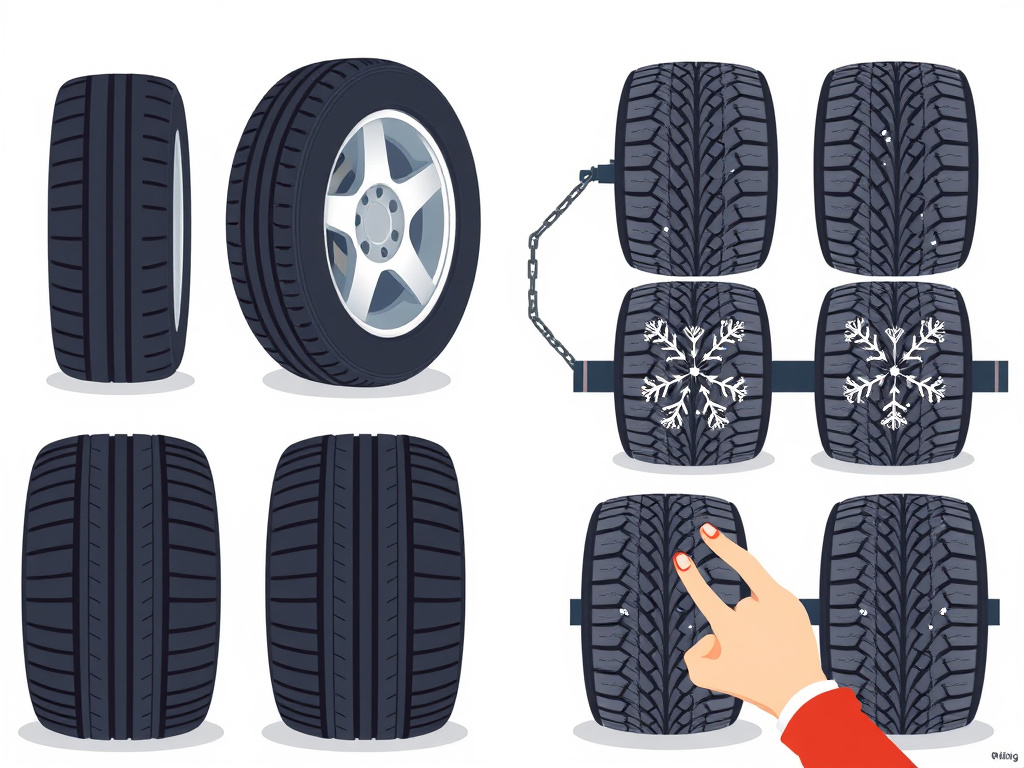
The rear-axle rule assumes all four wheel positions use the same size tire. Some vehicles don’t. Here are the three exceptions you must know.
1. Staggered Fitments (Different Front/Rear Sizes)
Performance cars often have wider tires on the rear axle. You cannot rotate them front-to-back, and you certainly can’t put a rear-sized tire on the front. As the Hyundai Technical Service Bulletin notes, “for vehicles with different sized tires front and rear, this will not be possible, and the new tires should be positioned accordingly.” You replace the tires in axle sets as they wear.
2. All-Wheel/Four-Wheel Drive Requirements
This is the most critical exception. The Tire Industry Association states that on certain AWD/4WD vehicles, manufacturers require all four tires to be replaced simultaneously. The reason is drivetrain damage. Even a small tread depth difference can force the center differential or coupling to work overtime to compensate for the different rolling radii, leading to premature failure. Before replacing just two tires on an AWD vehicle, you must check the owner’s manual. This is why understanding AWD matching tires requirements is non-negotiable.
3. Winter & Studded Tires
The guidelines here are even stricter. Goodyear’s bulletin is clear: winter tires are best applied to all four positions. If you install them on the front, you must also install them on the rear. If you only install two winter tires, they go on the rear axle. Studded tires must be applied to all four wheel positions. Mixing radial and non-radial winter tires is also prohibited.
How to Talk to Your Tire Shop (And Avoid the Old Myth)
Many technicians, especially seasoned ones, were taught that new tires go on the drive axle for better traction. For front-wheel drive, that meant the front. This is the “steering control” counter-argument, and it’s been officially debunked for over a decade by the very companies that make the tires.
When you go to the shop, be specific. Don’t just ask for “two new tires.” Say: “I need two new tires, and I want them installed on the rear axle per the manufacturer guidelines.” If they push back, you have the ammo:
- “Hyundai’s TSB says new tires in the rear for stability.”
- “Goodyear’s police bulletin states deepest tread on the rear.”
- “The NHTSA Technical Service Bulletin I read recommends the same.”
A shop that follows current industry standards will know this. If they insist on the front “for steering,” they are operating on outdated information. Your follow-up question should be about whether you need an alignment after new tires. That’s a more productive discussion.
Drive gently. And now is the perfect time to establish a tire rotation schedule; recommendations vary by manufacturer, with intervals commonly between 5,000 and 8,000 miles.
Frequently Asked Questions
Do new tires go on the front or back of a front-wheel drive car?
They go on the back. The drivetrain is irrelevant to the rule. Traction for acceleration is less critical than stability for braking and cornering. Putting the better tires on the rear of a FWD car prevents the rear from sliding out in wet conditions, which is a more dangerous failure mode.
Can I put two new tires on the front?
You should not. Every major source. OEM and tire manufacturer, states the newer/deeper tread tires belong on the rear axle. Installing them on the front with worn rears increases the risk of oversteer and loss of vehicle control on wet roads.
What if my front tires are more worn than the rear?
This is common on front-wheel drive cars due to steering and braking forces. It’s also why a consistent tire rotation schedule matters. In this case, you still install the two new tires on the rear axle. You would then move the partially worn rear tires to the front. This gives you the deepest tread on the rear and more even wear overall.
How much tread difference is acceptable?
For optimal safety, a significant tread depth difference between axles means the newer tires should go on the rear. Specific thresholds vary; for example, Tesla recommends replacing tires in pairs if the difference exceeds 2/32″. For AWD vehicles, the acceptable difference is often 2/32″ or less, consult your manual.
Is it bad to mix tire brands on my car?
It’s not recommended, especially on the same axle. Different brands can have variations in tread compound, construction, and performance that lead to uneven handling. If you must, always keep the same brand, model, and size on the same axle. The best practice is to match all four.
The Bottom Line
The rule is simple, but its reason is physical: new tires on the rear. This isn’t a matter of opinion or old shop habits. It’s documented, sourced engineering guidance aimed at preventing a specific, dangerous loss of control.
Before you buy, measure the tread depth of the tires you plan to keep. If that depth is 4/32″ or less, you should consider replacement, as some manufacturers like Tesla recommend replacement at that point. If the tread depth difference between new and old tires is significant, the new pair should go on the rear. Tell your shop this is your directive. If you drive an all-wheel-drive vehicle, pause and check the manual, the rule may be “replace all four.”
One final spec: tire age. Hyundai recommends a maximum tire service period of 6 years from the date of new vehicle purchase, regardless of tread. A tire with plenty of tread but that is several years old may be a candidate for replacement based on its age. Check the DOT date code on the sidewall. It’s the final piece of data that, combined with tread depth and the rear-axle rule, gets you a safe, stable setup.
