
Is It Safe to Drive on Dry Rotted Tires? What to Check
This post contains affiliate links. As an Amazon Associate, we earn from qualifying purchases.
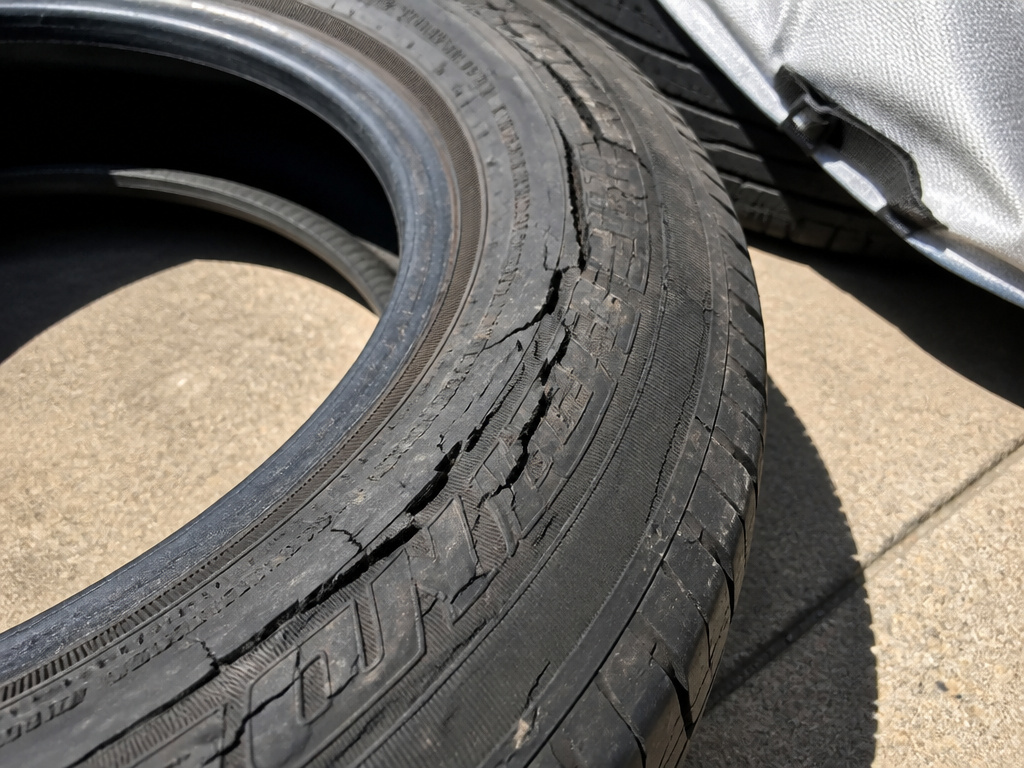
You should not drive on dry rotted tires when sidewall or tread cracking is visible. Cooper Tire says replace the tire if you spot dry rot. Transport Canada warns that poorly maintained tires can fail suddenly and cause loss of control. If the cracks are only surface weather checking, inspect them closely before deciding.
Weather checking is the fine surface cracking that appears after sun exposure. It can look alarming. It can stay shallow. Dry rot is deeper. It can split the rubber and weaken the tire. The practical line is simple: visible cracking needs a close look before any highway drive.
The next sections cover a severity check and the age recommendations that disagree. They also cover storage fixes and the inspection order that catches hidden damage.
Key Takeaways
- Replace any tire with visible dry rot. Cooper Tire says spot dry rot means replacement.
- Check tread before 2/32 inch. NHTSA says tires are not safe when tread wears to 2/32 inch.
- Compare 6-year and 10-year age guidance. Hyundai recommends 6 years from purchase; Toyo recommends replacement at 10 years from manufacture.
- Store tires cool, dry, and away from ozone. NHTSA TSB lists furnaces and electric motors as ozone sources.
- Move stored cars weekly or every 3 months. NHTSA TSB says drive 20 minutes weekly; USTMA says move every 3 months.
Is It Safe to Drive on Dry Rotted Tires?
You should treat visible dry rot as a stop sign. Cooper Tire says to replace a tire when you spot dry rot. A cracked sidewall can look like the dry skin on an old rubber band. That is the visual cue that the rubber has lost flexibility.
Dry rot describes cracking or splitting in a tire sidewall or tread. Visible cracks can signal reduced rubber flexibility and weakened structure. Continuous use of an underinflated tire causes heat buildup and internal tire damage. Transport Canada warns that poorly maintained tires can fail suddenly and cause loss of control. Cooper Tire says replace the tire.
I would not drive on a tire with deep splits. The risk is sudden failure. Transport Canada says a vehicle won’t accelerate, brake, or steer properly without good tires that are properly inflated. The NHTSA vehicle safety standards page says tires are the only thing between the vehicle and the road.
If you need to reach a tire shop, the safest move is a tow. If you must move the car, keep it slow, cold, and short. One mile is the cold-tire definition from USTMA and NHTSA, while Transport Canada uses a limit of 2 km. It is not a safe trip limit. Use the when to replace tires checklist before you decide a cracked tire can stay.
How Do You Tell Dry Rot From Weather Checking?
Weather checking is the fine surface cracking that appears after sun exposure. It can look alarming. It can stay shallow. Dry rot is deeper. It can split the rubber and weaken the tire. The difference between weather checking and dry rot matters because shallow lines and deep splits lead to different decisions.
I’ve seen inspection videos where a tire looks serviceable by tread depth while the sidewall shows deep splits. That is why I do not stop at tread depth alone.
What to look for on the sidewall
Cooper Tire describes dry rot as cracking or splitting in the sidewall. I check the sidewall from the rim edge to the tread shoulder. A shallow surface line is less alarming. A split that looks open is a replacement signal. The how to inspect your tires for damage order I use starts with cold pressure, then the sidewall.
When a crack becomes a hazard
Use this quick decision table. It is a field check.
| Crack type | What it looks like | What to do |
|---|---|---|
| Weather checking | Fine surface lines | Inspect monthly |
| Dry rot | Deep splits in sidewall | Replace tire |
| Tread separation | Visible damage at tread edge | Stop driving |
Expert tip: I treat a deep sidewall split as a replacement decision. Cleaning it is a separate job.
How Do You Inspect a Tire for Dry Rot?
Before you start: Check tires cold. A warm tire can read 4 to 6 psi higher, which can mask the true inflation level. After a drive, wait at least 3 hours for a cold reading. Use a gauge. Don’t rely on your eyes. Wear gloves if the tire is damaged.
- Read the DOT date. The last 3 or 4 digits show the week and year of manufacture. Skipping this leaves age unknown, and age drives replacement decisions.
- Check cold pressure with an accurate gauge. USTMA says check at least once a month. Transport Canada says about 50% of vehicles in Canada have at least one tire over or underinflated by more than 10%.
USTMA says passenger and light truck tires may lose 1 to 2 psi per month. They may lose 1 to 2 psi for every 10 degrees F temperature drop. If a tire continually loses more than 2 psi per month, have a tire service professional check it.
A reading taken after a drive can be several psi higher. The NHTSA TSB says tire inflation can increase 4 to 6 psi as tires warm up.
- Inspect the sidewall and tread. Look for cracking, splitting, and rough surface lines. A dry rotted sidewall can look like an old rubber band. Feel for a gritty drag under the fingernail, then note any open splits. Visible dry rot, such as open splits, means replacement according to Cooper Tire.
- Check the spare. Toyo says all tires, including spares, must be inspected at least once a month. A rotted spare can fail when you need it most.
- Check the tread wear indicator. NHTSA says tires are not safe when tread wears to 2/32 inch. The NHTSA TSB says replace before the indicator becomes level with the tread.
What Causes Dry Rot and How Can You Slow It?
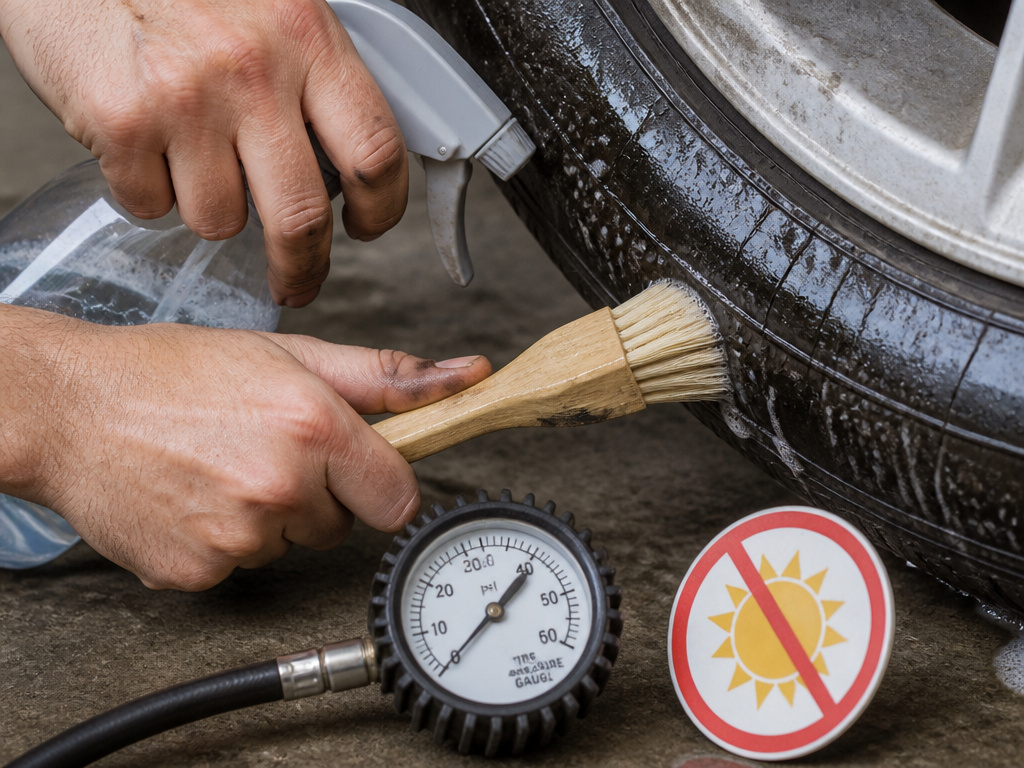
Cooper Tire lists sun, heat, and chemicals as contributors. It also lists underinflation and prolonged inactivity. USTMA adds that incompatible dressings or harsh cleaning agents hasten oxidation (rubber breakdown from air and heat) and premature cracking.
- Keep tires cool and out of direct sun. Cooper Tire says limit sun and heat exposure in storage.
- Use soap and water only. Cooper Tire and USTMA say never use petroleum-based cleaners or dressings.
- Maintain proper inflation. Cooper Tire says underinflation creates excessive sidewall stress, which leads to overheating and cracking.
- Drive regularly. Cooper Tire says lack of use seriously contributes to dry rot.
Cooper Tire and USTMA guidance point to the same fixes. The how to prevent tire dry rot routine keeps tires clean, cool, and properly inflated. The industry tire care manual says never use petroleum-based tire dressings, cleaners, or other products.
Does Storage and Sun Exposure Speed Dry Rot?
Storage matters because tires age faster when heat, sunlight, and ozone attack the rubber. NHTSA TSB says store tires in a cool, dry place and away from direct sunlight. It also says keep tires away from ozone sources, such as furnaces and electric motors using contact brushes.
For outdoor tire storage, USTMA says raise tires off the ground and cover them with an opaque, waterproof covering with vent openings. The goal is to protect the tires from the elements. Transport Canada says reduce rim-mounted tire pressure to approximately 103 kPa (15 psi) for storage.
The how to protect your tires from sun damage basics are shade, covers, and less heat soak. If you store a vehicle, the interval question gets messy. USTMA says move a stored vehicle every 3 months. NHTSA TSB says if a vehicle sits more than 1 week, drive it at least once a week for 20 minutes at freeway speeds.
When Does Tire Age Matter More Than Tread?
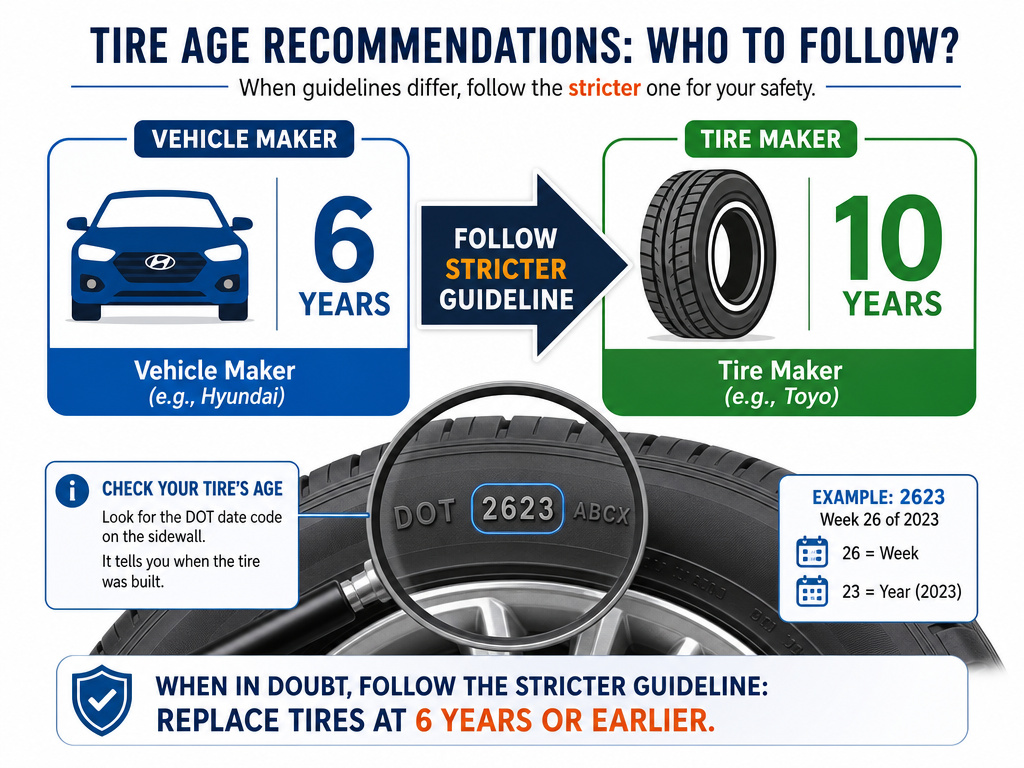
Age matters because rubber degrades over time, even with tread left. Toyo says it is not aware of reliable data that sets a specific chronological age limit. Still, Toyo recommends replacing any tire in service 10 years or more from the date of manufacture.
Hyundai, via NHTSA TSB, recommends a maximum tire service period of 6 years from the date of new vehicle purchase. That is a vehicle maker recommendation, and Toyo says follow the vehicle maker if its guidance differs.
Read the DOT date first
The tire manufacture date comes from the last 3 or 4 digits of the DOT serial number. The last two digits are the year, and the first two are the week. A number ending in 2623 means week 26 of 2023. If you ask the how old are my tires question, this number is the answer.
When sources disagree
The age advice splits between vehicle makers and tire makers. The storage advice also splits. Use this table to see the conflict, then follow the stricter trigger for your vehicle.
| Issue | Source position | Practical reading |
|---|---|---|
| Tire age | Hyundai says 6 years from purchase; Toyo says 10 years from manufacture | Follow the vehicle maker if guidance differs |
| Cold tire check | USTMA and NHTSA say 3 hours or less than 1 mile; Transport Canada says 3 hours or not more than 2 km | Use 3 hours for a consistent cold reading |
| Stored vehicle | USTMA says move every 3 months; NHTSA TSB says drive 20 minutes weekly | Drive weekly if the car cannot be lifted |
Can You Drive on Slightly Dry Rotted Tires?
Slight cracking is where owners get caught. A fine line of weather checking can be monitored. Deep cracking, splitting, or a sidewall bulge is a different problem. A sidewall bulge or impact damage is a serious defect that typically requires immediate replacement.
Owner reports ask about short trips to the shop. Short trips on damaged tires carry increased risk. The safety of driving with tire cords showing topic is stricter than weather checking. If cords are visible, I replace the tire before driving.
- Deep splits: Replace the tire.
- Sidewall bulge: Replace it. A sidewall bulge is a serious defect that warrants replacement.
- Exposed cords: Treat it as structural damage.
- Only fine surface lines: Inspect monthly and watch for opening.
What About Tire Shine and Protectants?
Tire shine is a common trap. Cooper Tire says use only soap and water when cleaning tires. USTMA says never use petroleum-based tire dressings, cleaners, or other products. It says incompatible dressings or harsh cleaning agents hasten oxidation and premature cracking.
I use a soft bristle brush or shop cloth with soap and water. USTMA says that is the safe cleaning method.
Check availability. Hyundai’s service bulletin adds a cap of 6 years for that vehicle.
Frequently Asked Questions
How long can a tire last with dry rot?
There is no predetermined safe period. Cooper Tire says replace the tire when dry rot appears. Toyo says no reliable data sets a specific chronological age limit, because service conditions vary.
Will dry rotted tires pop?
They can fail suddenly. Transport Canada warns that poorly maintained tires can fail suddenly and cause loss of control. USTMA says continuous use of an underinflated tire causes heat buildup and internal tire damage.
How long does it take for dry rot to develop?
No source gives a fixed timeline. Sun and heat speed the process. Harsh chemicals, underinflation, and prolonged inactivity also speed it.
Can I drive on slightly dry rotted tires?
If the tire has only fine surface weather checking, inspect it monthly and check cold pressure. If it has deep splits, a sidewall bulge, or exposed cords, I do not drive on it. The safest move is replacement or towing.
Does tire shine help prevent dry rot?
No. Cooper Tire says use only soap and water. USTMA says never use petroleum-based tire dressings, cleaners, or other products. Harsh cleaners can hasten cracking.
Before You Go
When you still ask, is it safe to drive on dry rotted tires, the answer is no when cracking is visible. Cooper Tire advises replacing a tire if you spot dry rot. If you only see fine surface lines, inspect monthly and read the DOT date. Check pressure cold.
If the tire is older than 6 years from purchase on a Hyundai, replace it. If it is older than 10 years from manufacture under Toyo guidance, replace it before the next road trip.
A recommended first step is a cold-pressure check with an accurate gauge, followed by a visual inspection of the sidewalls.
