
How Tires Affect Ride Comfort: Which Factors Matter?
This post contains affiliate links. As an Amazon Associate, we earn from qualifying purchases.
How tires affect ride comfort depends on sidewall height and pressure. It also depends on force variation and road noise on smooth roads. GM service bulletin 19-NA-219 links tire/wheel vibration to a 10 to 20 Hz reading. NHTSA ties pressure to safety, durability, and fuel use.
That 10 to 20 Hz band is a diagnostic clue. It points the service path toward the tire and wheel assembly before a shop chases suspension ghosts.
The rest walks through size, pressure, and sidewall stiffness. It covers tread, compound, and noise. It ends with wear and the DOT date code.
Key Takeaways
- Sidewall height matters because it sets how much the tire flexes before the wheel meets a bump.
- Check cold pressure because NHTSA says correct inflation affects safety, durability, and fuel consumption.
- Diagnose by frequency because GM TSB 19-NA-219 links tire/wheel issues to 10 to 20 Hz readings.
- Read the date code because NHTSA says some manufacturers recommend replacing tires six to 10 years old.
How Tires Affect Ride Comfort on a Smooth Road
Ride comfort starts with what the tire does under load. SAE J332 describes tire uniformity testing because nonuniformities can cause vibrations on smooth roads. I treat the tire as a soft spring, and sidewall stiffness sets how much it gives.
Radial force variation is the stiffness change a tire produces under load during one rotation. GM service bulletin 19-NA-219 gives guide limits. Passenger P-Metric tires should stay at 18 pounds or less. Light truck P-Metric tires should stay at 24 pounds or less. LT tires should stay at 35 pounds or less. These values isolate tire and wheel vibration causes.
The SAE J332 tire uniformity standard defines the machines used to spot those nonuniformities. That matters.
A tire can feel fine on a rough lane and still thump on smooth pavement.
Which Tire Factors Change Ride Comfort Most?
Ten factors decide most comfort complaints. Start with what you can see on the sidewall and the wheel.
Sidewall height sets the first cushion. I compare it with how wheel size affects comfort before buying. Low profile tires can feel sharper, but they leave less air to absorb small bumps.
Sidewall construction and pressure
The sidewall flexes, but pressure controls how much. NHTSA says correct inflation is the most important part of tire maintenance. It affects safety, durability, and fuel consumption. I check tire aspect ratio with the sidewall, because a shorter sidewall can make the same wheel feel harsher.
For agricultural vehicles, a 2004 Journal of Terramechanics study says reduced inflation can improve ride. The Tire and Rim Association adopted a new load inflation table, with minimum inflation pressures reduced to 40 kPa for radial ply agricultural tires, a 50% reduction from the previous table. That doesn’t mean you should underinflate a passenger car. NHTSA still calls correct inflation the most important part of tire maintenance.
Tread pattern and compound
Tread design and rubber compound influence performance, including ride comfort and rolling resistance, per NHTSA. A blocky all-terrain can hum. A fine touring tread can whisper. I don’t pick a tire by the brochure photo.
For daily comfort, I start with touring tires, then compare road noise data. The quiet choice is the one with test data. A friendly ad can wait.
Width, unsprung weight, and ratings
Tire width changes the contact patch. Wider tires add grip. They also add mass and cabin noise. Wheel weight affects how the suspension recovers after a bump. A tire is part of the suspension. The tire’s spring rate works with the vehicle’s springs. NHTSA says tire construction influences ride comfort. A stiffer sidewall transfers more impact to the suspension.
Load and speed ratings must match the vehicle. I used to assume a higher speed rating meant a better tire. High-rated tires wear faster and ride firmer on a daily driver. Now I match the rating to the driving, not the letter. Check it, don’t assume it.
I check how tire pressure affects the ride before I judge width, because pressure changes the same contact patch.
I won’t call a tire comfortable until I’ve checked the date code and a force variation reading. A fresh tread can still sit on an aged carcass.
| Comfort goal | First check | Watch for |
|---|---|---|
| Softer daily ride | Sidewall height and profile | Low profile tires with stiff wheels |
| Less highway thump | Cold pressure and date code | Underinflation or tires six to 10 years old |
| Quieter cabin | Noise data and tread pattern | Aggressive block tread |
- Sidewall height and aspect ratio set the air cushion. A short sidewall leaves less room to flex.
- Tread pattern and compound set the noise floor.
- Wheel weight and load rating set how the suspension recovers.
What Does Tire Pressure Actually Do to Comfort?
Pressure is the cheapest comfort adjustment. NHTSA says correct inflation is the most important part of maintaining your tires. It affects safety, durability, and fuel consumption. I check the door placard before trusting a gas station gauge.
Before you start: Check cold inflation, inspect for cuts or bulges, and read the DOT date code. NHTSA says underinflation or overloading can cause irregular wear, and aged tires are more failure-prone. Replace tires six to 10 years old if recommended.
A low tire can feel mushy in the steering. It can growl at one corner. That’s a wear and heat problem.
For daily driving, I treat pressure as the first service item.
- Check the door placard, not the sidewall maximum. The placard matches the car’s load and handling targets.
- Look for uneven wear, especially shoulder wear. NHTSA links underinflation or overloading to irregular wear.
- Read the DOT date code before blaming noise.
When Does a Tire Need Diagnosis Instead of Shopping?
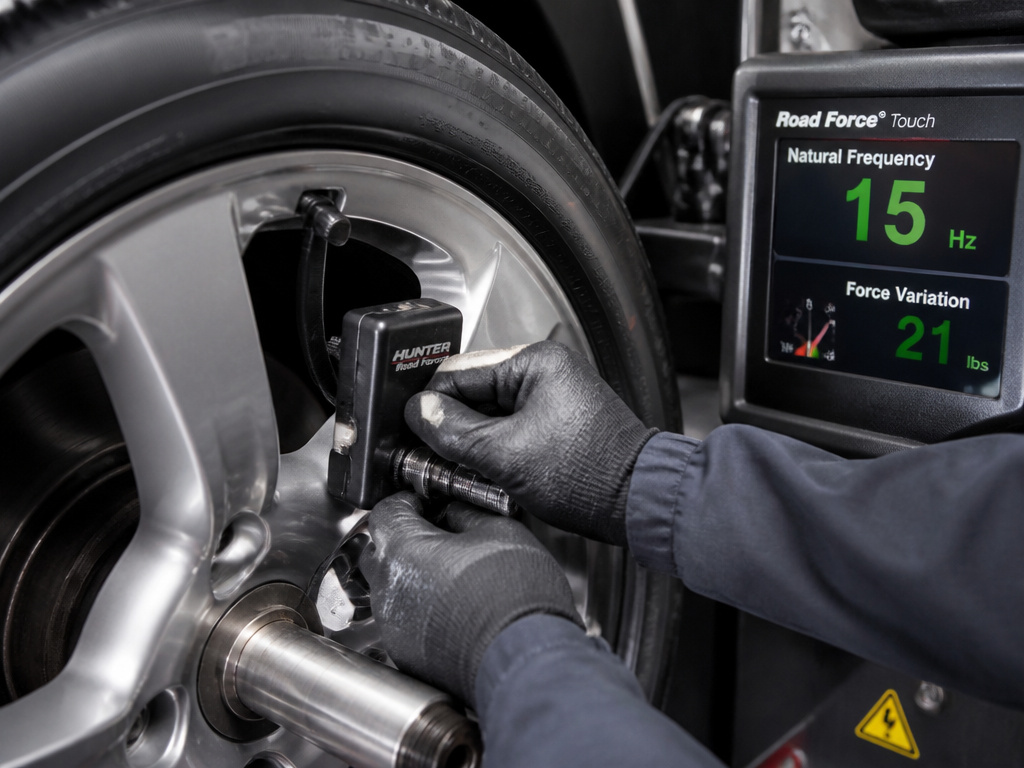
Ask for data. A brand new tire can still shake if the assembly has force variation. I ask for the Hz reading before accepting a replacement as the fix.
Common mistake: Blaming a new tire before the break-in drive. GM TSB 19-NA-219 requires at least 24 km (15 mi) at 72 km/h (45 mph) or greater before vibration diagnosis.
GM TSB 19-NA-219 gives a useful frequency window. A reading between 10 to 20 Hz (cycles per second) indicates a tire/wheel vibration. Temporary flat-spotting may come and go at any speed over 72 km/h during the first 10 minutes. If vibration continues after 10 minutes, you can rule out temporary flat-spotting.
GM also says shops should not use service bay force variation equipment to audit new tires. It’s a diagnostic tool for matching and minimizing assembly variation. That line saves arguments.
| Clue | GM TSB 19-NA-219 value | Next step |
|---|---|---|
| Tire/wheel vibration | 10 to 20 Hz | Check balance and force variation |
| Temporary flat-spotting | first 10 minutes over 72 km/h | Drive at least 24 km at 72 km/h |
| Excess balance weight | more than 1/4 ounce on either flange | Remove weights and rebalance near zero |
Engineering notes help separate feel from proof.
How to Choose a Smoother Daily Tire?
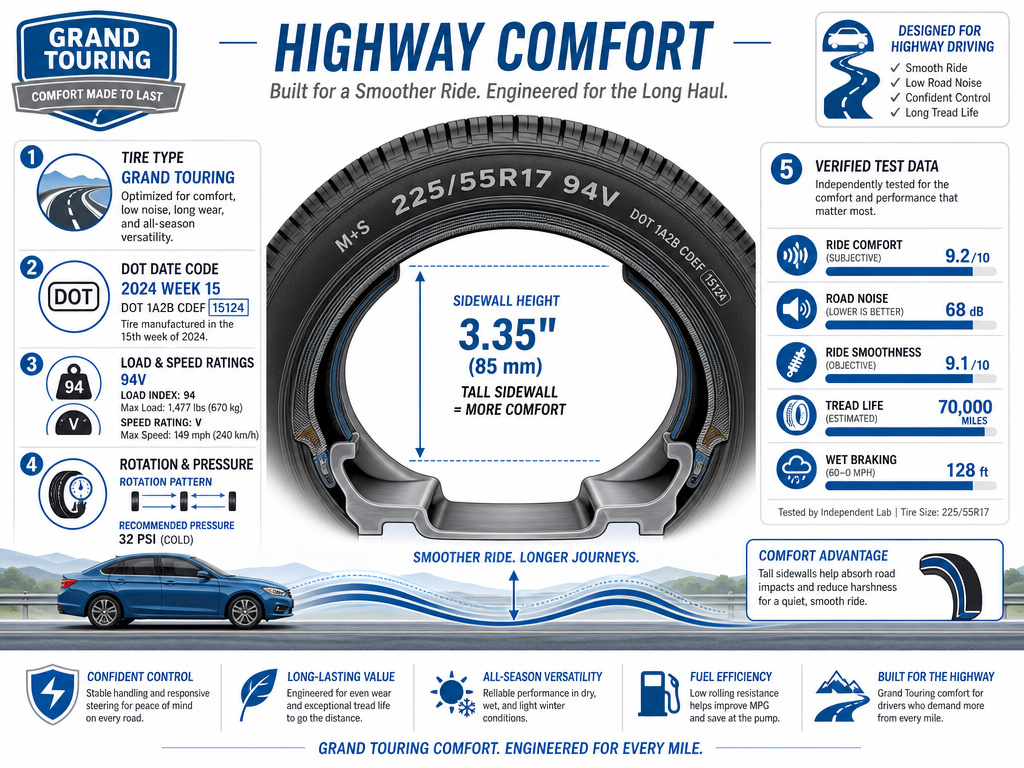
Match the job. I look at bigger vs smaller tires before I look at a wheel catalog. Changing size alters sidewall height and wheel weight. A mismatch can make the ride harsher.
For comfort, I compare grand touring tires with touring tires before I shortlist brands. Then I compare budget vs premium tire comfort with test data. I’d buy the one that matches my car and driving. The flashiest brochure can wait.
- Set the job first. If comfort is the goal, a touring or grand-touring tire fits better than an aggressive show tire. Skipping this buys a look.
- Read the DOT date code. The last four digits show the week and year. Ignoring the date code can buy you an old tire with new tread.
- Match load and speed ratings. I match the rating to the driving rather than chasing the highest letter. A mismatch can hurt handling and wear.
- Check rotation and pressure. NHTSA says rotate every 5,000 to 8,000 miles if recommended. Uneven wear can change ride feel before the tread looks bad.
- Verify test data. I don’t trust a comfort ad without test results. A tire that feels smooth in a photo can still thump on the highway.
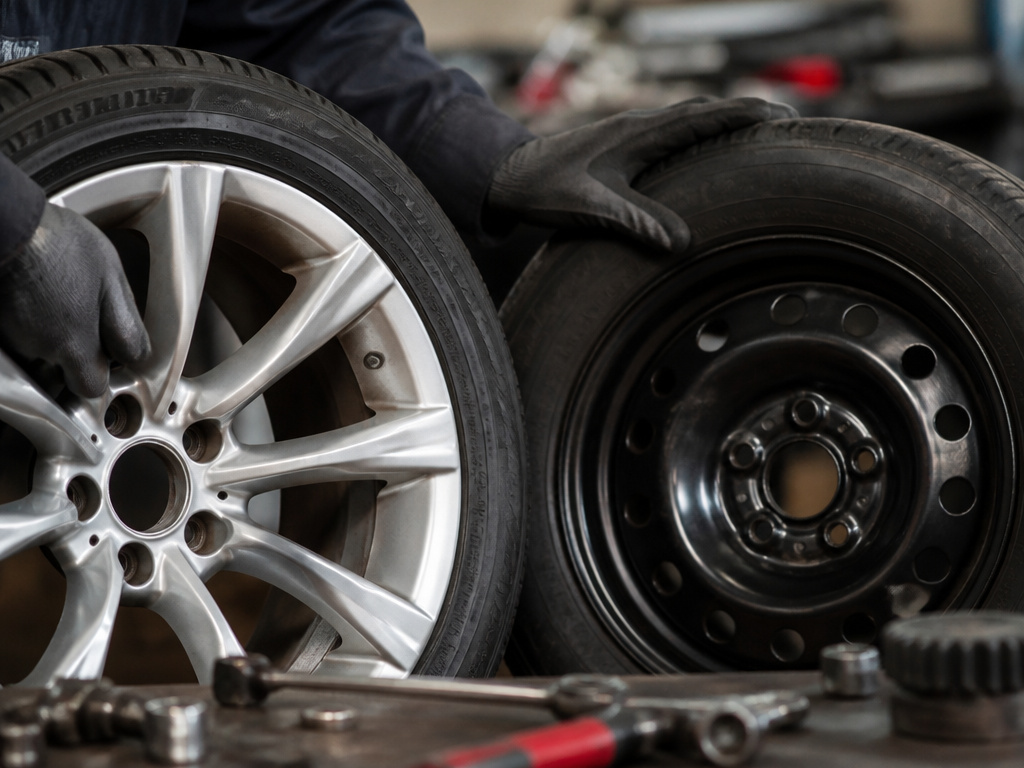
How does wheel weight affect ride comfort?
Frequently Asked Questions
Which tires give you the smoothest ride?
I start with touring or grand-touring tires, then check current independent test data. NHTSA says materials, construction, and tread design influence ride comfort. The spec sheet matters more than the brand photo.
What is the small-percentage tire diameter rule?
The comfort change comes from sidewall height, pressure, and wheel weight.
Is high mileage on a set of tires good?
Mileage alone doesn’t decide comfort or safety. NHTSA says stop using tires when the penny test shows minimum tread. Also stop for cuts, cracks, or bulges. Irregular wear also matters. Check the DOT date code too.
What tires should you stay away from?
Stay away from a tire that doesn’t match the vehicle’s load and speed ratings. Also avoid any tire with physical damage or an aged date code.
Why does a tire cause vibration?
The bulletin requires a break-in drive of at least 24 km at 72 km/h or greater before diagnosis.
Before You Go
If highway shake appears, drive before blaming the tire. GM TSB 19-NA-219 requires at least 24 km (15 mi) at 72 km/h (45 mph) or greater. A 10 to 20 Hz reading points to the tire and wheel assembly. That one step saves money and embarrassment.
Pressure still wins the cheap fix. Check cold pressure against the door placard, inspect for damage, and read the DOT date code. NHTSA ties correct inflation to safety, durability, and fuel consumption.
That’s how tires affect ride comfort in the real world. For cars and SUVs, I’d buy a touring or grand-touring tire over a fashion wheel upgrade. The smoother daily tire is the one that matches the actual drive.
