
Can You Replace Run Flat TIRES WITH Regular TIRES?
This post contains affiliate links. As an Amazon Associate, we earn from qualifying purchases.
Yes, you can replace run-flat tires with regular tires, but the swap is governed by a strict set of manufacturer rules. You must replace all four tires at once, match the exact size, load capacity, and speed rating from your vehicle’s placard, and ensure your wheels don’t have run-flat system inserts. Mixing types is banned except in a temporary emergency, and you will permanently lose the vehicle’s run-flat capability.
The rules are printed in technical service documents from tire makers like Toyo and industry bodies like the U.S. Tire Manufacturers Association. Ignoring them changes your car’s handling, can void warranties, and turns a simple tire swap into a safety gamble. A common question is, can you replace run flat tires with regular tires.
What follows is the breakdown those documents give you when you compare a can you replace run flat tires with regular tires scenario: the seven required steps, the one wheel-compatibility trap that stops the whole project, and the real-world gear you need to buy to replace the safety net you’re removing.
Key Takeaways
- Replace all four tires at once. Mixing a single regular tire with run-flats, even on the same axle, violates every manufacturer guideline unless it’s a strictly temporary emergency fix.
- Check your wheels for inserts. Some OE run-flat wheels have physical inserts in the air chamber; the Toyo Tires document states these wheels are not compatible with non-run-flat tires.
- Match the placard specs exactly. The replacement tire must meet the OE size, load index, and speed rating. A lower speed rating means you must legally restrict your vehicle’s top speed.
- You lose run-flat capability. Switching to regular tires means you lose the ability to drive on a flat. You must carry a tire mobility kit or a spare tire your car likely didn’t come with.
- Your TPMS is still critical. A functioning Tire Pressure Monitoring System becomes your only warning for slow leaks. The USTMA bulletin stresses that run-flat use does not replace monthly pressure checks with a gauge.
The Manufacturer Rulebook You Haven’t Read
Most forum advice on the can you replace run flat tires with regular tires topic starts and ends with “yes, you can.” The actual answer lives in PDFs most owners never see. The Toyo Tires technical service document is the closest thing to a universal rulebook.
It doesn’t ask if you should. It lists how you must.
The document’s first line is a recommendation: replace run-flats with run-flats. The next paragraph is the permission slip, followed by two pages of conditions. Those conditions are the guardrails between a successful swap and a modification that alters your car’s engineered safety profile.
The U.S. Tire Manufacturers Association echoes this in their tire industry safety bulletin. Run-flats are a system. Removing part of the system without accounting for the rest is where owners get into trouble.
Where this goes sideways: Assuming any tire in the correct size will work. The replacement tire must not interfere with the OE Tire Pressure Monitoring System (TPMS), must be compatible with the wheel, and must meet the vehicle’s original load and speed requirements. One mismatch and the swap fails.
The 7-Step Checklist for a Safe Swap
This isn’t a pros and cons list. It’s a sequence. Skip a step, and you either waste money or create a hazard.
1. Consult Your Vehicle Manufacturer First.
The Toyo document ends with a note in bold: “Before replacing runflat tires with non-runflat tires, ALWAYS refer to and follow the vehicle manufacturer’s replacement tire restrictions and recommendations.” Your owner’s manual or a dealer service bulletin may have model-specific warnings or required part numbers. This step overrides everything you read online.
2. Verify Wheel Compatibility.
This is the trap. Look at your wheels. Some OEM run-flat systems use wheels with hardened inserts installed in the air chamber. The Toyo rule is absolute: “If the OE wheels have installed inserts in the air chamber as part of the runflat system, they are not compatible with non-runflat tires.” You cannot mount a conventional tire on this wheel. If you have them, the project stops here unless you buy new wheels.
3. Match the Placard Specs Precisely.
Find the tire information placard inside your driver’s door jamb. You are matching three things: size, load index, and speed rating. For the original size, the replacement tire must be identical. Not “close.” Identical.
4. Understand the Speed Rating Law.
The speed rating (the letter at the end of the size, like ‘V’ or ‘W’) is a certified performance ceiling. The rule states: “If the replacement tire has a lower speed capability than that specified by the vehicle manufacturer, the vehicle’s speed must be restricted to that of the replacement tire.” Putting a ‘T’ rated tire (118 mph) on a car that came with ‘W’ (168 mph) means you should never drive over 118 mph. It’s a legal and safety requirement.
5. Plan for Your New “Spare.”
Your car almost certainly has no spare tire or jack. The run flat tire benefits and downsides include eliminating that weight. When you remove the run-flats, you remove the emergency mobility plan. You must replace it. A compact spare tire kit or a quality tire mobility kit is now mandatory equipment.
6. Never Mix Types on the Same Axle.
The warning is in all caps: “NEVER MIX RUNFLAT TIRES WITH NON-RUNFLAT TIRES.” The only exception is “an emergency situation on a limited, temporary basis.” If you have a blowout and only a regular tire is available, use it to get to a shop. Then replace it with a run-flat “as soon as possible.” Permanent mixing is forbidden.
7. Reset Your TPMS and Expectations.
Your Tire Pressure Monitoring System will still work, but its role changes. With run-flats, it warns you of a slow leak so you can plan a repair. With conventional tires, it warns you of a leak that could leave you stranded immediately. The USTMA bulletin emphasizes that a functioning TPMS is required with run-flats, but it “does not replace the need for regular inflation pressure checks with a gauge… At least once a month.”
What You Lose (It’s More Than a Feature)
Swapping out run-flats is a trade. You are exchanging a built-in safety system for potential improvements in ride comfort and tire cost. The trade has concrete consequences.
First, you lose the “get home” capability. A run-flat, by the USTMA definition, is “designed to temporarily allow the vehicle to be driven for a limited distance and reduced speed after a puncture.” That distance and speed must be limited according to the tire and vehicle manufacturer recommendations. Without it, a nail in a highway lane means an immediate stop and a call for roadside service.
Second, you affect the vehicle’s tuning. The Toyo Tires document notes, “Selecting non-run-flat tires can cause possible changes to vehicle handling, stability, and/or performance.” The stiffer sidewalls of run-flats influence damping and alignment settings. Softer conventional tires can make the steering feel less precise or the body roll more pronounced.
Finally, you assume new liability. The car was certified with the run-flat system. Altering it places the onus on you to ensure the replacement system—regular tires plus your chosen emergency solution—is equally safe. This is why the NHTSA tire care documentation includes specific guidelines for run flat tire replacement rules.
Wheel Inserts: The Deal-Breaker No One Mentions
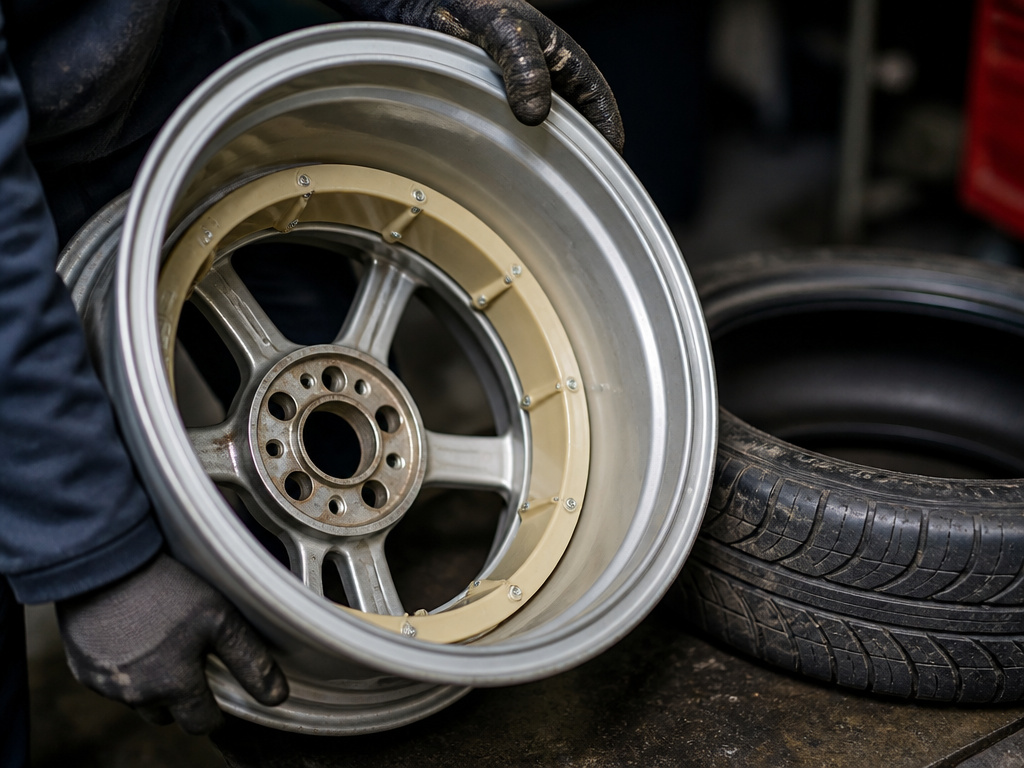
Here is the technical nuance that gets glossed over. Not all run-flat systems are the same.
Some rely solely on the tire’s reinforced sidewall. Others use a combined system with a special wheel that has a polyurethane or metal insert mounted inside the drop center of the rim. This insert supports the tire’s sidewall when air pressure is lost.
If your wheels have these inserts, the game is over. The Toyo document is definitive: “Specific wheels that are intended for runflat applications (i.e. Wheel inserts or runflat-system modified wheels) are not compatible with non-runflat tires.” You cannot mount a standard tire onto this wheel. The bead won’t seat correctly, and the insert will damage the tire’s inner liner.
How do you know? The insert is visible. Remove the tire, and you’ll see a rigid ring fixed inside the wheel. If you’re buying a used car and aren’t sure, a tire shop can inspect it during a rotation.
The part nobody mentions: Run-flat wheel inserts make the wheel a single-use part for the run-flat system. Switching tire types means switching wheels too. That cost alone can erase any savings from buying cheaper regular tires.
What Happens to Your TPMS and Warranty?
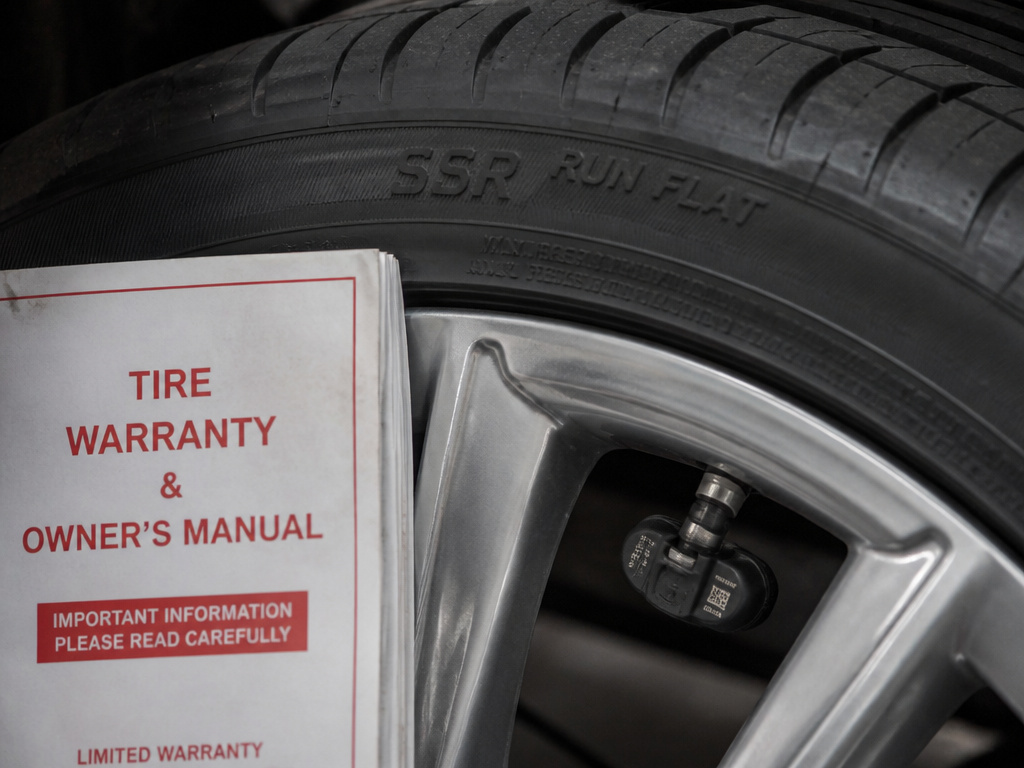
Your Tire Pressure Monitoring System will continue to function, provided the new tires don’t interfere with the sensors. The rule states the replacement tire must not “render inaccurate, or make inoperable the vehicle OE TPMS.” This is rarely an issue with standard tires, but it’s a final box to check.
The warranty landscape shifts. Your vehicle’s original warranty is unaffected. Tire warranties are different.
If you install new conventional tires, they come with their own manufacturer’s warranty. However, if you have a repair run flat tires situation under the original run-flat warranty, that coverage vanishes once those tires are removed. Also, some tire makers have specific exclusions. The Bridgestone manual notes its “Buy & Try 30 Day Guarantee” applies only to full sets of tires (4 or more tires purchased together).
Most critically, altering the original equipment specification could be used by a dealer to deny a claim on related suspension or drivetrain components if they can argue your modification contributed to the failure. It’s a grey area, but it exists.
Your Emergency Kit Options (Because You Need One)
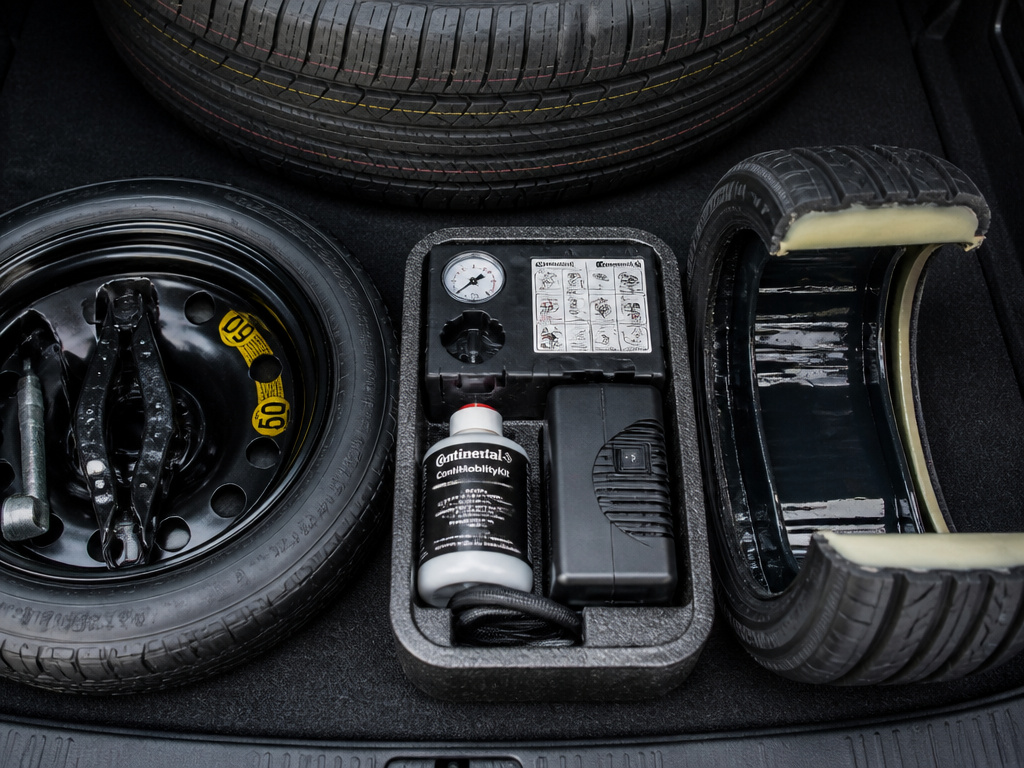
Since your car has no spare, you must choose your backup plan. You have three realistic paths.
A Compact Spare Tire (“Donut”):
You can purchase a donut spare kit specific to your vehicle. This includes the tire, a jack, and a lug wrench. It’s the most reliable solution but eats up trunk space. Ensure the spare’s load rating matches your vehicle’s weight.
A Tire Mobility Kit:
This is the factory solution for many non-run-flat cars. A tire inflator and sealant kit combines a compressor with a sealant canister. It can plug small punctures in the tread and reinflate the tire. It won’t help with sidewall damage or blowouts. The sealant also ruins the TPMS sensor, requiring a costly replacement after use.
Run-Flat Tire Repair System:
Some brands sell a specific self-sealing tire as an alternative. These have a lining that seals most punctures automatically. They are a middle ground, offering some puncture protection without the harsh ride of a traditional run-flat, but they still lack the zero-pressure mobility.
The kit is not optional. Driving without one after removing run-flats is driving without a safety net.
Can You Mix and Match During the Transition?
The short answer is no. The detailed answer has a 50-mile window.
The prohibition against mixing tire brands or types is about permanent installation. If you have a flat and your only option is a conventional tire, you can mount it to get to a service station. This is the “limited, temporary basis” exception.
But you cannot drive on that mixed set for weeks. The handling imbalance and stress on the differential can cause damage. The rule says to replace the conventional tire with a run-flat “as soon as possible.” Treat it as a get-home fix, not a solution.
This is also why the standard advice is to replace all four tires at once. It maintains uniform grip, wear, and handling. Replacing just two run-flats with conventional tires creates a permanent mix, which is explicitly warned against.
Will Switching Tires Affect My Lease Return?
Replacing your vehicle’s original run-flat tires with regular tires can create complications at lease end. The vehicle manufacturer’s original equipment specifications are a key part of your lease agreement. Returning a car with non-run-flat tires when it was equipped with run-flats may be considered a modification that violates the lease terms. You must always refer to and follow the vehicle manufacturer’s replacement tire restrictions and recommendations. To avoid potential fees or a rejected return, the safest course is to reinstall the original type of run-flat tires before turning the vehicle in. Check your lease contract for specific language about tire specifications and modifications.
Frequently Asked Questions
Is it safe to replace run-flat tires with regular tires?
It is safe if you follow all manufacturer rules: replace all four, match the exact specifications on your door placard, ensure wheel compatibility, and equip a spare tire or mobility kit. Safety comes from adhering to the technical guidelines, not from the act of swapping itself.
Can I replace just two run-flat tires with regular tires?
No. Every manufacturer document forbids permanently mixing run-flat and non-run-flat tires on the same vehicle. It creates a handling imbalance and violates the original equipment specifications. The only exception is a temporary emergency repair to reach a service facility.
Will my TPMS still work with regular tires?
Yes, your Tire Pressure Monitoring System should continue to work normally, provided the new tires are mounted correctly and don’t physically interfere with the sensors. The system is wheel-based, not tire-based. You will, however, become more reliant on its warnings since you lose the run-flat’s ability to drive on a flat.
Why do cars come without a spare tire if they have run-flats?
Run-flat tires are the spare tire. Manufacturers eliminate the spare tire, jack, and associated hardware to save weight and increase cargo space, relying on the run-flat’s limited zero-pressure mobility to get you to a repair shop. This is the main reason cars without spares have become common.
Do regular tires ride better than run-flats?
Usually, yes. Conventional tires typically have more flexible sidewalls, which absorb small road imperfections better than the stiff, reinforced sidewalls of a run-flat. This often results in a quieter, more comfortable ride, which is a primary reason owners make the switch.
The Bottom Line
Replacing run-flat tires with regular tires is a technical procedure, not a lifestyle choice. The rulebook is written by the engineers who designed the system.
Your decision comes down to one question: are you willing to trade a built-in, albeit limited, safety feature for potential gains in comfort and cost, while taking on the responsibility to source and carry your own emergency solution?
If yes, follow the checklist in order. Start with your owner’s manual, inspect your wheels for inserts, and match the placard specs like your safety depends on it—because it does. Buy a spare or a kit before you drive away.
If any step fails—especially the wheel check—the answer is no. In that case, your only path is a new set of run-flats or a new set of wheels and tires. There is no safe shortcut. The details decide it.
