9 Best 650b Gravel Tires in 2026
This post contains affiliate links. As an Amazon Associate, we earn from qualifying purchases.
Our best overall 650b gravel tire is the Panaracer GravelKing Classic for its durable, all-surface versatility. For riders seeking confident grip, the Maxxis Rambler is our best all-rounder, while the Continental Terra Trail wins for loose terrain. Choosing the right rubber transforms your ride on mixed surfaces. A gravel tire’s tread pattern, width, and casing directly affect your speed, comfort, and confidence on everything from pavement to chunky gravel.
This guide helps you navigate those choices. Our research focused on specifications, manufacturer data, expert insights, and patterns in owner feedback. We identified nine standout tires to suit different priorities, from pure speed to aggressive traction.
Top 9 650b Gravel Tires in the Market
Certain content that appears on this site comes from Amazon. This content is provided "as is" and is subject to change or removal at any time.
The Best 650b Gravel Tires, Reviewed
Panaracer GravelKing Classic Tire

What We Like
- BeadLock tech for easy mounting on hookless or clincher rims.
- TuffTex casing provides full bead-to-bead puncture resistance.
- Classic slick tread design for versatile terrain use.
Trade-offs
- The slick tread lacks cornering knobs for loose or muddy conditions.
- Pure slick design is a trade-off for riders who prioritize loose-surface grip.
A 48mm slick tire with bead-to-bead TuffTex protection means you get a fast, confident ride on everything from pavement to hardpack gravel. Its versatility and thoughtful construction make it a standout all-rounder. Panaracer’s BeadLock technology also removes the usual struggle of mounting a tubeless tire, a huge practical benefit whether you’re in your garage or on the side of a trail.
The slick tread pattern prioritizes speed and comfort on diverse terrain but lacks the bold shoulder knobs found on the Continental Terra Trail. This design focuses on versatility for the majority of gravel conditions rather than aggressive off-road handling. For routes on maintained gravel paths and paved connectors, the tire provides balanced performance.
Product photos
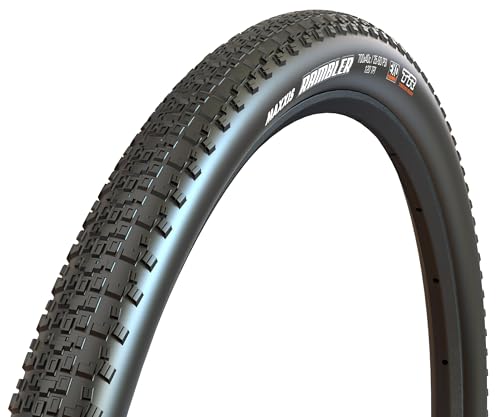
Maxxis Rambler Gravel Tire
What We Like
- Dual compound balances grip and rolling resistance.
- EXO sidewall protection for cut and abrasion resistance.
- Tightly-packed center and ample side knobs for confident handling.
Trade-offs
- At 1.2 lb, it's heavier than the 1.0 lb Panaracer GravelKing Classic.
- The 47mm width may be too wide for riders seeking a pure speed tire.
A dual-compound tread gives the Maxxis Rambler a rare split personality, offering low rolling resistance from the center knobs while the outer rubber digs in for grip. That, combined with its EXO sidewall protection, creates a tire that handles everything from fast gravel roads to light trail duty without complaint. It’s the ideal choice for riders who cover mixed terrain on a single ride and don’t want to swap tires for the occasion.
The trade-off for that do-it-all capability is a bit of heft, and it won’t slice through corners with the same razor precision as a dedicated trail tire like the Continental Terra Trail. For pure, unadulterated speed on hardpack, the narrower Continental Terra Speed will feel quicker. But if your route map is a scribble of pavement, gravel, and dirt, the Rambler’s balanced performance is hard to beat.
Product photos
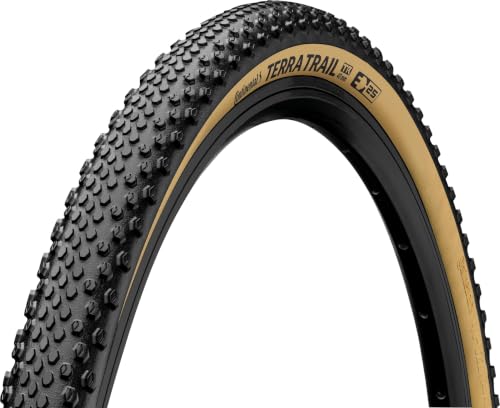
Continental Terra Trail Tire
What We Like
- Bold shoulder knobs for confident cornering on loose terrain
- ShieldWall system resists punctures while remaining flexible
- Fast-rolling center tread for efficient straight-line speed
- Hookless rim compatible with clear pressure guidelines
Trade-offs
- At 1.1 lb, it's heavier than some fast-rolling gravel tires
- Cream sidewalls may show dirt and require more cleaning
The Continental Terra Trail’s 47mm width and bold shoulder knobs give you a planted, secure feel when gravel paths turn loose or technical. This tire is for the rider who values control over outright speed when the surface gets unpredictable. Continental’s PureGrip compound and ShieldWall system deliver the grip and puncture resistance you need to commit to corners on mixed terrain without worrying about a sudden flat.
The Continental Terra Trail is rated for pedal-assist e-bikes up to 25 km/h, making it a suitable choice for riders who use electric gravel bikes. Its ShieldWall system adds a layer of puncture-resistant fabric, which helps protect against flats from trail debris while keeping the tire flexible. A pressure range of 29 to 65 PSI and its tubeless-ready design allow riders to fine-tune setup for comfort and traction across different surfaces.
Product photos
Continental Terra Speed Tire

What We Like
- BlackChili compound for low rolling resistance
- ProTection layer guards tread and sidewalls
- Fast-rolling tread excels on hardpack and road
- Tubeless ready and hookless rim compatible
Trade-offs
- 40mm width offers less cushion than wider 47-50mm tires
- Shallow tread lacks bite for deep mud or loose terrain
Continental’s shallow hexagonal tread rolls smoothly on drier, less technical trails and light gravel, prioritizing efficiency over rough terrain. The design is engineered for speed on hardpack and connecting pavement stretches. Its BlackChili compound aims for low rolling resistance and dependable grip, while the ProTection layer makes the casing highly resistant to damage and penetration.
This tire’s speed comes with a compromise in chunky or soft terrain. Its close-knit tread clears mud poorly, and the 40mm profile absorbs less vibration than a fatter tire. For regular rides on looser gravel or if you want more comfort, the wider tread blocks on the Continental Terra Trail or the greater volume of the Pirelli Cinturato Gravel H will be more forgiving. The Terra Speed is a specialist, not a universal tool.
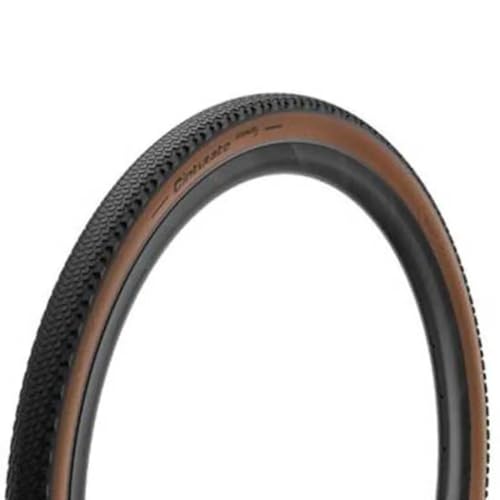
Pirelli Cinturato Gravel H Tire
What We Like
- Folding bead for easier transport and installation.
- Tubeless ready for modern setup options.
Trade-offs
- Wider 50c size may not fit all gravel frames.
The Pirelli Cinturato Gravel H Tire is offered in a 650b x 50c size, a width that requires sufficient frame clearance. It uses a Speedgrip compound and is listed as tubeless ready, with a 127 TPI casing and a folding bead. These features are common among tires in its category, as seen on models like the Panaracer GravelKing Classic and Continental Terra Trail.
That plush width requires ample frame clearance to run these tires. Compared to the slimmer Continental Terra Speed in a 650bx40, the Pirelli prioritizes terrain absorption over outright rolling speed on hardpack. Its 127 TPI casing and folding bead are common in the premium segment, positioning it as a dedicated off-road performer rather than a pavement-biased hybrid.
Panaracer GravelKing X1 Tire

What We Like
- ZSG compound for low rolling resistance and high grip.
- Aggressive, independent side knobs for cornering stability.
- Redesigned bead allows easy tubeless setup with a floor pump.
- Balanced TuffTex casing combines flexibility and puncture resistance.
Trade-offs
- At 22.1 oz, it's heavier than the Panaracer GravelKing Classic.
- The aggressive tread pattern prioritizes loose terrain over pure pavement speed.
- Its 48mm width may be too wide for some frames designed for narrower tires.
A 48mm width paired with sharp, independent side knobs gives this tire a planted, confident feel when you lean it over on loose corners. The ZSG Gravel Compound and dense center tread are designed to handle harsh conditions while still rolling smoothly on pavement. This is the tire for a rider who wants to push the pace on chunky gravel and doesn’t mind a bit of extra weight for the sake of traction and control. It suits aggressive riding where cornering stability and ground grip are more important than ultimate speed on smooth tarmac.
Weighing 22.1 ounces, the Panaracer GravelKing X1 carries more mass than many gravel tires, which can be felt during acceleration on paved roads. This weight is a trade-off for its aggressive tread pattern and reinforced construction. Riders prioritizing predictable handling on rough or loose terrain will find the trade acceptable, while those covering long paved sections might prefer a lighter model.
Fincci Gravel Bike Tire Pair

What We Like
- Includes a full pair of tires in one package
- 1mm puncture shield for thorn and debris resistance
- Wide 40-65 PSI range for mixed-surface tuning
- Foldable aramid bead for easy transport and storage
Trade-offs
- Tube-only setup, lacks tubeless compatibility
- 60 TPI casing is less supple than higher-thread-count options
A 1mm puncture protection belt gives these tires a legitimate defense against trailside flats, a significant benefit for riders who frequent thorny or rocky paths. The 45mm-wide gravel tires come as a pair, which is a practical offering for anyone needing to replace both ends at once. Its versatile 40-65 PSI range and 1.5mm knobs provide a confident, predictable grip for everything from dry forest trails to loose climbs. This is a straightforward, durable option for the rider who prioritizes simple clincher setups and wants to minimize downtime from punctures.
The trade-off is in the construction. The 60 TPI nylon casing lacks the vibration-damping suppleness of a tire like the Panaracer GravelKing Classic with its 120 TPI TuffTex. You also won’t find tubeless readiness here, which rules out the sealant-based flat protection and lower-pressure comfort that system offers. For a rider seeking maximum performance and modern setup options, that’s a hard limit. But if your rig uses tubes and you want a tough, ready-to-roll pair, the Finccis cover the essentials without fuss.
Product photos
Kenda Alluvium Pro Tire

What We Like
- GCT casing adds puncture and slash protection without weight penalty.
- Reflective Hot Patch sidewall increases low-light visibility.
- Tubeless Light Race design for secure bead retention.
- Tread pattern balances on-center grip with cornering bite.
Trade-offs
- At 1.2 pounds, it's heavier than the 1.0-pound Panaracer GravelKing Classic.
- Maximum 50 PSI pressure limits high-pressure options for smooth pavement.
The Kenda Alluvium Pro’s defining feature is its GCT casing, engineered to fend off punctures and sidewall cuts without a significant weight penalty. This makes it a standout choice for riders who prioritize reliability and hate fixing flats, especially on routes littered with sharp gravel or debris. The tread uses a smart hybrid design, with tightly packed hexagons in the center for efficient rolling and splayed shoulder knobs to dig in during corners. It’s a tire built for the rider who wants to forget about what’s under their wheels and just ride.
You do trade some suppleness and ultimate cushiness for that protection, as the casing isn’t the lightest in the category. Compared to something like the Continental Terra Speed, the Alluvium Pro is more about defense than all-out speed. It finds a strong middle ground, offering confident traction and notable durability for mixed-surface adventures where a flat would ruin your day.
American Classic Krumbein Tire
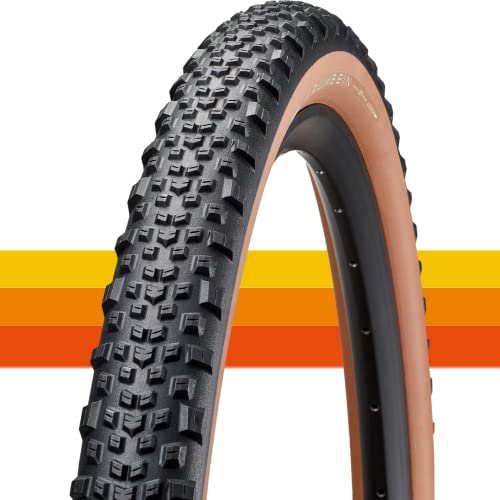
What We Like
- Tall side lugs provide cornering grip on loose terrain
- Chamfered center knobs minimize rolling resistance
- Bead-to-bead nylon armor improves cut and abrasion resistance
- Open tread pattern helps prevent mud buildup
Trade-offs
- The 1.9-inch aggressive tread will roll slower on pavement than a slick
- Its knobby design generates more noise on smooth surfaces
The American Classic Krumbein is built around a 1.9-inch aggressive tread pattern, which translates directly to confidence when your route turns to loose trails or chunky gravel. Its tall side lugs dig in for cornering, while the spaced-out knob design sheds mud. This tire suits riders who prioritize traction and control over pure speed, making it a logical choice for technical singletrack or unpredictable all-weather conditions. The Rubberforce G compound and bead-to-bead nylon armor are engineered for dependable grip and durability when the terrain gets rough.
You pay for that off-road capability with on-road manners. The pronounced knobs increase rolling resistance on pavement compared to a tire like the Continental Terra Speed. Think of the Krumbein as a tire for the adventurous half of your ride, not the commute to the trailhead. It’s a specialist for aggressive routes where maintaining momentum matters less than keeping your line through loose corners and over rocky sections.
Product photos
How We Evaluated 650b Gravel Tires
Our evaluation is research-based, analyzing manufacturer specifications, documented casing technologies, and tread designs. We studied expert round-ups that compare performance across diverse terrain and synthesized common themes from extensive owner feedback. This method reveals which tires truly deliver on promises of grip, speed, or durability in real-world conditions.
Key criteria included tread design for mixed-surface capability, casing construction for puncture resistance and ride feel, and compatibility with modern tubeless or hookless setups. We also considered the practical impact of tire weight and width on a bike’s handling and frame clearance. For a broader look at options, our best gravel tires guide covers all wheel sizes.
The main limit of a research-led evaluation is the lack of controlled, side-by-side riding tests. Perceptions of grip and comfort can be subjective and vary with rider weight, bike setup, and local trail conditions. Therefore, we emphasize matching a tire’s documented strengths to your most common riding surfaces.
What To Look For In 650b Gravel Tires
Selecting a 650b gravel tire involves balancing traction, rolling speed, and durability. Your local terrain and riding style should guide the decision between a fast-rolling slick and a knobby tire for loose conditions. Understanding key specs helps you find the right match without overcomplicating the search.
Focus on tread pattern for your primary surface, casing for puncture protection, and width for comfort. Ensure the tire is compatible with your rim type (hookless or clincher) and fits your frame’s clearance.
Tread Pattern & Intended Terrain
The tread is your primary interface with the ground. Slick or file-tread patterns, like on the Panaracer GravelKing Classic, minimize rolling resistance on hardpack and pavement. For loose gravel or dirt, look for tightly packed center knobs and pronounced shoulder lugs, as seen on the Continental Terra Trail, to maintain cornering confidence. Aggressive treads, such as on the American Classic Krumbein, offer maximum bite in mud and soft terrain but will feel slower and noisier on smooth surfaces.
Casing & Puncture Protection
The tire’s casing, or body, influences ride quality, weight, and flat resistance. A higher thread-per-inch (TPI) count often indicates a more supple, comfortable ride. Many performance tires use specialized layers like Panaracer’s TuffTex or Continental’s ShieldWall for bead-to-bead puncture defense without excessive stiffness. For maximum flat protection, some models integrate a dedicated belt, like the Kenda Alluvium Pro‘s GCT casing, which adds minimal weight.
Width, Compatibility & Setup
Tire width affects traction, comfort, and frame fit. Wider tires (e.g., 47-50mm) run at lower pressures for a smoother ride and more grip but may not fit all frames. Always check your bike’s maximum clearance. Verify if the tire is tubeless-ready, which allows for lower pressures and sealant use, or designed for tubes only. Also, confirm bead compatibility if you have hookless rims.
- Measure your frame’s clearance to ensure a new tire, especially a wide one, will fit with adequate mud space.
- Check if the tire requires a tube or is tubeless-ready for a modern setup with sealant.
- Confirm the bead type (e.g., BeadLock tech) matches your rim, particularly for secure hookless rim installation.
Choose a tread that matches the terrain you ride most, and don’t sacrifice essential puncture protection for a slight weight saving.
650b Gravel Tires Compared
The following table compares the key attributes of our top picks to help you see the differences at a glance.
| Product | Width | Puncture Protection | Weight |
|---|---|---|---|
| Panaracer GravelKing Classic Tire | 48C (1.9 inches) | Bead-to-bead TuffTex | 1.0 pounds |
| Maxxis Rambler Gravel Tire | 650x47B | EXO material | 1.2 Pounds |
| Continental Terra Trail Tire | 47 mm (650b) | ShieldWall woven fabric | 1.1 Pounds |
| Continental Terra Speed Tire | 650b x 40 | ProTection layer | 1.0 Pounds |
| Pirelli Cinturato Gravel H Tire | 650b x 50 | N/A | 1.0 pounds |
| Panaracer GravelKing X1 Tire | 650B x 48 | N/A | 1.3 pounds |
| Fincci Gravel Bike Tire Pair | 650x45B (27.5×1.75) | 1mm layer (Level 3) | N/A |
| Kenda Alluvium Pro Tire | 650Bx45 | GCT puncture & sidewall protection | 1.2 pounds |
| American Classic Krumbein Tire | 1.9 inches | Nylon105 bead-to-bead Stage 5S Armor | N/A |
Frequently Asked Questions
What is the difference between 650b and 700c gravel tires?
650b wheels have a smaller diameter than 700c, allowing for wider tires to be fitted within the same frame for more cushion and grip. 700c wheels typically roll faster and maintain momentum better on smooth surfaces. The choice depends on whether you prioritize comfort and control on rough terrain (650b) or efficiency on mixed surfaces (700c).
How wide should my 650b gravel tires be?
Tire width is a balance of comfort, traction, and frame clearance. Many riders find 47mm a versatile sweet spot for mixed terrain. Wider tires around 50mm offer more cushion for rough roads but require ample frame space. Narrower tires near 40mm prioritize speed on hardpack. Always consult your bike’s manufacturer specifications for maximum allowable width.
Are tubeless tires better for gravel riding?
Tubeless setups are highly recommended for gravel. They allow you to run lower tire pressures for increased traction and comfort without the risk of pinch flats. The liquid sealant inside also instantly plugs most small punctures from thorns or glass, significantly reducing the chance of a ride-ending flat.
Can I use 650b tires on my 700c gravel bike?
You cannot directly swap a 650b tire onto a 700c wheel due to the different rim diameters. However, many modern gravel bikes are designed with enough frame and fork clearance to accommodate either a 700c or a 650b wheelset. Swapping entire wheelsets lets you choose the best tool for your ride.
What tire is best for gravel and pavement?
For a mix of gravel and pavement, look for a tire with a fast-rolling center tread and modest cornering knobs. Our best overall, the Panaracer GravelKing Classic, uses a slick design that is efficient on pavement yet grippy on hardpack. The Continental Terra Speed is another excellent choice, specializing in low rolling resistance for riders who prioritize speed on mixed surfaces.
The Bottom Line
The Panaracer GravelKing Classic is the best overall 650b gravel tire for riders seeking a durable, versatile performer that excels on hardpack and pavement. Its balanced design offers a great blend of speed, puncture protection, and easy tubeless setup for all-surface adventures.
If you’re on a tight budget, the Fincci Gravel Bike Tire Pair provides a solid, puncture-resistant option. For those tackling loose and technical terrain, prioritize aggressive tread patterns like those on the Continental Terra Trail or Panaracer GravelKing X1. Ultimately, matching the tread pattern to your most common riding surface is the single most important factor in choosing a confident, capable gravel tire.
