
8 Best 80/20 Dual Sport Tires in 2026
This post contains affiliate links. As an Amazon Associate, we earn from qualifying purchases.
The IRC GP-1 Dual Sport Tire is the best overall 80/20 dual sport tire because its special knobs add off-road traction while the tread resists fast wear on pavement. For road-focused grip, the Kenda K761 Dual Sport Tire is the Best Road-Focused Grip award winner, and the Continental TKC 70 Adventure Tire is the on/off versatility pick.
A true 80/20 mix is mostly pavement with regular gravel, fire roads, and loose corners. The tire needs DOT approval for highway miles, stable cornering, and a tread that grips dirt without adding too much road noise.
We compared manufacturer specs, published tread-ratio guidance, and listed trade-offs about noise, terrain limits, and fitment. You get clear picks for budget use, wet weather, front fitment, and dirt-leaning riding.
Top 8 80/20 Dual Sport Tires in the Market
Certain content that appears on this site comes from Amazon. This content is provided "as is" and is subject to change or removal at any time.
The Best 80/20 Dual Sport Tires, Reviewed
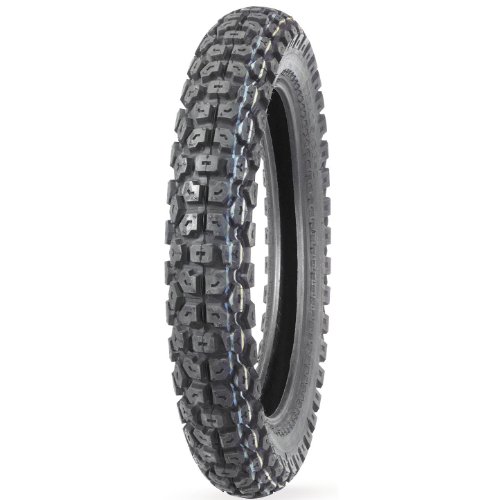
IRC GP-1 Dual Sport Tire
What We Like
- Special knobs provide excellent off-road traction and braking
- Tread design resists fast wear during on-road use
- Balanced for handling and control on both pavement and dirt
Trade-offs
- Specifically a 4.10-18 rear tire, limiting fitment options
An 80/20 tread design means the IRC GP-1 is built for riders who spend most of their time on pavement but regularly head off it. Its special knobs penetrate loose surfaces for traction off-road, yet they won’t wear off as fast as a full knobby tire when used on the street. This balance suits commuters or tourers who detour onto unpaved trails, offering predictable control in both settings without a drastic compromise.
Compared to a more aggressive tire like the Continental TKC 80, the GP-1’s pattern is geared toward its stated 80% on-road use, which keeps it stable on highways. The trade-off is a design focused on loose-surface traction rather than extreme off-road conditions. It executes its specific formula with a design that prioritizes control for the rider whose mix is largely street with some trail riding.
Kenda K761 Dual Sport Tire

What We Like
- DOT approval confirms legal roadworthiness and safety standards.
- Aggressive tread pattern provides grip on loose surfaces like gravel.
- Designed for excellent wet and dry pavement grip.
Trade-offs
- The 80/20 on/off-road ratio limits capability in deep mud or sand.
- Chunky tread may produce more road noise than a pure street tire.
A DOT-approved, tubeless tire built for an 80/20 on/off-road split gives you the legal road grip and puncture resistance for daily commuting, with just enough tread to confidently explore unpaved fire roads. This makes it a solid pick for riders who prioritize asphalt performance but want the option for occasional light-duty adventures. The chunky tread pattern bites well on gravel, so you won’t feel out of place when the pavement ends.
Kenda designed the K761 for riders who spend most of their time on pavement but want to explore gravel or fire roads occasionally. The tread offers a chunky, aggressive look suitable for unpaved trails, while remaining DOT-approved for street legality. This balance makes it a practical choice for connecting highway stretches with backcountry routes on packed surfaces.
Shinko Motorcycle Tires 87-4526 80/20 Dual Sport Tire

What We Like
- Rugged nylon carcass resists impacts
- Tear-resistant compound for off-road durability
- Superior all-weather adhesion for wet and dry traction
- DOT approval for highway safety certification
Trade-offs
- 15.0-pound weight may affect unsprung mass more than lighter options
- Tube-type fitment requires an inner tube for mounting
- Bias ply construction, not radial, for its performance class
An H-rated speed certification up to 130 mph means this tire is built for confident highway cruising, a key feature for commuters who need to merge and pass safely. That core spec, combined with its 80/20 design and tear-resistant rubber, makes it a solid fit for riders whose adventures are mostly pavement. The tough 4-ply nylon carcass provides a stable foundation, so you get predictable handling on city streets and backcountry byways.
The trade-off for that durability and highway certification is weight. At 15 pounds, it carries more mass than some competitors like the IRC GP-1, which can influence suspension response and acceleration feel. As a tube-type bias ply tire, it delivers reliable, traditional performance rather than the latest radial construction. For a rider prioritizing a budget-friendly, do-it-all tire that won’t shy away from the occasional rough patch, the Shinko 705 covers the essentials without fuss.
Continental TKC 70 Adventure Tire

What We Like
- Advanced tread provides excellent traction on various surfaces
- Optimized profile ensures stable, predictable handling
- Reinforced construction offers long-lasting performance
- Tubeless design adds safety and mounting convenience
Trade-offs
- Weighs 15.4 pounds, heavier than the 14.5 lb Kenda K761
- Intended for light off-road, not deep mud or loose terrain
A reinforced, tubeless construction with an optimized profile delivers stable and predictable handling on pavement and gravel. This tire suits riders who prioritize on-road manners but refuse to turn back when the pavement ends. Its advanced tread compound and design offer traction across a wide range of surfaces, making it a versatile choice for adventure touring where dirt roads are part of the journey.
This tire is framed in research as a more budget-friendly and street-oriented option compared to aggressive 50/50 knobbies. For riders who stick to maintained trails and backroads but still want confident wet-weather braking and cornering on asphalt, the TKC 70 Adventure strikes a balance that more dedicated off-road tires can’t match.
Michelin Anakee Adventure Tire

What We Like
- Excellent wet grip from new silica compounds.
- Dependable on-road stability with Bridge Block tech.
- Precise handling from optimized profile and 2CT+.
- Uncompromising off-road traction from grooved tread.
Trade-offs
- At 14.3 lb, it's heavier than the 9.0 lb IRC GP-1.
- The 130/80R-17 size fits specific 17-inch rear wheels only.
Tremendous wet grip from new silica tread compounds adds confidence on slippery roads, a key advantage for riders in rainy conditions. Michelin Bridge Block Technology and 2CT+ Technology deliver dependable on-road stability, while the optimized profile and tread pattern provide precise handling. This combination suits the on-road demands typical of dual-sport riding.
While it offers superb on-road manners and wet weather performance, this is a substantial tire at 14.3 pounds. That weight can affect unsprung weight compared to a lighter option like the IRC GP-1. The fully grooved geometric pattern provides confident off-road traction for the rider who spends a smaller portion of their time off-road, but it is not intended for extended technical trail riding where a more aggressive tread would be a better fit.
Tusk Waypoint Adventure Tire

What We Like
- Aggressive knobs provide traction in tough conditions.
- Predictable on-road handling from tread profile design.
- Rubber compound balances grip with long wear life.
- Offers great off-road traction for its category.
Trade-offs
- Aggressive knobs may hum more on the highway.
A 70% dirt, 30% street focus means this tire is built for riders who prioritize loose-surface traction and durability over touring comfort. The aggressive knob pattern bites into soft terrain, giving you confidence when the pavement ends, while the predictable tread profile keeps things manageable on the tarmac. It’s the ideal choice for dual-sport adventurers who spend weekends exploring forest roads and trails but still need DOT-compliant rubber to connect the dots.
Research indicates the Tusk Waypoint Adventure tire has dethroned previous budget favorites by delivering superior off-road performance at a lower cost. This makes it a standout for value-focused riders who prioritize capability where it counts. The tread design is intended for a 70% dirt and 30% street use mix.
Product photos
Kenda K761 Front Dual Sport Tire

What We Like
- 4-ply casing for durability
- Original equipment for major brands
- Optimized tread for street riding
Trade-offs
- 12.8-pound weight for a 21-inch front tire
- Tread pattern leans away from aggressive trail use
Its 4-ply casing delivers the durability needed for sustained highway miles, and its tread pattern provides predictable grip on asphalt and hardpack. This makes it a solid choice for commuters or adventure tourists whose routes are primarily paved, with only occasional detours onto gravel or dry trails. The tire’s design philosophy is clear: confident street performance first.
The focus on street performance does limit capability when the terrain gets rough. Riders seeking a tire for loose dirt or mud might find the K761’s traction insufficient compared to more aggressive patterns. For a dual-sport tire with a different intended use, the Shinko 705 is listed as an 80/20 option, but the K761’s stability on pavement remains its key advantage for road-biased riding.
Continental TKC 80 Tire
What We Like
- Aggressive block tread grips loose gravel and mud
- M+S rating ensures versatile, year-round performance
- Optimized spacing provides stable on-road handling
Trade-offs
- At 17.3 lb, it's heavier than the 14.5 lb Kenda K761
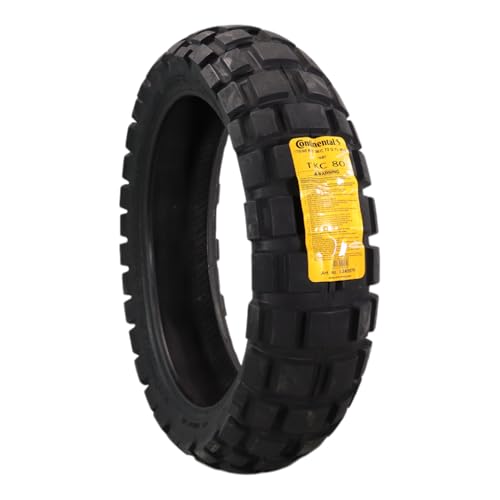
An open block tread pattern and a certified Mud and Snow rating give the TKC 80 exceptional bite in loose terrain. This is the tire for riders who prioritize confidence when the pavement ends, whether that’s on gravel, sand, or rocky trails. Its reinforced construction handles the abuse, and the tread spacing is still managed well enough for stable highway miles to connect the dirt sections.
The Continental TKC 80’s aggressive, block-style tread pattern delivers exceptional grip on loose gravel, mud, sand, and rocky terrain, giving riders confidence when venturing off the pavement. This rugged design is certified for mud and snow, ensuring reliable performance in a variety of weather conditions. While optimized tread spacing provides stable handling on paved roads for touring, the tire’s primary strength lies in its off-road capability.
Product photos
How We Evaluated 80/20 Dual Sport Tires
We built this list from manufacturer specs, published tread ratios, and owner-feedback patterns about road noise, wet grip, and loose-surface traction.
We prioritized DOT approval, on-road stability, off-road traction, and practical fitment. The broader dual sport tires category includes more dirt-heavy choices, but this list stays focused on road-leaning 80/20 use.
A research-led list cannot replace a shop check for exact size, load, speed, and tube or tubeless setup.
What To Look For In 80/20 Dual Sport Tires
Use this section to match the tire to your actual route, from highway commuting to weekend gravel, instead of buying the most aggressive knob you see.
Choose a DOT-approved tire with stable road handling, enough knob or block traction for gravel, and a size that fits your rim and tube setup. Weight, tread noise, and wet grip matter most when the mix is mostly pavement for daily riding.
Tread Ratio and Terrain Match
An 80/20 tire is for riders who spend most miles on pavement but still hit maintained gravel, hardpack, or fire roads. The IRC GP-1 Dual Sport Tire balances special knobs for loose-surface braking with a tread that resists fast wear on road. Riders moving toward more dirt should consider 70/30 tires, while equal road and dirt use points to 50/50 tires.
Road Manners, Noise, and Wet Grip
For daily commuting, the Kenda K761 Dual Sport Tire carries DOT approval and is designed for wet and dry pavement grip, though its chunky tread may produce more road noise than a pure street tire. The Michelin Anakee Adventure Tire adds silica compounds for wet grip, while the Tusk Waypoint Adventure Tire may hum on the highway. Street-first riders may also weigh dual purpose tires, which cover the same on-and-off-road job.
Fitment, Weight, and Construction
Check size and tube type before buying. The IRC GP-1 Dual Sport Tire is a 4.10-18 rear tire, while the Michelin Anakee Adventure Tire uses a 130/80R-17 size for 17-inch rear wheels. Weight matters too: the Shinko Motorcycle Tires 87-4526 80/20 Dual Sport Tire weighs 15.0 pounds, the Continental TKC 70 Adventure Tire weighs 15.4 pounds, and the Continental TKC 80 Tire reaches 17.3 pounds. For riders comparing tire families, adventure tires may include tubeless designs and reinforced construction, as the Continental TKC 70 Adventure Tire shows.
- Confirm DOT approval if you ride on highways.
- Match rim size and tubeless or tube-type setup.
- Check front and rear weights when unsprung mass matters.
- Read tread pattern notes for mud, sand, and gravel limits.
- Verify load and speed ratings before mounting.
If you commute daily and ride gravel only on weekends, pick the road-focused award before the dirt-heavy one.
80/20 Dual Sport Tires Compared
The table below compares the eight 80/20 dual sport tires by award, best use, key strengths, and trade-offs.
| Product | Tire Size | Weight | Tread Design |
|---|---|---|---|
| IRC GP-1 Dual Sport Tire | 4.10-18 | 9.0 pounds | Special knobs |
| Kenda K761 Dual Sport Tire | 130/80-17 | 14.5 pounds | Chunky, aggressive |
| Shinko Motorcycle Tires 87-4526 80/20 Dual Sport Tire | 120/80-18 | 15.0 pounds | Versatile tread pattern |
| Continental TKC 70 Adventure Tire | 170/60 R17 | 15.4 pounds | Adventure-ready |
| Michelin Anakee Adventure Tire | 130/80R-17 | 14.3 Pounds | Fully grooved geometric |
| Tusk Waypoint Adventure Tire | 130/90-17 | N/A | Aggressive knobs |
| Kenda K761 Front Dual Sport Tire | 90/90-21 | 12.8 pounds | N/A |
| Continental TKC 80 Tire | 170/60B17 | 17.3 pounds | Open block pattern |
Frequently Asked Questions
What is the best dual sport tire?
The IRC GP-1 Dual Sport Tire is the best overall pick in this 80/20 list because it balances special knobs for off-road traction with tread that resists fast wear on pavement. Riders who want the road-focused grip pick may prefer the Kenda K761 Dual Sport Tire instead. The right choice depends on your rim size and how often you leave pavement.
What are the best 80/20 dual sport tires for motorcycles?
For motorcycles, the Kenda K761 Dual Sport Tire is the best road-focused grip pick, while the Kenda K761 Front Dual Sport Tire is the front option. The Continental TKC 70 Adventure Tire is the best on/off versatility pick for riders who want tubeless convenience and stable handling.
What is the difference between 80/20 and 70/30 tires?
An 80/20 tire is road-leaning, while a tire with a greater off-road focus gives more dirt traction but can trade away some highway smoothness. The Shinko Motorcycle Tires 87-4526 80/20 Dual Sport Tire is a highway-capable budget pick, while the Continental TKC 80 Tire leans off-road and grips mud and gravel.
Do 80/20 dual sport tires work in mud?
Only for light mud. The Kenda K761 Dual Sport Tire trade-off notes that an 80/20 ratio limits deep mud or sand. If you need maximum traction in mud, gravel, and loose terrain, the Continental TKC 80 Tire is the best off-road grip pick, though it accepts more road noise.
Which 80/20 dual sport tire is best for wet weather?
The Michelin Anakee Adventure Tire is the best wet weather traction pick. Its strengths list excellent wet grip from new silica compounds and dependable on-road stability. The Kenda K761 Dual Sport Tire is also designed for wet and dry pavement grip, but the Michelin is the clearer rain-focused choice.
The Bottom Line
The IRC GP-1 Dual Sport Tire is the best overall pick for riders who want a true 80/20 balance: predictable on-road manners and reliable loose-surface traction. Its special knobs help off-road braking, while the tread is designed to resist fast wear on pavement.
Budget commuters should choose the Shinko Motorcycle Tires 87-4526 80/20 Dual Sport Tire, our budget all-rounder, for DOT approval and a rugged nylon carcass. For wet roads, choose the Michelin Anakee Adventure Tire, the wet weather traction pick; for dirt-leaning trail use, the Tusk Waypoint Adventure Tire, the dirt-leaning bias pick, gives aggressive knobs and durability.
The most important buying factor is matching the tire to your real surface mix. If your route is mostly pavement with weekend gravel, road stability and noise matter more than mud knobs.
