10 Best Aftermarket Tpms Sensors in 2026
This post contains affiliate links. As an Amazon Associate, we earn from qualifying purchases.
Our best overall aftermarket TPMS sensor is the Autel MX TPMS Sensors MaxiTPMS Set, chosen for its dual-frequency design that works on nearly every vehicle. Other top picks include the Schrader TPMS Solutions 33500 for universal OEM replacement and the Masoll TPMS Sensor Kit for a complete DIY solution.
Choosing the wrong sensor can leave you with a persistent warning light or a sensor that won’t communicate with your car. A sensor must match your vehicle’s specific frequency and protocol to work reliably. This guide, based on manufacturer specifications and patterns in owner feedback, provides ten researched options to help you find a direct and effective replacement.
Top 10 Aftermarket TPMS Sensors in the Market

Certain content that appears on this site comes from Amazon. This content is provided "as is" and is subject to change or removal at any time.
The Best Aftermarket TPMS Sensors, Reviewed
Autel MX TPMS Sensors MaxiTPMS Set

What We Like
- Dual-frequency design covers nearly all vehicles
- Wireless programming after sensor mounting
- Lightweight 11g sensor for better stability
- SAE certified with a 24-month warranty
Trade-offs
- Requires Autel-specific tools for programming
A single sensor that handles both 315MHz and 433MHz signals eliminates the guesswork and inventory headache for shops. This dual-frequency capability, combined with a claimed 99% vehicle coverage, means you can stock just one part number for almost every TPMS repair. The ability to program the sensors wirelessly even after they’re mounted on the wheel saves significant time, turning a multi-step job into a quicker, more efficient process. For any professional technician or well-equipped DIYer looking to streamline their TPMS service, this sensor set offers a comprehensive and reliable solution.
Programming these sensors requires an Autel TPMS tool, limiting use to shops already invested in that brand’s diagnostic equipment. Unlike pre-programmed sets designed for specific vehicles, this universal set needs activation before installation. The trade-off is broad vehicle coverage from a single sensor type, eliminating the need to stock many pre-coded units.
Schrader TPMS Solutions 33500 Aftermarket Tpms Sensor
What We Like
- Covers three major radio frequencies in one sensor
- Replicates original equipment functionality and auto-locate
- Built to OEM quality and future-proofed for new tech
- Optimizes shop inventory with a universal single SKU
Trade-offs
- Must be programmed with a compatible tool before install
- Requires keeping TPMS tool software updated for coverage
Combining 314.9, 315, and 433 MHz into a single sensor means a shop can stock one part number for most vehicles, eliminating the guesswork and lost sales from grabbing the wrong frequency. This Schrader is built to original equipment standards, so once programmed, it behaves exactly like the factory sensor, including support for auto-locate systems. It’s the logical choice for a professional or serious DIYer who services a wide variety of cars and values a direct, reliable OEM replacement.
This sensor requires programming with a compatible tool before installation, which is an extra step that pre-programmed alternatives like the Marsflex set avoid. Its design combines 314.9, 315, and 433 MHz frequencies into a single unit, so a shop can stock one sensor for many different vehicles. Once programmed, it performs identically to an original equipment replacement.
Product photos
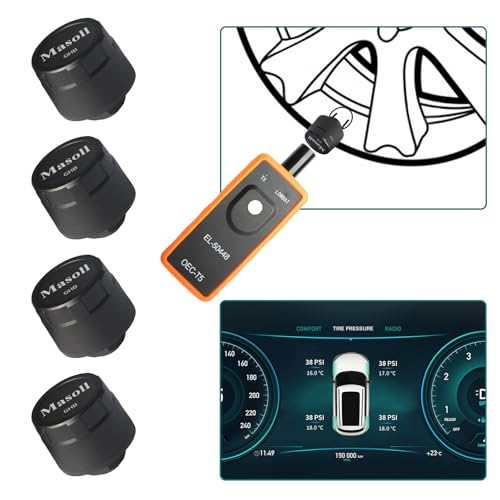
Masoll TPMS Sensor Kit for GM Vehicles
What We Like
- Includes a TPMS relearn tool for self-service
- Dual-frequency sensor eliminates frequency guesswork
- Designed for DIY installation in about five minutes
- Gen 2 update offers wider vehicle and truck coverage
Trade-offs
- External sensor design is more exposed to damage
- Limited to GM vehicles, excluding other brands
The inclusion of a dedicated relearn tool is the key feature here, turning a typically shop-dependent procedure into a home garage job. This kit is built for the GM owner who wants to clear a dashboard warning light without a service appointment. The dual-frequency sensors cover both common GM bands, so you don’t need to know your car’s specific MHz. It’s a straightforward solution for drivers of Chevy, GMC, Buick, and Cadillac models who prefer hands-on fixes.
The trade-off is the external mounting. Screwing it onto the valve stem is simple, but the sensor body sits outside the wheel. This makes it more vulnerable to road debris, car washes, and theft compared to internal units like the Schrader TPMS Solutions 33700. The claimed two-year battery life is decent for an external sensor, though it’s a component you’ll need to keep an eye on. For a permanent, OEM-style installation, a programmable internal sensor remains the more durable choice.
Product photos
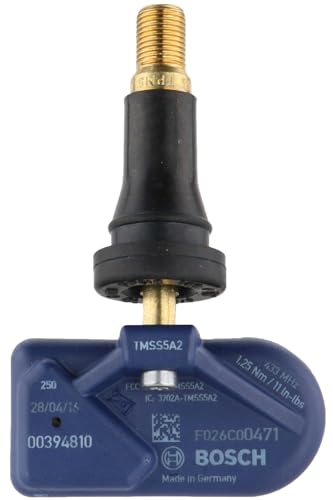
Bosch QF0471 Universal TPMS Sensor
What We Like
- Dual-band frequency works on most modern vehicles.
- Rubber stem is suitable for all wheel types.
- Unlimited programmability offers broad vehicle coverage.
- Compatible with many major TPMS programming tools.
Trade-offs
- Requires programming prior to installation, adding a step.
- Not compatible with Autel, Bartec, or Foxwell tools.
- Installation demands precise 90-degree angle to prevent breakage.
The dual-band 315/433MHz capability means a single sensor SKU can be programmed for the vast majority of modern vehicles, making it a true universal solution for shops that service diverse makes and models. This Bosch sensor is built for durability and accurate readings, suiting professionals who prioritize a reliable, long-lasting part over pre-programmed convenience. Its rubber valve stem design adds versatility for various wheel applications.
The critical trade-off is the mandatory pre-programming step; you cannot install it straight from the box. This makes it less suitable for DIYers without a compatible tool. Unlike sensors that come ready for specific vehicles, the Bosch offers a rubber stem as standard versus a snap-in design. Its tool compatibility list excludes some popular brands, which could be a limitation depending on your shop’s equipment.
Product photos
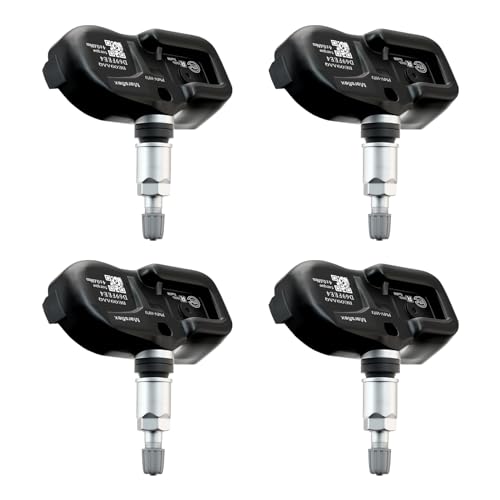
Marsflex Pre-programmed TPMS Sensor Set
What We Like
- Wide compatibility across Toyota and Lexus models.
- Upgraded battery for extreme temperature operation.
- Includes a one-year manufacturer warranty.
Trade-offs
- Requires a professional scanner for post-installation relearn.
- Does not include a relearn tool in the package.
Pre-programmed for a wide list of Toyota and Lexus models, the Marsflex set is ready to install right out of the box, saving you the time and hassle of initial sensor programming. That makes it a solid pick for a DIYer who knows their vehicle is on the compatibility list and just wants a direct swap. The upgraded battery range from -40 to 125 degrees Celsius means these sensors can handle the brutal heat of a summer highway and the deep freeze of a winter morning without missing a beat.
The catch is that ‘pre-programmed’ doesn’t mean plug-and-play. You’ll still need a professional diagnostic scanner or activation tool to perform the vehicle relearn procedure after installation. This is a key difference from a kit like the Masoll TPMS Sensor Kit for GM Vehicles, which bundles a relearn tool. For a mechanic with the right scanner already in the bay, this is a non-issue, but for a home garage, it adds a step and potentially an extra cost.
Product photos
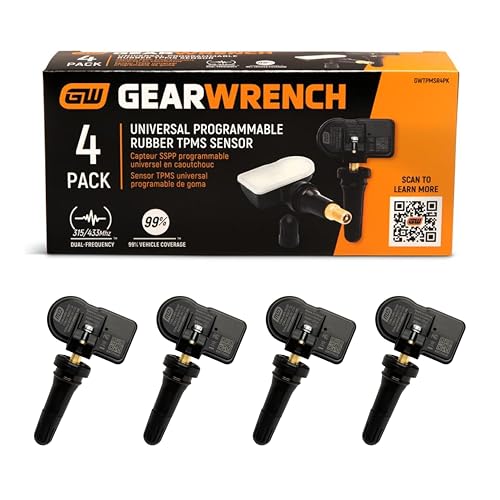
GEARWRENCH Universal TPMS Sensor 4-Pack
What We Like
- Universal fitment covers nearly all vehicles
- Dual-frequency design works on two common bands
- Clones OE IDs to avoid vehicle relearn procedures
- Optimized for GEARWRENCH programming tools
Trade-offs
- Requires a compatible TPMS programming tool for setup
Universal compatibility with 99% of vehicles worldwide means this four-pack fits nearly any car or truck. Its 100% ID cloneable technology replicates original equipment sensor IDs, so the vehicle’s computer accepts them immediately without a relearn procedure. Dual-frequency support for both 315 MHz and 433 MHz systems covers most domestic and import models in one set.
These sensors are optimized for use with GEARWRENCH programming and diagnostic tools. A compatible TPMS tool is required for the initial cloning or programming process. This differs from sensors that come ready for specific vehicle models. The GEARWRENCH pack provides broad vehicle coverage but depends on access to the necessary programming hardware.
Product photos
VDO SE10004A Aftermarket Tpms Sensor

What We Like
- OE-validated design for reliable performance
- Pre-programmed sensor saves shop time
- Includes all component parts for installation
Trade-offs
- Single 433.92 MHz frequency.
- Pre-programmed, not reprogrammable.
The VDO SE10004A’s pre-programmed, OE-validated design is its core advantage, meaning it’s built to match original equipment specifications and communicate correctly with your vehicle’s computer without any extra programming steps. This makes it a straightforward, reliable swap for a technician replacing a failed sensor on a compatible vehicle.
This sensor is a dedicated, high-quality replacement part, not a universal solution. For a shop with a known vehicle application, it simplifies the process. For a DIYer with multiple cars or an unknown frequency, a programmable sensor offers more flexibility.
Schrader TPMS Solutions 33700 Aftermarket Tpms Sensor
What We Like
- High-speed rating for performance driving
- Replicates OE auto-locate functionality
- Future-proofed for new vehicle technologies
- Programmable to 99% of North American vehicles
Trade-offs
- Requires programming by a trained technician before installation
- No DIY option; dependent on specific Schrader-compatible tool
- Tool software must be kept updated for full coverage
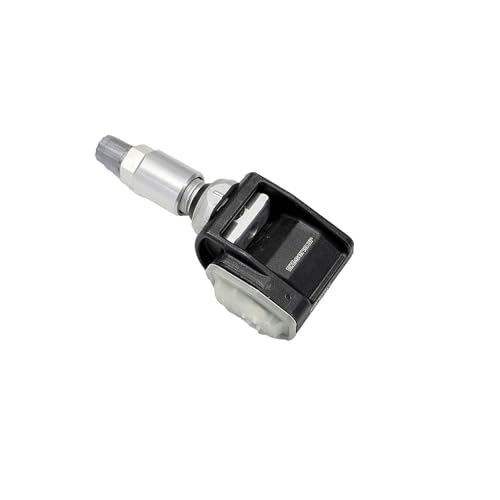
With a maximum speed rating of 200 MPH, this sensor is designed for vehicles that operate at very high speeds. It’s produced to OEM quality standards and replicates original equipment functionality, including auto-locate technology. This means it’s built to match the performance and integration level of the sensors your vehicle came with from the factory.
The trade-off is that you absolutely cannot install this yourself. It arrives blank and must be programmed with a specific Schrader-compatible tool by a professional before it even touches the wheel. That adds a step and cost compared to sensors that are ready to install on specific Toyotas. For a universal option that a dedicated DIYer could program themselves, the Bosch QF0471 with its rubber stem presents a different path.
Product photos
Tymate TM7 RV Tire Pressure Monitoring System

What We Like
- Includes dual USB outlets for device charging
- Easy plug-in power requires no complex wiring
- Works on various vehicles from sedans to RVs
Trade-offs
- May require a repeater for trailers longer than 36 feet
- Recommends installation with a metal valve stem for stability
- Sensor batteries are user-replaceable but a specific coin type
A pressure range of 0 to 144 PSI covers everything from a compact sedan to a fully loaded travel trailer, making it a versatile single-system solution for drivers with multiple vehicles. This plug-and-play kit is ideal for RV owners and DIY enthusiasts who want real-time tire data without professional installation. Its six-alert system watches for pressure drops, temperature spikes, and even sensor battery life, providing a comprehensive safety net for long trips. The included dual USB ports add a layer of convenience, turning a safety device into a practical charging hub.
The system’s signal transmission has a noted limit for very long trailers. The manufacturer suggests using a Tymate repeater for towing setups with a total length of 36 feet or more to ensure a stable connection. Unlike some other products listed, such as the Schrader 33500 sensor which requires programming, this is a dedicated aftermarket monitor designed for general use.
A-Premium Pre-programmed TPMS Sensor
What We Like
- Pre-programmed for direct fitment with no coding
- Extensive compatibility with Toyota, Lexus, Scion models
- Long-lasting CR2050 battery and durable aluminum valve
- Tested to strict SAE J2657 standards for reliability
Trade-offs
- Requires a vehicle-specific relearn procedure after installation
- Limited to a single 315MHz frequency band
- Compatibility is specific to a defined list of Asian vehicles
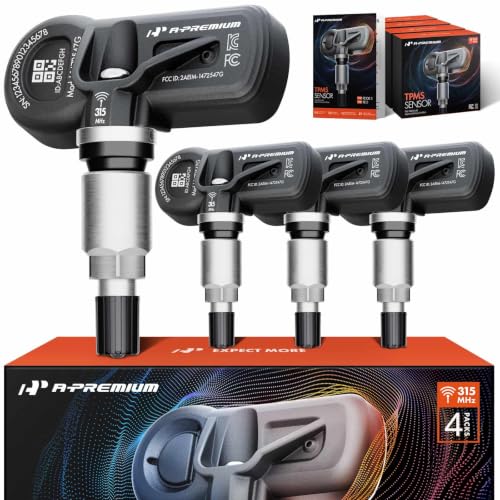
This sensor arrives pre-programmed, eliminating the need for coding before installation. That makes it a direct replacement for the listed Toyota, Lexus, and Scion vehicles from 2004 to 2017. It uses an upgraded aluminum valve and a high-precision chip, which are designed for accurate readings and durability inside a wheel. For a driver replacing a failed sensor on a compatible vehicle, this plug-and-play approach saves time.
The catch is that ‘pre-programmed’ does not mean the sensor pairs automatically. You must follow your vehicle’s manual to complete a relearn process after installation. Compared to a programmable sensor like the Schrader 33500, which lists 314.9 MHz, 315 MHz, and 433 MHz frequencies, this A-Premium unit is a dedicated solution. Its value is in its simplicity for a specific job, trading broad flexibility for out-of-the-box readiness for its targeted vehicles.
Product photos
How We Evaluated Aftermarket TPMS Sensors
Our evaluation is research-based, focusing on manufacturer specifications, published compatibility lists, and patterns in professional and DIY user feedback. We prioritized universal coverage, ease of programming, and the specific needs of different user groups, from performance drivers to RV owners. This approach means we can highlight the sensors with the broadest compatibility or the most straightforward installation, but we rely on owner reports for real-world reliability and tool compatibility details. Our research-based evaluation cannot confirm long-term durability and signal strength in the same way a physical test could.
What To Look For In Aftermarket TPMS Sensors
Replacing a TPMS sensor involves more than just buying a part that fits your valve stem. You must ensure the new sensor communicates correctly with your vehicle’s computer. The key is matching the sensor’s radio frequency and data protocol to your specific car, truck, or RV.
The most critical factors are vehicle compatibility and programming requirements. Universal sensors cover many vehicles but need a TPMS tool, while pre-programmed sensors are simpler but work only on specific makes and models.
Vehicle Compatibility
The first step is confirming a sensor works with your vehicle. Manufacturers list compatible makes, models, and years. The sensor’s radio frequency, typically 315 MHz, 433 MHz, or both, must match your car’s system. A dual-band sensor, like the Bosch QF0471, covers more vehicles. Some sensors, like the A-Premium set, are pre-programmed for a specific list of Toyota and Lexus models, offering a plug-and-play solution for those vehicles.
Programming and Installation
Most aftermarket sensors require programming before they will work. This process copies your vehicle’s original sensor ID or configures a new one using a dedicated TPMS programming tool. Some kits, like Masoll’s for GM vehicles, include a basic tool. Others require a separate, often professional-grade, programmer. A few sensors, like the GEARWRENCH set, can clone an OE ID to avoid a vehicle relearn procedure, but still need a compatible tool for the initial setup.
Design and Durability
Consider where and how the sensor will live. Internal sensors mount inside the wheel and are protected from the elements, but require tire dismounting for service. External sensors screw onto the valve stem outside the wheel, like in the Masoll kit, making DIY installation easy but exposing them to road debris and potential theft. For high-speed or performance driving, a sensor like the Schrader 33700 is validated for those stresses. Valve stem material, rubber or metal, also affects durability and suitability for different wheel types.
- Check if the sensor is internal or external.
- Verify the included valve stem type matches your wheels.
- Confirm the battery type and its expected lifespan.
- Look for certifications like SAE J2657 for reliability standards.
For most drivers, a sensor that matches the OE frequency and protocol, installed correctly, will provide years of reliable service.
Aftermarket TPMS Sensors Compared
The table below compares key features like frequency, programming needs, and best-use cases for all ten sensors.
| Product | Frequency | Valve Type | Programming Requirement |
|---|---|---|---|
| Autel MX TPMS Sensors MaxiTPMS Set | 315MHz + 433MHz dual | Rubber Valves, OE Press-in | Programmable |
| Schrader TPMS Solutions 33500 Aftermarket Tpms Sensor | 314.9, 315, and 433 MHz | Fixed Angle Snap-in | Required before installation |
| Masoll TPMS Sensor Kit for GM Vehicles | Dual 315/433MHz | External screw-on | DIY relearn tool included |
| Bosch QF0471 Universal TPMS Sensor | 315MHz/433MHz dual-band | Rubber stem | Must be programmed prior to install |
| Marsflex Pre-programmed TPMS Sensor Set | 315MHz | N/A | Pre-programmed |
| GEARWRENCH Universal TPMS Sensor 4-Pack | Dual 315 MHz & 433 MHz | Rubber stem | 100% ID cloneable |
| VDO SE10004A Aftermarket Tpms Sensor | 433.92 MHz | Clamp-in pivoting | Pre-programmed |
| Schrader TPMS Solutions 33700 Aftermarket Tpms Sensor | 314.9MHz, 315MHz, 433MHz | Adjustable Aluminum | Pre-installation, compatible tool |
| Tymate TM7 RV Tire Pressure Monitoring System | N/A | N/A | N/A |
| A-Premium Pre-programmed TPMS Sensor | 315MHz | Upgraded aluminum valve | Pre-programmed |
Frequently Asked Questions
What is the best aftermarket TPMS sensor?
The best sensor depends on your vehicle and tools. For the widest vehicle coverage and professional-grade features, the Autel MX TPMS Sensors MaxiTPMS Set is our top pick. For a GM owner wanting a complete DIY kit, the Masoll TPMS Sensor Kit is ideal. Always verify a sensor’s compatibility with your specific car before purchasing.
Are aftermarket TPMS sensors as good as OEM?
High-quality aftermarket sensors from reputable brands like Schrader or Bosch are designed to meet or exceed original equipment specifications. They can be just as reliable as OEM parts, often at a more affordable price. The key is selecting a sensor validated for your vehicle’s system and ensuring proper installation and programming.
What is the best aftermarket TPMS sensor for my car?
Identify your vehicle’s required TPMS frequency (315 MHz or 433 MHz) and whether it uses an auto-locate or wheel-position system. Then, choose a sensor that matches. For a direct replacement with no programming, a pre-programmed set like the Marsflex for Toyotas works. For broader use, a universal sensor like the Schrader 33500 is excellent if you have access to a programming tool.
What is the best TPMS on the market?
For a complete, standalone tire pressure monitoring system that doesn’t integrate with your factory dashboard, an aftermarket TPMS kit like the Tymate TM7 RV is a great choice. These systems use their own display and are perfect for vehicles without factory TPMS or for monitoring trailers. For replacing factory sensors, our top picks are based on extensive research into TPMS sensors and their real-world performance.
Do I need a special tool for aftermarket TPMS sensors?
Most universal and many pre-programmed sensors require a TPMS tool for activation or vehicle relearn. Some kits include a basic tool, but professional installers use advanced programmers. If you lack a tool, a pre-programmed sensor for your specific car, followed by a visit to a shop for the relearn procedure, is often the simplest path.
The Bottom Line
The Autel MX TPMS Sensors MaxiTPMS Set is the best overall choice for its exceptional vehicle coverage and wireless programming, ideal for shops and serious DIYers with the right tools. For GM owners seeking a quick DIY fix, the Masoll kit with its included tool is the standout pick, while Toyota and Lexus drivers should consider the pre-programmed value of the Marsflex set. Ultimately, the single most important factor is confirming the sensor’s compatibility with your vehicle’s specific TPMS frequency and protocol before you buy.
