10 Best Cycling Tires in 2026
This post contains affiliate links. As an Amazon Associate, we earn from qualifying purchases.
The Continental Grand Prix 5000 Clincher is our best overall cycling tire, balancing exceptional grip with low rolling resistance for a fast, confident ride. For urban riders prioritizing flat protection, the Continental Gatorskin is our top pick, while the Schwalbe Pro One TLE stands out as the Best High-Performance Tubeless.
Choosing the right tire means matching its strengths to your terrain and riding style. A fast road tire feels sluggish on trails, and a heavy-duty commuter tire can sap your speed on a group ride. We built this guide by researching specifications, expert round-ups, and patterns in owner feedback across ten distinct categories to help you find your perfect match.
Top 10 Cycling Tires in the Market
Certain content that appears on this site comes from Amazon. This content is provided "as is" and is subject to change or removal at any time.
The Best Cycling Tires, Reviewed
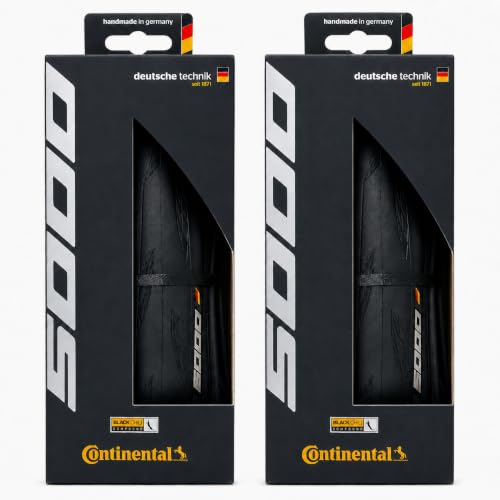
Continental Grand Prix 5000 Clincher Tire
What We Like
- Balances grip and low rolling resistance with BlackChili Compound
- Lightweight, cut-resistant Vectran Breaker for puncture protection
- LazerGrip micro profile aids cornering grip on shoulders
- Active Comfort Technology absorbs vibration for a smoother ride
Trade-offs
- Can have a harsh ride quality per research
- Pressure range is 52-123 PSI, requiring a pump with a gauge
Continental’s Grand Prix 5000 is designed as a true all-around road tire, balancing their BlackChili tread compound for grip with a Vectran puncture breaker for protection. This combination aims for a tire that rolls fast enough for race day yet is durable enough for daily training miles. According to one website’s visitor statistics, it is their most popular road bike tire, suggesting many riders find its balance works for them. The research indicates its speed and weight come very close to the fastest tires available.
The trade-off for that durability and puncture resistance is a firmer ride feel. Compared to some ultra-lightweight race tires, the GP5000 transmits more road vibration. If outright speed is your only goal, you might look at thinner, lighter options. However, for a balanced package, it’s hard to beat. For example, if you prioritize flat protection over all else for a commute, the Continental Gatorskin with its PolyX Breaker and DuraSkin sidewalls is a more focused choice.
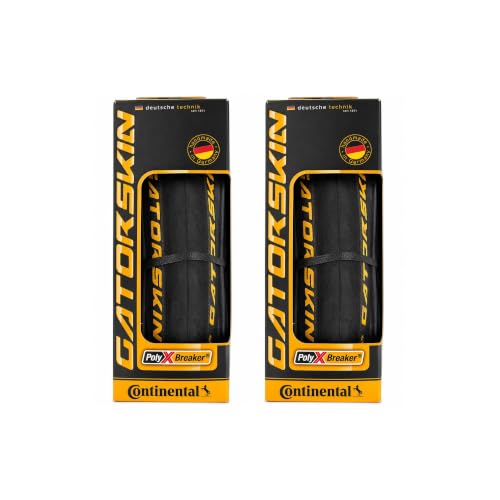
Continental Gatorskin Road Tire
What We Like
- Highly puncture resistant PolyX Breaker layer
- DuraSkin shields sidewalls from cuts and scuffs
- Folding bead is lighter and easier to store
- Continental rates it for high mileage use
Trade-offs
- Not tubeless compatible; requires an inner tube
The Continental Gatorskin packs a dense polyester PolyX Breaker under the tread, which acts like a shield against road debris. This makes it a go-to for riders who absolutely dread flats, especially fixed-gear messengers, daily commuters, and touring cyclists who face rough tarmac and curbs regularly. The added DuraSkin sidewall fabric means you can worry less about scuffs from the worst road conditions, and the folding bead keeps a spare in your bag practical. It’s built to last for mile after mile of urban punishment.
Continental builds the Gatorskin with a dense PolyX breaker and DuraSkin sidewall fabric, prioritizing flat protection over a supple feel. This design, focused on resisting cuts from curbs and rough roads, means the tire is a dedicated choice for commuters and tourers who value reliability above all. While expert round-ups discuss other models, the Gatorskin’s construction is aimed at riders in areas where punctures are common.
Maxxis Aggressor Mountain Bike Tire

What We Like
- Fast-rolling center tread for speed.
- Grippy cornering knobs for control.
- EXO casing resists cuts and abrasion.
- E25 rating suits light-duty e-bikes.
Trade-offs
- Designed specifically for hard-packed, rocky trails.
- Works best as a rear tire paired with a specific front tire.
A dual-compound tread delivers a clear balance, offering lower rolling resistance down the center for speed while the grippier rubber on the side knobs bites into corners. This makes the Aggressor a purpose-built choice for riders who want to maintain momentum on hard-packed and rocky trails without sacrificing all their cornering confidence. It’s engineered to excel in that specific rear-wheel role, particularly when paired with a more aggressive front tire like the Maxxis Minion DHF for a balanced setup.
This tire is designed for high-speed, hard-packed rocky trails, which means it excels on the specific terrain it’s built for rather than being a universal solution. The tread pattern and EXO casing are optimized for these defined conditions, not soft mud or the absolute toughest enduro runs. Its E25 rating adds versatility for light e-bike use, but the core design remains focused on efficient trail speed with controlled braking and cornering.
Product photos
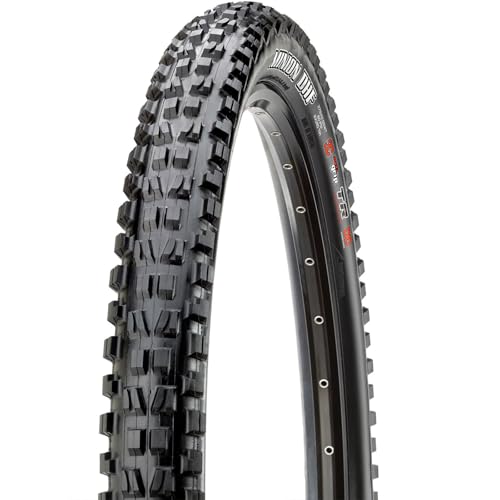
Maxxis Minion DHF Mountain Bike Tire
What We Like
- Dual compound balances rolling speed and grip.
- EXO material provides cut-resistant sidewalls.
- Tread design balances cornering and braking traction.
- E25 rating suits light-duty e-bike use.
Trade-offs
- Weighs 1.8 pounds, heavier than many road tires.
Its tread uses two distinct rubber compounds to balance rolling resistance and grip, a design that lets the tire roll efficiently on straight sections while still holding firm in corners. This makes the Minion DHF a strong choice for trails that mix climbing with technical descents, providing a versatile performance profile without needing a tire swap.
This balanced performance comes from a specific build. The EXO casing adds protection without excessive weight, but it’s intended for trail duty, not the repeated impacts of bike park laps. If your priority leans purely towards fast rolling for long-distance cross-country, a dedicated road tire is built for that singular purpose. The Minion DHF excels where the trail demands versatility above all else.
Product photos
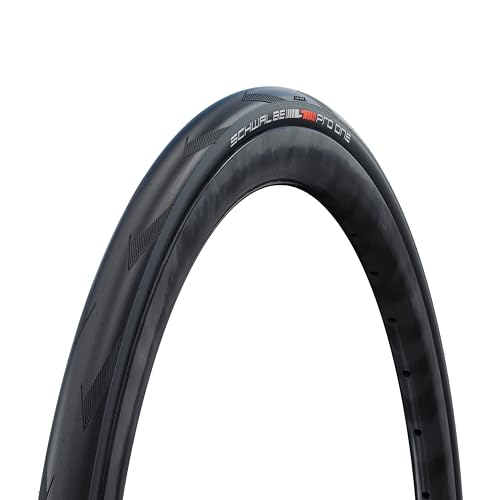
Schwalbe Pro One TLE Road Tire
What We Like
- Addix Race Compound for low rolling resistance.
- Super Race carcass provides comfort and smoothness.
- V-Guard offers reliable puncture protection.
- Transparent sidewall for a distinctive look.
Trade-offs
- Must be used with sealant in a tubeless setup.
- Specific tubeless-only design limits setup flexibility.
The Pro One TLE is built around Tubeless Easy technology, which requires sealant but unlocks the full potential of a supple, high-performance casing. This makes it a clear choice for ambitious road cyclists who prioritize speed and control. The Addix Race compound minimizes rolling resistance, while the Super Race carcass adds a layer of comfort, letting you push harder for longer without sacrificing ride quality.
Schwalbe’s Pro One TLE is designed exclusively for tubeless setups, which means you’ll need compatible rims and must use sealant. This dedicated approach prioritizes the performance benefits of tubeless systems, such as lower rolling resistance and the ability to self-seal minor punctures. While other tires are marketed as clinchers, the Pro One’s integrated design focuses on optimizing for a sealant-based system.
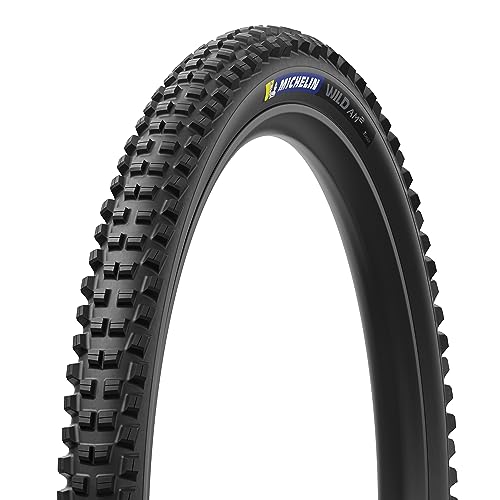
Michelin Wild AM Competition Mountain Tire
What We Like
- Gum-X compound and tread pattern for maximum cornering grip
- Gravity Shield casing provides durable, puncture-resistant riding
- Folding bead and 320 TPI nylon enable lightweight handling
- Versatile 2.30 to 2.60 inch width range for traction and stability
Trade-offs
- Tubeless-ready design requires a compatible rim and sealant setup.
Engineered with the Gum-X compound and Wild AM tread pattern, this tire delivers maximum grip during cornering and superior braking performance. That translates to confidence and control when pushing through soft, technical trails. Its Gravity Shield casing provides durable, puncture-resistant construction for aggressive off-road riding, letting you commit to corners without worrying about a sidewall slash.
That focus on soft terrain comes with a trade-off. The 2.4-pound weight and aggressive tread are optimized for grip, not for effortless speed on hardpack or long, smooth climbs. For riders who encounter a wider variety of hard and rocky trails, the Michelin Force AM2 from the same brand uses a similar Gum-X compound but is specifically engineered for hard terrain. This offers a different balance of durability and rolling efficiency. The Wild AM Competition’s performance is specialized, delivering where it’s designed to excel.
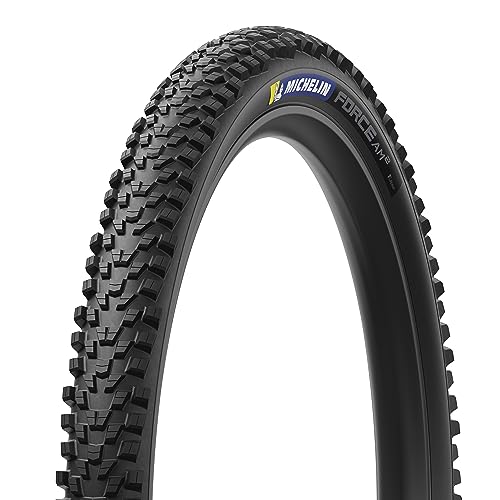
Michelin Force AM2 Mountain Bike Tire
What We Like
- Gum-X compound provides enhanced traction on hard terrain.
- Gravity Shield casing offers superior sidewall protection.
- Tread pattern reduces rolling resistance for efficiency.
- Tubeless-ready design increases puncture resistance.
Trade-offs
- Specific for hard and mixed terrain, not soft mud.
- At 2.4 inches wide, it may be less agile on smooth trails.
- The aggressive tread pattern prioritizes grip over maximum speed on pavement.
A 2.4-inch width paired with the Gum-X compound gives this tire a planted, confident feel on loose rock and hardpack. That’s why it’s a standout for riders who tackle technical descents and aggressive all-mountain trails. The Gravity Shield casing backs up that confidence with serious durability, letting you push through rocky sections without constantly worrying about sidewall cuts. This tire is built for control when the terrain gets demanding.
The specialized tread pattern optimized for reduced rolling resistance means the Force AM2 maintains efficiency and speed on hard terrain. While designed for all-mountain and aggressive trail riding, its focus on hard and mixed terrain means it prioritizes durability and control over the ultimate rolling speed of a less aggressive tire. For riders whose trails are primarily firm, it delivers confident handling during challenging descents.
Blackburn Mountain Bike Tire

What We Like
- Optimized tread provides superior traction and control
- Carbon Steel bead allows folding without damage
- Versatile size range fits 1.75 to 2.25 inch rims
Trade-offs
- PSI range of 35-65 limits high-pressure road use
- Tall knobby tread is optimized for trails, not pavement
This tire suits mountain bikers seeking dependable protection without a premium price, thanks to its tall, knobby tread that delivers solid traction from smooth paths to technical single track. The Carbon Steel bead is a practical touch, making storage and transport easier without worrying about damage.
Rugged protection and an aggressive tread come at the cost of on-road performance. The 35-65 PSI range and pronounced knobs aren’t meant for efficient pavement riding. For example, the Maxxis Minion DHF also comes in a 26-inch size but focuses more on a specialized tread compound and EXO protection casing for demanding downhill use. The Blackburn prioritizes core puncture defense and a simpler folding bead. For general trail riding where flats are the primary concern, the Blackburn’s design is straightforward and effective.
Product photos
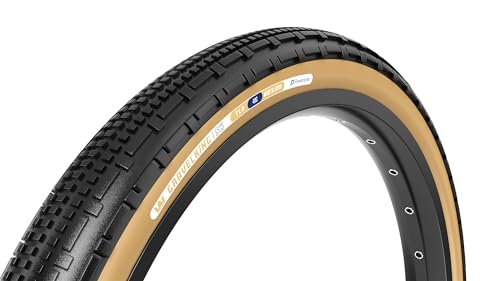
Panaracer GravelKing SK Gravel Tire
What We Like
- ZSG compound for low rolling resistance.
- Tufftex casing balances durability and weight.
- BeadLock technology aids tubeless installation.
- Two-year warranty against manufacturing defects.
Trade-offs
- 30C width offers less volume than wider gravel options.
- Specific gravel compound may wear faster on pure pavement.
With its ZSG Natural Gravel Compound designed for consistency across temperatures, the Panaracer GravelKing SK maintains predictable grip and rolling efficiency in both cold and hot conditions. This quality suits riders who value a smooth, efficient feel on varied gravel and loose surfaces. The 120Tpi Tufftex casing and BeadLock technology contribute to a lightweight, durable construction and easier tubeless setup, making it a balanced performance tire for long days on backroads.
A pure road tire is optimized for pavement speed, while the GravelKing SK’s tread pattern and compound are made for loose terrain. You’ll trade some ultimate pavement speed for off-road capability. The 30C width provides a nimble feel but doesn’t offer the same cushion and traction in chunky terrain as a true mountain bike tire. It finds its sweet spot as a fast, versatile connector between tarmac and trail.
Product photos
Fincci City Bike Tire Pair

What We Like
- Lightweight aramid bead reduces rolling resistance.
- Low-profile tread provides predictable traction on pavement.
- Wide 40-65 PSI range accommodates rider preferences.
- Foldable design allows for compact storage.
Trade-offs
- The 1mm tread depth offers minimal grip on loose surfaces.
- The 45c width may not fit all road bike frames.
A 675-gram weight paired with a low-profile 1mm tread makes this tire feel quick and efficient on paved city streets and light gravel. The aramid bead and foldable construction contribute to that snappy feel, which is exactly what a commuter or recreational rider wants for daily use without sacrificing too much durability. Its versatility across hybrid, touring, and gravel bikes comes from a sensible 40-65 PSI pressure range, letting you tune the ride for comfort or speed.
With a smooth, low-profile tread pattern just 1mm deep, these tires are built for efficient rolling on paved surfaces. This shallow design prioritizes predictable traction on asphalt and city streets over the aggressive bite needed for deep mud or loose gravel. While a narrower road tire exists, the Fincci’s 45c width provides a stable, comfortable platform that suits mixed-terrain commuting and light gravel paths.
Product photos
How We Evaluated Cycling Tires
This guide is based on an analysis of manufacturer specifications, documented expert reviews from cycling publications, and consistent patterns in user feedback. Three key criteria were prioritized: rolling resistance for speed, puncture protection for durability, and tread design for terrain-specific grip. A tire’s intended use, such as road racing, trail descending, or daily commuting, determined the importance of each factor. This approach uses aggregated information, so real-world performance can vary with individual bike setup and rider weight.
What To Look For In Cycling Tires
Your ideal tire depends on where you ride. A fast road tire is built very differently from a durable mountain bike tire, and understanding the key specifications helps you choose confidently.
Focus on the tread pattern for your terrain, the casing construction for puncture protection and ride feel, and the intended tire system (tubeless vs. Clincher). Rolling resistance affects speed, while compound and width influence grip and comfort.
Tread Pattern & Tire Type
The tread pattern is your first clue to a tire’s purpose. Smooth or minimally treaded slicks are for pavement, offering low rolling resistance and predictable cornering. Knobby, widely spaced tread blocks are for loose dirt and mud, providing traction but increasing drag on roads.
Some tires, like many best hybrid tires, use a moderate center tread for pavement speed with side knobs for occasional trail use. Your choice should align with the primary surface you ride; using a mountain bike tire on the road is inefficient, while a slick road tire is dangerous off-road.
Casing, Protection & Rolling Resistance
The tire’s casing and protective layers determine its durability, weight, and ride quality. A higher thread-per-inch (TPI) casing often feels more supple, absorbing road vibration for comfort. Manufacturers add puncture protection belts, like Vectran or PolyX, which add weight but significantly reduce flat risk. This creates a classic trade-off: lightweight, supple casings roll fast but are more fragile, while durable, puncture-resistant tires are heavier and can feel harsh. Consider how much flat protection you need based on your local road conditions and tolerance for mid-ride repairs.
Tire System: Tubeless vs. Clincher
You must choose between a traditional clincher (which uses an inner tube) and a tubeless setup. Tubeless systems seal small punctures with liquid sealant, allowing you to run lower pressures for more grip and comfort without the same pinch-flat risk. However, they require compatible rims and can be messier to install. Clinchers are simpler and universally compatible. Understanding the tubeless vs. Tube decision is crucial, as it affects your maintenance routine and on-bike experience. Many modern road bike tires are now designed specifically for one system or the other.
- Check your wheel’s compatibility before buying tubeless-ready tires.
- Consider the availability and cost of sealant for tubeless maintenance.
- For commuting, the reliability of a standard clincher often outweighs tubeless benefits.
- Wider tires generally provide more comfort and traction at lower air pressures.
- Always stay within the PSI range molded on the tire’s sidewall.
Match the tire’s design to your most common ride: slicks for pavement, knobs for dirt, and a protective layer for debris-filled routes.
Cycling Tires Compared
The following table summarizes the key features of our top picks to help you compare them at a glance.
| Product | Size | Puncture Protection | Tread Compound |
|---|---|---|---|
| Continental Grand Prix 5000 Clincher Tire | 700×25 | Vectran Breaker layer | BlackChili Compound |
| Continental Gatorskin Road Tire | 700×25 | PolyX Breaker layer | N/A |
| Maxxis Aggressor Mountain Bike Tire | 29×2.30 | EXO sidewalls | Dual Compound |
| Maxxis Minion DHF Mountain Bike Tire | 26×2.30 | EXO sidewall | Dual compound tread |
| Schwalbe Pro One TLE Road Tire | 28" | V-Guard | Addix Race Compound |
| Michelin Wild AM Competition Mountain Tire | 29 x 2.40 inch | Gravity Shield | Gum-X Technology |
| Michelin Force AM2 Mountain Bike Tire | 2.4 inches | Gravity Shield | Gum-X |
| Blackburn Mountain Bike Tire | 26" x 1.75-2.25" | Protective layer under tread | N/A |
| Panaracer GravelKing SK Gravel Tire | 700 x 30C | BeadLock TLR | ZSG Natural Gravel |
| Fincci City Bike Tire Pair | 700 x 45c | LVL3 layer | N/A |
Frequently Asked Questions
What are the best tires for cycling?
The “best” tire depends entirely on your riding style. Our best overall pick for road cycling is the Continental Grand Prix 5000 Clincher. For mountain biking on mixed trails, the Maxxis Minion DHF offers a great balance, and city commuters should look at the Fincci City Bike Tire Pair for lightweight, predictable pavement performance.
Which is the best bike tire brand?
Several brands excel in specific areas. Continental is renowned for its high-performance road and durable commuter tires. Maxxis dominates in mountain bike traction and durability, while Schwalbe and Michelin are also highly regarded for their advanced compounds and tubeless technology across different bike tire types.
What is the 105% rule in cycling?
A common aerodynamic guideline suggests matching your tire width closely to your rim’s external width for smoother airflow. This can help reduce drag and is most relevant for road cyclists using deep-section carbon wheels who are focused on optimizing speed.
What are the best tires for bikes used on both road and trail?
For mixed-surface riding, you need a versatile tire like a gravel or hybrid model. The Panaracer GravelKing SK is an excellent choice, with a tread that grips on loose surfaces yet rolls efficiently on pavement. Some riders also use smooth mountain bike tires for road riding, though they will be slower than dedicated pavement tires.
How important is puncture protection for a commuter tire?
It is very important. For daily riding where reliability is key, a tire with a strong puncture protection layer, like the Continental Gatorskin, can prevent frustrating and untimely flats. This often outweighs the minor speed penalty. Many commuter bike tires prioritize this durability over ultra-low rolling resistance.
The Bottom Line
For most road cyclists seeking a do-it-all tire, the Continental Grand Prix 5000 Clincher is the best overall choice, offering a proven blend of speed, grip, and reasonable durability. If your budget is limited or you face constant road debris, prioritize the Blackburn Mountain Bike Tire for value or the Continental Gatorskin for maximum puncture protection, respectively. Ultimately, the single most important factor is matching the tire’s tread and construction to the terrain you ride most.
