10 Best Enduro Tires in 2026
This post contains affiliate links. As an Amazon Associate, we earn from qualifying purchases.
The IRC Gekkota VE33S Rear Enduro Tire earns our best overall pick for its gummy compound and tall tread blocks, which deliver exceptional traction in extreme conditions. For a dedicated front tire, the Kenda Trakmaster K760 is the Best Dual-Sport Value. The IRC Volcanduro VE-35 is another strong option developed specifically for cross-country racing.
Choosing the wrong tire can leave you spinning on climbs or fighting for control in corners. The right tread pattern and compound are critical for connecting trails and surviving technical terrain. We researched specifications, manufacturer data, and patterns in owner feedback to evaluate ten top options.
This guide distills that research to help you find a tire that matches your riding style and terrain.
Top 10 Enduro Motorcycle Tires in the Market
Certain content that appears on this site comes from Amazon. This content is provided "as is" and is subject to change or removal at any time.
The Best Enduro Motorcycle Tires, Reviewed
IRC Gekkota VE33S Rear Enduro Tire

What We Like
- Gummy compound enhances cornering and durability.
- Tall tread blocks maximize traction and contact patch.
- Rigid sidewall improves bump absorption.
- Developed for extreme enduro conditions.
Trade-offs
- At 13.6 lb, it's heavier than the 11.2 lb Bridgestone E50.
- Tube-type construction requires an inner tube.
- Tall block design may wear faster on pavement.
The IRC Gekkota VE33S uses a new gummy compound that directly translates to better grip when you’re leaned over in a high-speed corner or clawing up a rocky climb. Its tall, flexible blocks create a larger contact patch, giving you confidence when the trail gets loose or wet. This tire is built for riders who demand maximum traction and durability from a rear tire in the roughest enduro environments, where performance matters more than a slight weight penalty.
That focus on aggressive off-road performance comes with a trade-off. The tire’s substantial 13.6-pound weight is noticeable compared to a lighter enduro option like the Bridgestone Battlecross E50, which can make the rear end feel a bit more planted but also slightly less flickable. While the rigid sidewall soaks up impacts well, the tall block pattern is primarily designed for dirt, meaning it will likely square off more quickly if you spend significant miles on asphalt connecting trails.
Kenda Trakmaster K760 Front Enduro Tire

What We Like
- DOT approval for legal road use between trails
- Durable compound for extended tread life
- Tall aggressive knobs designed for varying terrain
- Classic design at an affordable price point
Trade-offs
- Weighs 9.0 pounds, heavier than the 8.6-pound IRC Volcanduro VE-35
- Designed primarily for dirt, with only 10% road application focus
DOT approval means you can legally connect trail sections on pavement without swapping tires, a key feature for dual-sport riders. The Kenda Trakmaster K760 suits riders who prioritize budget-friendly performance across mixed terrain. Its tall, aggressive knobs bite into loose dirt and mud, while the durable compound resists wear from occasional road miles. This is a straightforward tire for riders who want proven capability without premium costs.
Weighing 9.0 pounds, the Kenda Trakmaster K760 Front Enduro Tire is heavier than some front-specific options, which can influence steering responsiveness. Its DOT approval is for a 90% dirt and 10% road application, meaning its on-road behavior is designed for basic transit between trails rather than extended pavement use. For riders prioritizing the lightest possible front end or who spend most of their time on asphalt, other tires may offer a different feel.
IRC Volcanduro VE-35 Front Enduro Tire

What We Like
- Rubber compound grips all surfaces
- Dynamic driving and braking power
- Extra durability on varied terrain
- Stable performance across conditions
Trade-offs
- Specific 21-inch front wheel size limits fitment options.
Developed specifically for cross-country enduro racing, the IRC Volcanduro VE-35 uses an optimum rubber compound to deliver grip on everything from dry hardpack to loose rocks and mud. This focus makes it a serious choice for riders who need predictable traction and dynamic power transfer across an entire race loop, not just a single surface. Stability and extra durability come from its construction, letting you push hard without worrying about the tire giving up mid-stage.
That cross-country specialization does mean some trade-offs. The added heft contributes to its durability but can be felt in quick steering inputs. If your riding skews more towards technical, slow-speed trail work or deep mud, a tire with a more aggressive, open tread pattern might offer better bite than this all-surface design.
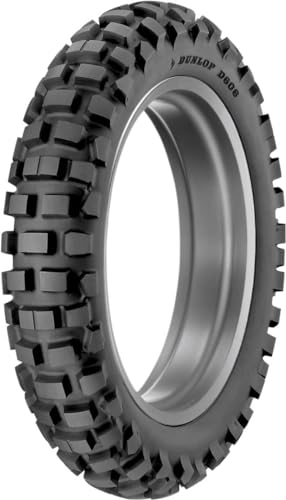
Dunlop D606 Rear Enduro Tire
What We Like
- D.O.T. legal for street use
- Aggressive off-road tread design
- Engineered for good highway wear
- Full-depth pattern for varied terrain
Trade-offs
- Primarily an off-road tire with limited street focus
Designed to be street-legal with an emphasis on aggressive off-road riding, the Dunlop D606 is for riders who spend most of their time on trails. Its full-depth tread pattern provides traction from hard-packed fire roads to soft single-track, while the compound is engineered for highway wear. This tire is designed with a clear focus on off-road capability while maintaining street-legal status.
For the rider whose weekend involves more trail miles than pavement, the D606 delivers a proven, aggressive hybrid formula. Its DOT stamp allows for plate registration, but its dirt capability vastly outweighs its street manners.
Michelin Enduro Medium Rear Tire

What We Like
- R-rated for legal road use up to 106 mph
- Improved durability for aggressive riding
- Versatile traction on wet and slippery surfaces
- Stable platform for unpredictable terrain
Trade-offs
- The 120/90-18 size limits fitment to specific rear wheels.
An R-rated speed certification for 106 mph road use means this tire can legally connect trail sections without a second thought. That homologation, combined with its advanced rubber compound, is the core of its multi-surface appeal. It suits enduro riders who face a true mix of terrains, from slick roots to loose gravel, and need a single tire that transitions confidently onto pavement. The stability engineering gives you a predictable feel when the trail gets physically demanding, letting you focus on riding rather than fighting the bike.
The trade-off for that road-legal versatility and all-condition traction is weight. That extra mass can be felt when accelerating or changing direction quickly in tight singletrack. Choose this Michelin for its broad capability across changing conditions, but if your rides are purely off-road and you prioritize light weight for flickability, a lighter specialist tire might serve you better.
Bridgestone Battlecross E50 Enduro Tire

What We Like
- Castle Block tech maximizes traction
- Optimized for broad off-road spectrum
- Improved sidewall rigidity aids mounting
- New tread pattern increases biting edges
Trade-offs
- At 11.2 lb, it is heavier than the 8.6 lb IRC Volcanduro VE-35 front tire
- 28-inch dimensions require adequate clearance
Designed specifically for the hard core Enduro rider, the Bridgestone Battlecross E50 uses Castle Block technology and advanced block positioning to maximize traction. The design includes increased block rigidity and additional biting edges, which the brand states improves off-road traction. This tire is optimized for a broad spectrum of off-road riding conditions.
The tire weighs 11.2 pounds, a figure that contributes to its overall mass on the wheel. For comparison, the IRC Volcanduro VE-35 front tire is listed at 8.6 pounds. This difference in unsprung weight can influence a motorcycle’s steering response and suspension action.
Tusk Dsport Adventure Tire Set

What We Like
- D.O.T. compliance for legal street use
- Aggressive tread for tough off-road grip
- Rubber compound balances grip and long wear
- Tall knobbies provide a tough, aggressive look
Trade-offs
- Tube-type design requires inner tubes and more maintenance
This set’s D.O.T. compliance is the key, letting you legally connect trail sections on public roads without swapping tires. The aggressive tread pattern and tall knobbies are built to dig into loose dirt and mud, giving you confidence when the pavement ends. That same rubber compound is formulated for durability, so you can expect decent mileage from both tires whether you’re carving a forest service road or commuting to work. It’s a solid choice for riders who need one set to handle a true mix of terrain and want the look of a serious off-roader.
The trade-off comes from that very design. The tube-type construction means dealing with inner tubes, which adds a puncture repair step compared to a tubeless setup. Prioritizing off-road bite and a set-and-forget solution for mixed use involves accepting some compromise in on-road refinement.
Product photos
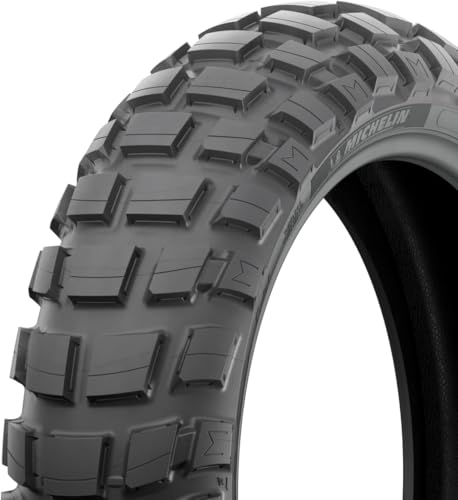
Michelin Anakee Wild Adventure Tire
What We Like
- Dakar-inspired tread for proven off-road grip
- All-new compounds for extraordinary longevity
- Specific casing design ensures on-road stability
- Balanced for both adventure and road use
Trade-offs
- The 140/80-17 size limits fitment to specific wheel diameters.
An all-new compound derived from Dakar-winning technology delivers extraordinary longevity, making this tire built for extended adventures where changing a tire isn’t an option. It suits riders who need a single tire to confidently handle both the tarmac transit to the trail and the off-road exploration itself. The specific front and rear casing design is engineered for impeccable on-road stability, so your adventure bike feels planted during highway stretches.
Weighing 14.8 pounds, the Michelin Anakee Wild is a substantial tire, which can affect unsprung weight and handling feel compared to lighter enduro-specific options. Its design prioritizes a balance, with casing construction aimed at on-road stability and comfort for adventure touring. The tread compound and pattern, inspired by a Dakar-winning tire, are developed for longevity across both pavement and dirt.
Product photos
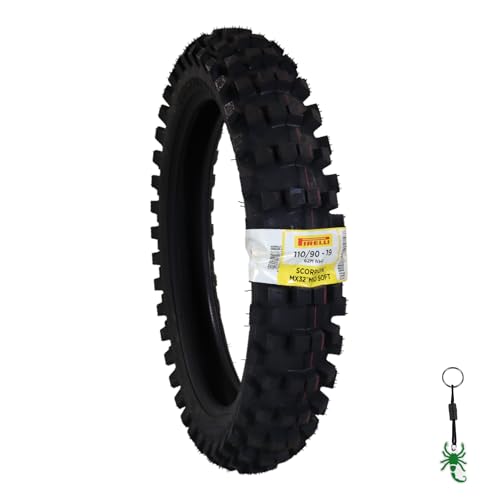
Pirelli MX32 Mid Soft Enduro Tire
What We Like
- Optimized block arrangement improves braking stability.
- Front lateral knobs increase line-holding precision in corners.
- Effective for competition, training, and recreational use.
- Performance reliability in extreme riding conditions.
Trade-offs
- Specific to 19-inch rear wheels, limiting fitment options.
The optimized block arrangement and front lateral knobs translate directly to exceptional cornering grip, letting you hold your line with confidence when the trail gets loose or rutted. This makes the MX32 Mid Soft a serious choice for riders who prioritize carving through technical single-track over everything else. Pirelli’s focus on power transmission to the ground means you get predictable traction out of corners, which is exactly what aggressive Enduro and hard enduro riders need when they’re on the gas.
The Pirelli MX32 Mid Soft is built for maximum power transmission and grip, a focus that demands a substantial 12.1-pound construction. This heft provides the casing strength needed for aggressive riding, though it adds rotational mass compared to lighter-weight rear tires. Its block arrangement is optimized for braking stability and cornering grip, with lateral knobs designed for greater line-holding precision. Review mentions indicate Pirelli offers multiple casings and compounds for Enduro, positioning this as a serious option for competition and training.
Product photos
Dunlop Geomax EN91EX Rear Tire

What We Like
- Super soft compound for extreme traction
- Progressive Cornering Block Technology for slide control
- Enhanced damping from stiffer sidewall construction
- Optimized shoulder knobs for stability
Trade-offs
- Not approved for street use (DOT or FIM)
- Use limited to the United States and Canada
- Requires verification by a tire professional
A super soft rubber compound defines the Dunlop Geomax EN91EX, delivering the kind of bite that hooks up when the terrain turns to mud, roots, and loose rock. This tire is built for riders who prioritize maximum traction above all else in technical enduro conditions. The additional ply in its construction stiffens the sidewall progressively, which translates to better damping and a more predictable feel when you’re leaning the bike over on loose surfaces. Progressive Cornering Block Technology works the shoulder knobs harder, increasing their contact patch to help manage slides.
This tire is not DOT or FIM approved, so it is strictly for off-road competition or use on private land. Unlike the standard EN91 model mentioned in its description, the EN91EX lacks the certifications required for legal road use. That focus means it cannot be used on public highways, so always check local regulations and your vehicle manual before mounting it.
How We Evaluated Enduro Motorcycle Tires
This guide is based on an analysis of manufacturer specifications, technical documentation, and expert round-ups to understand each tire’s intended design and performance characteristics. We also reviewed patterns in owner feedback from forums and retailer reviews to gauge common experiences with durability, traction, and fitment.
Key criteria included the tread compound’s grip level, the tread pattern’s aggressiveness for different terrains, and whether the tire carried DOT approval for legal road use. Weight and specific fitment sizes were also important factors, as they directly impact a bike’s handling and compatibility. A research-led evaluation cannot replicate the feel of a tire on a specific trail, but it effectively highlights the objective trade-offs, like the balance between a soft, sticky high-grip compound and its potential wear rate.
What To Look For In Enduro Motorcycle Tires
Enduro riding demands a tire that can handle sharp rocks, slick roots, and everything in between. The right choice balances aggressive off-road capability with any necessary road legality, all while fitting your bike’s wheels and your riding style.
Prioritize a tire’s tread compound and pattern for your primary terrain, then check for DOT approval if you ride on public roads. Consider weight and casing construction for durability versus ride feel.
Tread Compound & Pattern
The rubber compound determines initial grip and wear. Soft, “gummy” compounds, like that on the IRC Gekkota VE33S, offer incredible traction on rocks and hardpack but may wear faster. Harder compounds last longer but can sacrifice bite in slippery conditions. The tread pattern manages mud clearance, braking traction, and cornering stability. Tall, widely spaced knobs excel in loose dirt and mud, while tighter, more progressive patterns, like those on the Pirelli MX32, provide better stability and slide control on harder terrain.
DOT Approval & Intended Use
A tire’s intended use is paramount. Pure off-road competition tires, like the Dunlop Geomax EN91EX, are not DOT-approved and are illegal for street use. For connecting trails on public roads, you need a DOT-legal tire. Options like the Dunlop D606 or the Kenda Trakmaster K760 offer aggressive off-road treads that meet this legal requirement, making them ideal dual sport tires. Consider how much pavement you will actually encounter; a tire focused primarily on dirt will behave differently on asphalt than a tire designed for more balanced use tires for dual sport bikes.
Fitment, Weight & Construction
Always verify the tire size matches your wheel’s diameter and width. A mismatch can affect handling and safety. Weight impacts unsprung mass and the bike’s responsive feel; lighter tires like the IRC Volcanduro VE-35 can make a bike feel more agile. Construction refers to casing rigidity and whether it’s tube-type or tubeless. A more rigid sidewall, like on the Bridgestone Battlecross E50, can improve bump absorption and resist pinch flats, while tubeless-ready designs offer puncture-sealing benefits.
- Confirm the exact tire size (e.g., 120/90-18) matches your wheel.
- Check if the tire is tube-type (requires an inner tube) or tubeless-ready.
- Compare weights if you are sensitive to rotational mass and agility.
- Ensure you have adequate swingarm and fork clearance for the tire’s inflated dimensions.
The perfect enduro tire is a compromise, maximize performance for your most common terrain and legal requirements.
Enduro Motorcycle Tires Compared
For a detailed breakdown of key specifications, the following table compares all ten tires side-by-side.
| Product | Size | Weight | Construction/Type |
|---|---|---|---|
| IRC Gekkota VE33S Rear Enduro Tire | 110/100-18 | 13.6 Pounds | Tube type (TT) |
| Kenda Trakmaster K760 Front Enduro Tire | 80/100-21 | 9.0 pounds | Bias Tire |
| IRC Volcanduro VE-35 Front Enduro Tire | 80/100-21 | 8.6 pounds | Front Enduro Tire |
| Dunlop D606 Rear Enduro Tire | 130/90-18 | 13.5 pounds | N/A |
| Michelin Enduro Medium Rear Tire | 120/90-18 | 15.2 Pounds | N/A |
| Bridgestone Battlecross E50 Enduro Tire | 120/90×18 | 11.2 pounds | N/A |
| Tusk Dsport Adventure Tire Set | 90/90-21, 120/90-18 | N/A | Tube type |
| Michelin Anakee Wild Adventure Tire | 140/80-17 | 14.8 pounds | N/A |
| Pirelli MX32 Mid Soft Enduro Tire | 110/90-19 | 12.1 Pounds | Dual-Sport/Enduro |
| Dunlop Geomax EN91EX Rear Tire | 140/80-18 | 13.2 pounds | N/A |
Frequently Asked Questions
What is the best all-round enduro tire?
The IRC Gekkota VE33S is our best overall pick for its balanced performance in extreme conditions. Its gummy compound and tall, aggressive tread blocks provide excellent traction for climbing and cornering on a wide variety of technical off-road terrain, making it a versatile and reliable choice for serious enduro riders.
What are the best enduro tires for connecting trails on the road?
Look for DOT-legal tires with a durable tread compound. The Kenda Trakmaster K760 Front Enduro Tire offers great value and legal road use, while the Dunlop D606 Rear Enduro Tire provides a more aggressive hybrid pattern. The Michelin Enduro Medium is also R-rated for higher-speed road sections.
What is better, a soft or hard compound enduro tire?
A soft, gummy compound offers superior traction on rocks, roots, and hardpack, which is crucial for technical, low-speed enduro sections. However, it wears faster. A harder compound lasts longer and may be better for faster, less technical terrain or riders who prioritize tread life over maximum grip.
Do I need different tires for front and rear wheels?
Yes, front and rear tires serve different purposes. A front tire prioritizes steering precision, braking traction, and cornering stability, often with a more progressive tread pattern. A rear tire is designed for drive traction, acceleration, and managing slide control, frequently with a more aggressive, digging tread pattern.
What does DOT approval mean for a tire?
DOT approval means the tire meets the U.S. Department of Transportation’s safety standards for use on public roads. It is a legal requirement for any tire used on street-legal motorcycles. Tires without DOT approval, like many pure competition models, are intended for closed-course use only.
The Bottom Line
For riders tackling extreme off-road enduro conditions where maximum rear-wheel traction is non-negotiable, the IRC Gekkota VE33S Rear Enduro Tire is the best overall choice. Its gummy compound and tall block design hook up reliably on the toughest terrain.
Budget-conscious dual-sport riders should prioritize the DOT-legal Kenda Trakmaster K760, while those in competitive cross-country events will find a predictable front partner in the IRC Volcanduro VE-35. Ultimately, matching the tire’s compound and tread pattern to your primary terrain is the single most important factor for confidence and control.
