
8 Best Tire Sealant For Bicycle Tubes in 2026
This post contains affiliate links. As an Amazon Associate, we earn from qualifying purchases.
Our best overall pick, the Slime Bike Tube Puncture Repair Sealant, wins for its reliable Fibro-Seal technology and two-year preventative protection. For tubeless compatibility, the Stan’s NoTubes Tire Sealant excels, while the Muc-Off Inner Tube Sealant handles the largest punctures. This guide helps you match a sealant’s capabilities to your specific riding needs.
Flat tires disrupt rides and cost time. The right sealant can provide dependable, long-term puncture protection, but only if its sealing capacity, compatibility, and longevity fit your bike and terrain.
We compiled this list by analyzing manufacturer specifications, expert round-up reviews, and patterns in owner feedback. You’ll get eight focused recommendations to stop flats before they happen.
Top 8 Bicycle Tube Tire Sealants in the Market
Certain content that appears on this site comes from Amazon. This content is provided "as is" and is subject to change or removal at any time.
The Best Bicycle Tube Tire Sealants, Reviewed
Slime Bike Tube Puncture Repair Sealant

What We Like
- Uses Fibro-Seal Technology for instant puncture sealing.
- Provides two years of preventative flat tire protection.
- Environmentally friendly and safe for home use.
- Works for emergency repairs on various wheeled equipment.
Trade-offs
- Maximum puncture size of 1/8" limits sealing on larger gashes.
- Sealant effectiveness requires an air source for preventative application.
Continuous flat protection for two years means riders can install it and largely forget about punctures. Slime’s Fibro-Seal Technology seeks out and instantly seals punctures up to 1/8 inch, helping users get back on the road quickly after a flat. The sealant works on bicycles, dirt bikes, wheelbarrows, and strollers, offering broad utility for various equipment. A non-toxic, water-soluble formula makes cleanup and storage simpler for home use.
Its sealing capability is limited to punctures up to 1/8 inch in size. For larger holes, such as those some mountain bikers might encounter, other products like Joe’s No Flats Super Sealant are designed for holes up to 0.25 inches. The Slime formula is intended for preventing and repairing punctures in tubes under the specified size limit.
Stan's NoTubes Tire Sealant

What We Like
- Immediately seals holes up to 6 mm
- Works with all tires and tubes
- Functions in extremely cold conditions
- Uses fine crystals for permanent sealing
Trade-offs
- At 2 ounces, it's a small volume for frequent users
- 2-ounce volume is small for high-use situations
Its ability to immediately and permanently seal a 6 mm hole is the standout feature, making it a reliable first line of defense against common trail and road punctures. This sealant suits riders who prioritize a fast, set-and-forget solution that works across their entire fleet, from tubeless mountain bike setups to traditional inner tubes, without worrying about cold-weather performance. The fine crystal formula aims for a lasting fix, not just a temporary plug, which means fewer interruptions on long rides or during races.
Stan’s NoTubes sealant can permanently seal holes up to 6 mm, a size that covers many common punctures from thorns or glass. Its 2-ounce bottle is lightweight and fits easily into a small toolkit or jersey pocket. This small volume suits riders maintaining one or two bikes, but it means more frequent purchases for those sealing many tires or facing regular flats compared to a bulk option like the 1-liter Muc-Off sealant.
Product photos
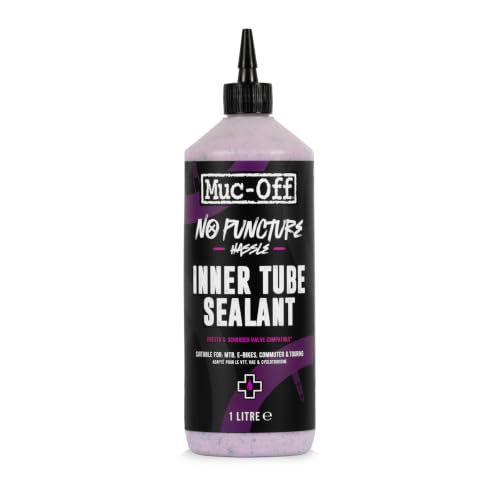
Muc-Off Inner Tube Sealant
What We Like
- Seals large punctures up to 4mm wide
- Easy to dispense with included filling tube
- Works for MTB, Road, eBike, and commuter use
Trade-offs
- Requires a removable valve core for installation
- 1-liter bottle weighs 2.3 pounds, less portable
A sealant that handles 4mm holes means you can confidently ride over debris that would stop most other riders in their tracks. This is the core appeal for anyone tired of frequent flats, especially on rough commutes or aggressive mountain bike trails. The formula is engineered to last the entire life of your tube, which translates to a true ‘set and forget’ application without needing frequent top-ups. It’s a solid choice for cyclists who want maximum puncture protection without constant maintenance.
This sealant works only with inner tubes that have a removable valve core, so it won’t fit some simpler tube designs. The formula is designed for tubes, unlike some general-purpose options. For riders who want strong puncture protection and don’t mind checking their valve type, this targeted approach makes sense.
Joe's No Flats Super Sealant

What We Like
- Clear packaging and applicator for easy valve insertion
- Official supplier to UCI World Cycling Center and pro teams
- Effective in tubeless tires, tubulars, and inner tubes
Trade-offs
- Seals holes up to 6mm, which may not handle larger punctures
Joe’s No Flats Super Sealant is formulated for high-volume, low-pressure tires in the 20-70 PSI range, making it a natural fit for gravel and mountain bike setups where tire compliance is critical. The sealant handles punctures up to a quarter-inch, a solid capacity for typical trail debris, and its clear packaging with a dedicated applicator top simplifies injection through a valve stem. This combination of targeted pressure compatibility and user-friendly design suits riders who prioritize a straightforward, professional-grade solution for off-road conditions.
Joe’s No Flats Super Sealant is officially supplied to UCI World Tour teams, indicating a level of trust at the professional cycling level. The clear 125ml packaging with an applicator top makes the product visible and simplifies adding sealant through a valve. With a shelf life of three years unopened, riders can keep a spare on hand without worrying about it expiring quickly. This sealant is formulated for high-volume, low-pressure tires like those on mountain and gravel bikes, operating effectively within a 20 to 70 PSI range.
Product photos
FlatOut QuickStrike Tire Sealant

What We Like
- Seals large 1/4-inch tread punctures
- Kevlar reinforcement for strong seal
- Latex-free, water-washable formula
- Works for both tubed and tubeless setups
Trade-offs
- Not recommended for passenger vehicle tires
- Specific small-tire formula limits use on wider tires
A sealant that handles 1/4-inch punctures means you can ride over most debris without an immediate stop. The Kevlar fibers create a reinforced patch, which is ideal for riders who encounter sharp rocks or thorns on trails. This one-time application lasts the tire’s life, so you avoid the frequent top-offs some formulas require. It’s built for cyclists who want maximum protection from large punctures and value a clean, latex-free sealant that washes out with water.
With a 16-ounce volume, this sealant offers substantial coverage compared to compact options like Stan’s 2-ounce bottle, making it suitable for multiple applications across a fleet of compatible vehicles. The formula is intended for tires under 3.5 inches wide, including bikes, scooters, and one-wheels, so it’s not a universal choice like the Slime product listed as suitable for all bicycles.
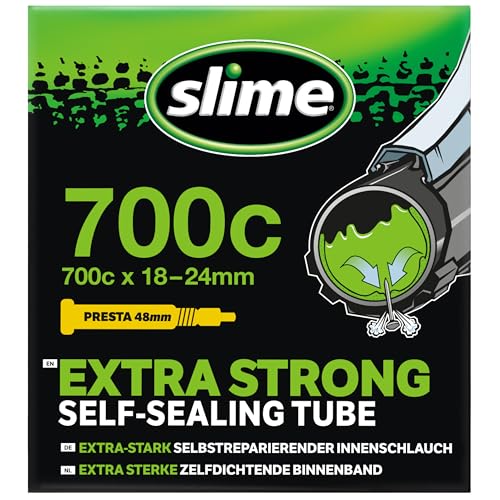
Slime Self-Sealing Smart Tube
What We Like
- Pre-installed sealant provides immediate puncture protection
- Seals tread area punctures instantly and repeatedly
- Designed for road bike use with a Presta valve
- Offers up to two years of flat prevention
Trade-offs
- Limited to road bike tires sized 700 x 19-25mm
- Only seals punctures in the tread area, not the sidewall
A tube pre-filled with sealant that provides up to two years of instant, repeated puncture protection means you can install it and largely forget about flats from common road debris. This makes it a straightforward choice for road cyclists who prioritize reliability and want a set-and-forget solution without the mess of adding sealant themselves. It suits riders looking for a simple, integrated defense against tread punctures on their daily or performance road bike.
Sealing protection is built directly into the tube, so you avoid the separate step of adding liquid sealant. This pre-installed Slime sealant is designed to seal punctures in the tread area for up to two years. The tube fits a specific range of 700 x 19-25mm road bike tires, making it a dedicated solution rather than a universal one.
Product photos
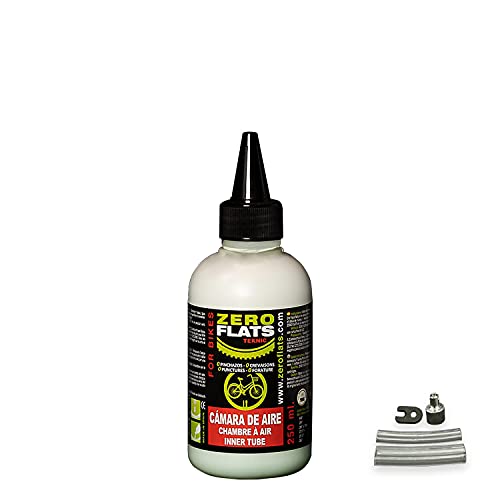
ZeroFlats Teknic Anti-Puncture Sealant
What We Like
- Permanently seals punctures up to 5mm
- Biodegradable formula washes off easily
- Includes tools for both valve types
- Prevents flats with negligible air loss
Trade-offs
- Not for car or motorcycle tires
- Requires checking every 4-8 months
- Bottle must be kept from freezing
An ultra-fast moving liquid that permanently seals punctures up to 5mm means you can keep riding with minimal air loss. This sealant is ideal for cyclists who prioritize a clean, environmentally friendly maintenance routine. Its biodegradable formula rinses off with water and doesn’t clog valves, so cleaning your bike or topping off the sealant is a straightforward job. The included tools for both Presta and Schrader valves make installation simple right out of the bottle.
This sealant requires checking and potentially replacing it every 4 to 8 months, so it’s not a completely set-and-forget solution. ZeroFlats Teknic is formulated as a biodegradable, ammonia-free liquid that rinses easily with water and leaves no permanent residue. For riders who prioritize a clean workshop and easy application without staining their tires or clogging valves, this focus on a mess-free, environmentally friendly product is a key advantage.
Product photos
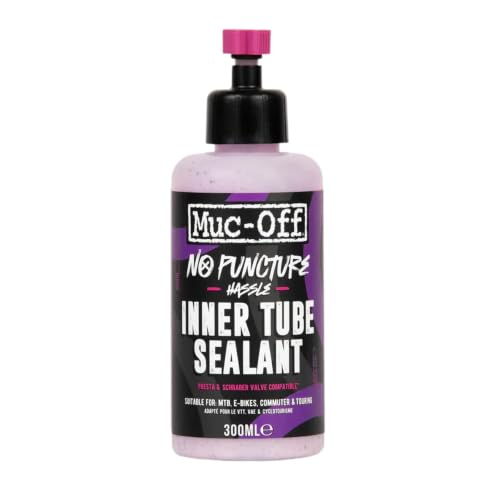
Muc-Off No Puncture Hassle Sealant
What We Like
- Seals multiple punctures up to 4mm
- One application lasts the entire tube life
- Non-corrosive formula works in extreme temperatures
- Easy to use with included filling tube
Trade-offs
- Requires a removable valve core for installation
- Larger 300ml bottle is less portable than smaller 2oz sealants
A sealant that lasts the entire life of your inner tube means you can install it and essentially forget about it, which is a huge relief for commuters and everyday riders who want maximum uptime. The Muc-Off formula is engineered to handle temperatures from freezing cold to blistering heat without drying out, making it a reliable, set-it-and-forget-it solution. Its ability to seal holes up to 4mm tackles most common road debris, keeping your ride uninterrupted from thorns, glass, and small wires.
The trade-off is that you need a tube with a removable valve core to install it, which rules out some older or basic tubes. Compared to a smaller, more portable option like Stan’s NoTubes 2oz sealant, the Muc-Off 300ml bottle is a bulkier initial purchase better suited for protecting a single bike long-term or a small fleet. For riders who frequently switch bikes or want a tiny emergency kit, the larger size might be less convenient.
How We Evaluated Bicycle Tube Tire Sealants
Our research centered on comparing manufacturer claims about sealing capacity, intended use, and formula longevity against findings from expert round-ups and consistent feedback from actual users. We prioritized real-world performance factors over marketing claims.
Key criteria included maximum puncture size sealed, compatibility with tubeless or inner tube systems, and the expected maintenance interval. We also weighed practical factors like ease of installation and whether the formula is messy or easy to clean, as these details affect the user experience.
This is a research-based evaluation; we did not conduct physical product testing. Our conclusions are drawn from a synthesis of available technical data, expert analysis, and aggregated user reports to identify reliable patterns.
What To Look For In Bicycle Tube Tire Sealants
Choosing a sealant involves more than grabbing the first bottle you see. You need a formula that matches your tire system, riding style, and tolerance for maintenance. A sealant that works for a road bike’s high pressure may not be ideal for a mountain bike’s low-pressure, high-debris environment.
Look for a sealant that specifies its maximum puncture size, confirms compatibility with your tire type (tube or tubeless), and details its expected lifespan before requiring a refresh. Portability and ease of application are secondary but practical concerns.
Sealing Capacity
The most critical spec is the maximum puncture size a sealant can seal, typically measured in millimeters or fractions of an inch. Common small punctures from thorns or glass are often under 2mm, which most sealants handle. For riders on rough trails who risk larger gashes, seek a formula rated for 4mm or more, like those with Kevlar reinforcement. Our research shows that the performance of tire sealant can vary significantly based on this capacity.
Tire System Compatibility
Sealants are formulated for specific applications. Some work exclusively in tubeless tires, while others are designed for inner tubes or are universal. Using a tubeless-specific sealant in a tube can sometimes lead to clogging or imbalance. Always verify compatibility. Understanding the differences between tubeless and tube systems is essential before selecting a sealant, as installation methods differ.
Longevity and Maintenance
A “set-and-forget” sealant that lasts a full season is convenient, but many require checking and refreshing every few months, especially in dry climates where they dry out faster. Latex-based formulas often seal quickly but may dry out sooner, while some synthetic blends offer longer life. Factor in the recommended sealant refresh interval for your chosen product as part of your seasonal bike maintenance.
Practical Application
- Installation Method: Check if you need a removable valve core or a special injector tool. Some bottles include a filling tube.
- Cleanup: Biodegradable, water-washable formulas are much easier to handle during installation or when changing a tire.
- Portability: For trailside repairs, a small 2oz bottle is ideal. For home garage use on multiple bikes, a larger 1-liter bottle offers better value.
- Storage: Some formulas must be kept from freezing; others are rated for extreme temperatures.
A reliable bike repair kit is still a necessary backup, as no sealant can fix every type of tire damage, like a torn sidewall.
Bicycle Tube Tire Sealants Compared
The table below provides a side-by-side comparison of key features for all eight sealants.
| Product | Seals Holes Up To | Protection Duration / Lifespan | Volume / Bottle Size | Compatibility |
|---|---|---|---|---|
| Slime Bike Tube Puncture Repair Sealant | Up to 1/8" (3mm) | Two years continuous | 8oz bottle | All bicycles, dirt bikes, wheelbarrows |
| Stan's NoTubes Tire Sealant | Up to 6 mm | N/A | 2oz | All tires and tubes |
| Muc-Off Inner Tube Sealant | 4mm | Lasts life of inner tube | 1 Liter | Tires with removable valve cores |
| Joe's No Flats Super Sealant | 6mm (0.25 inches) | 6-8 months | 125ml | Tubeless tires, tubulars and tubes |
| FlatOut QuickStrike Tire Sealant | 1/4 inch | One-time for tire life | 16 Ounce Bottle | Tires less than 3.5 inches |
| Slime Self-Sealing Smart Tube | Instantly and repeatedly seals punctures | Up to 2 years | Pre-installed | 700 x 19-25mm |
| ZeroFlats Teknic Anti-Puncture Sealant | Up to 5mm | After 4-8 months | 250ml | Tires with Inner Tubes |
| Muc-Off No Puncture Hassle Sealant | 4mm | Lasts inner tube life | 300ml (10 fl oz) | Removable valve core |
Frequently Asked Questions
Which bike tire tube sealant is best?
The best sealant depends on your primary need. For versatile, long-lasting protection in standard inner tubes, the Slime Bike Tube Puncture Repair Sealant is an excellent all-around choice. For sealing the largest possible holes, consider the Muc-Off Inner Tube Sealant or the Kevlar-reinforced FlatOut QuickStrike Tire Sealant.
Can I use tire sealant in my bike tubes?
Yes, but you must use a sealant specifically labeled as compatible with inner tubes. Universal sealants like Stan’s NoTubes are formulated for both systems. Using a tubeless-only sealant in a tube can lead to clogging or imbalance, as the sealant may not distribute properly around the inner tube.
Which is better, Stans or Orange Seal?
Both are highly regarded universal sealants. Based on expert analysis, Stan’s is often noted for its low viscosity and efficient sealing of smaller holes, while Orange Seal’s Endurance formula prioritizes a longer lifespan between refills. Your choice may come down to prioritizing immediate sealing power versus maintenance intervals for your tubeless sealant setup.
Can you use tire sealant on tube tires?
Absolutely. Many sealants, including our top picks from Slime and Stan’s, are designed to work in traditional tube-type tires. The key is ensuring the product specifies tube compatibility on its label. This application is a proven method for adding preventative flat protection to any bike with inner tubes.
What is the longest-lasting bicycle tire sealant?
Formulas that advertise a single application or protection for the life of the tube tend to last the longest. The Muc-Off No Puncture Hassle Sealant is specifically marketed for this, with one application lasting the entire tube life. For off-road riders, a dedicated mountain bike sealant like Joe’s No Flats also offers substantial, long-term protection.
The Bottom Line
For most cyclists adding flat protection to inner tubes, the Slime Bike Tube Puncture Repair Sealant is the best overall choice due to its proven Fibro-Seal technology and two-year protection claim. It’s a versatile, reliable staple for commuters and recreational riders alike.
If you need to seal large punctures, choose the Muc-Off Inner Tube Sealant. For the convenience of a pre-sealed tube, the Slime Self-Sealing Smart Tube is ideal for road bikes. Gravel and mountain bikers should look to the pro-endorsed Joe’s No Flats Super Sealant.
Ultimately, matching the sealant’s maximum puncture size to the threats on your regular routes is the single most important factor for a flat-free ride. No sealant is a substitute for a proper understanding of how tire sealants work and carrying a basic repair kit for sidewall tears or valve failures.
