
How to Check Tire Tread Depth: Step-by-Step
This post contains affiliate links. As an Amazon Associate, we earn from qualifying purchases.
Check your tire tread depth by measuring the distance from the top of the tread rubber to the bottom of the groove in 32nds of an inch. The federal minimum is 2/32 of an inch. Use a tread depth gauge for accuracy, the penny test for a quick check, or inspect for the tread wear indicator bars molded into the grooves.
That 2/32-inch mark isn’t just a suggestion. It’s the line where the 49 CFR tire regulation says your tire fails inspection. The difference between 4/32 and 2/32 is significant, as wet-road braking begins declining noticeably at 4/32. A key part of maintenance is knowing how to check tire tread depth.
What follows: the exact federal inspection procedure, why manufacturers like Michelin tell you to replace tires before you hit the legal limit, and how to read the wear patterns that tell you more about your car’s health than the tread depth number ever will.
Key Takeaways
- The federal legal minimum tread depth is 2/32 of an inch. Driving on tires at or below this depth is illegal in most states and significantly reduces wet-weather safety.
- For a precise measurement, use a tread depth gauge. Check the inner, center, and outer tread ribs at three spots around the tire because wear is never even.
- If you can see all of Lincoln’s head in the penny test, your tread is at or below 2/32″. If the tread touches Washington’s head in the quarter test, you have about 4/32″ left.
- Tread wear indicator bars are molded into the grooves. When the tread surface wears flush with these bars, the tire has reached the 2/32″ minimum and must be replaced.
- Age matters as much as depth. The NHTSA tire safety pamphlet notes that some manufacturers recommend replacing tires six to ten years old, regardless of tread depth.
The Federal Minimum and How to Measure It
The rule is printed in the Code of Federal Regulations. Title 49, Section 570.9 states the tread on each tire shall be not less than two thirty-seconds of an inch deep. That’s 2/32″. It’s not a recommendation. It’s the line where a tire is considered worn out for passenger vehicle inspection purposes.
Passenger car tires have tread depth indicators that become exposed when tread depth is less than two thirty-seconds of an inch. Inspect for indicators in any two adjacent major grooves at three locations spaced approximately equally around the outside of the tire. For vehicles other than passenger cars, it may be necessary to measure tread depth with a tread gauge. , eCFR, 49 CFR 570.9
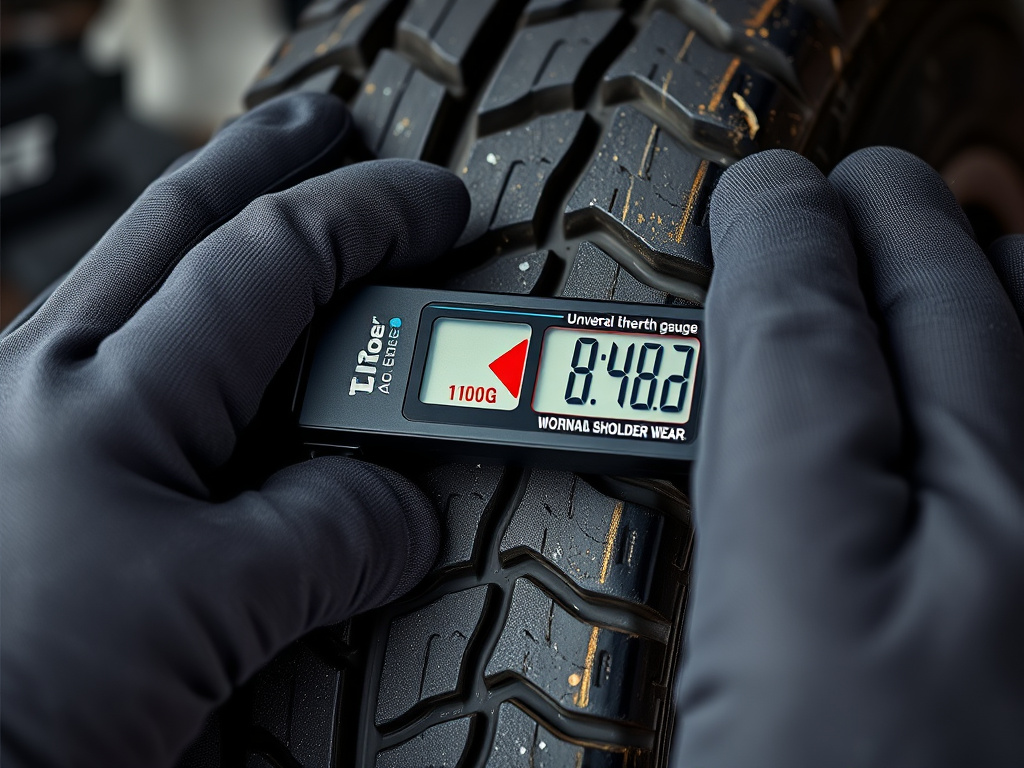
That’s the official inspection method. Your job is to find those indicators or measure with a tool when you compare a how to check tire tread depth. For most of us, that means a tread depth gauge. A basic mechanical gauge costs a few dollars and measures in 32nds of an inch.
How to use a tread depth gauge:
- Press the gauge’s probe down into the deepest part of a tread groove until the base rests flat on the tread ribs.
- The measurement stem will extend, showing the depth. Read the number on the scale.
- Take a measurement in the inner, center, and outer tread ribs. Do this at three spots around the tire’s circumference, front, middle, and back of the tread patch.
A single reading is useless. Tires wear unevenly. The inside edge often wears faster if your alignment is off. The center can wear faster if you chronically over-inflate. You need the full picture.
| Gauge Reading (in 32nds) | Depth in Inches | What It Means |
|---|---|---|
| 10/32″ – 12/32″ | 0.31″ – 0.38″ | New tires start with a much deeper tread than the legal minimum. |
| 6/32″ – 8/32″ | 0.19″ – 0.25″ | |
| 4/32″ | 0.13″ | At 4/32″, some manufacturers and safety organizations recommend planning for replacement, especially if you drive in rain regularly, as wet-road braking performance declines. |
| 2/32″ | 0.06″ | At 2/32″, the tire has reached the federal legal minimum for tread depth and should be replaced. |
For an accurate measurement with a tread depth gauge, press the base down firmly on the solid tread rubber.
The Quick Coin Tests (Penny and Quarter)
Not everyone has a gauge in the glove box. The coin tests are the backup plan for the how to check tire tread depth process every driver should know. They’re imprecise, but they give a clear pass/fail signal.
The Penny Test
Grab a penny. Insert it into a tread groove with Lincoln’s head upside down and facing you. If you can see all of Lincoln’s head, your tread depth is at or below 2/32 of an inch. The tire needs to be replaced immediately.
If any part of Lincoln’s head is covered by the tread, you’re above the legal minimum. The BFGoodrich inspection guide notes this means you have a legal and safe amount of tread remaining.
The Quarter Test
This is the early warning system. Take a quarter and insert it into a groove with Washington’s head facing down. If the tread rubber touches the top of Washington’s head, you have at least 4/32 of an inch of tread left.
Where this goes sideways: Only checking one spot. Tread wear is rarely even. You must perform the test in the shallowest groove you can find on the tire, using the penny test method. A pass in the center doesn’t mean the inner edge isn’t already worn to the legal minimum.
The quarter test is useful because 4/32″ is a critical threshold. The Michelin tread depth guide states that wet-road braking begins declining noticeably at 4/32″. If you drive regularly in rain, this is your trigger to start shopping, not the 2/32″ legal limit.
Finding and Reading Tread Wear Indicator Bars
Built into every modern tire is a simpler gauge. Look into the main circumferential grooves, the deep channels that run around the tire. You’ll see raised rubber bars molded into the bottom, perpendicular to the groove direction. These are the tread wear indicator bars.
They are set at a height of 2/32 of an inch from the bottom of the groove. When the tire was new, these bars sat well below the tread surface. As the tire wears, the tread rubber gets thinner. When the tread surface wears down to become even with these bars, the tire has reached the legal minimum. It’s a visual “replace now” signal.
On some tires, like Michelin’s, the location of these bars is marked on the sidewall by a small Michelin Man symbol. Some tires have more advanced visual wear indicators.
Why this method is foolproof: It’s built in and can’t be misread like a coin test. If the bar is even with the tread anywhere across its width, that spot is at 2/32″. It’s the method referenced directly in the federal tire tread standard.
What Your Tread Wear Pattern Tells You
The depth number is one thing. The pattern of wear across the tire’s face is a diagnostic report on your car’s suspension, alignment, and your inflation habits. Checking multiple spots isn’t just for an accurate average, it’s to catch these problems early.
| Wear Pattern | Where You See It | Likely Cause | The Fix |
|---|---|---|---|
Spotting these patterns during a regular inspection can save you a set of tires. Use a monthly tire safety checklist as a guide.
When Depth Isn’t the Whole Story: Age and Damage
Tread depth is the primary metric, but it’s not the only one. Two tires can measure 6/32″ and have radically different safety profiles.
Tire Age
The NHTSA TireWise tire guide is clear: as tires age, they are more prone to failure. Some vehicle and tire manufacturers recommend replacing tires that are six to ten years old, regardless of treadwear. You find the age by decoding the DOT Tire Identification Number (TIN) on the sidewall. The last four digits are the week and year of manufacture. “0321” means the third week of 2021.
After six years, the rubber compound begins to harden and lose elasticity, even if the tire has been stored. This reduces grip and increases the risk of cracking. An eight-year-old tire with 5/32″ of tread is often a worse bet than a three-year-old tire with 4/32″.
Physical Damage
The eCFR regulation also mandates that tires be free from conditions that evidence internal failure. This includes:
- Cuts or cracks deep enough to expose the cord layer.
- Bulges or bubbles in the sidewall or tread, which mean the internal cords are broken.
- Cords or belting materials that are exposed.
A bulge means replace immediately. Do not drive on it. A tread puncture up to 1/4 inch away from the shoulder is usually repairable. A sidewall puncture never is. This damage trumps tread depth. A brand new tire with a sidewall bubble is junk.
This is why a complete check is more than a reading from a tread depth gauge. It’s a visual inspection of both sidewalls and the tread face for embedded objects, cracks, and irregularities. Do this when you check pressure.
How Deep is the Tread on a Brand New Tire?
Brand new tires start with a much deeper tread than the legal minimum. While the federal safety standard requires replacement at 2/32 of an inch, a fresh tire will have significantly more rubber. This extra depth is what provides effective water evacuation and grip when the tire is new. Over time, driving wears this material down. The built-in treadwear indicators, which are raised bars molded into the bottom of the grooves, are set at the 2/32-inch level. When the tread surface wears down to become even with these bars, the tire has reached the legal wear limit and must be replaced for safety.
Frequently Asked Questions
What is the easiest way to check tire tread depth?
The penny test is the easiest method. Insert a penny into the tread groove with Lincoln’s head upside down. If you see all of his head, your tread is at or below 2/32″ and needs replacing. For more precision with the same simplicity, use a quarter. If the tread touches Washington’s head, you have at least 4/32″ left.
Should tires with 5/32 tread be replaced?
At 5/32″, the tread depth is above the legal minimum. However, for optimal wet or winter performance, some sources recommend considering replacement at 4/32″.
Are 7 year old tires with good tread still good to use?
It depends. The tread depth might be fine, but the rubber compounds degrade with age. The NHTSA and many manufacturers recommend considering replacement at 6–10 years regardless of tread. Inspect them closely for sidewall cracking (tiny hairline cracks are normal, deep cracks are not) and have them assessed by a professional if you’re unsure. Age is a separate risk factor from wear.
How often should I check my tread depth?
The NHTSA recommends checking at least once a month when you check tire pressure. Goodyear suggests checking every 3,000 miles or once tread reaches 4/32″ deep. Make checking tread depth part of your regular vehicle maintenance routine, using a tire safety checklist as a guide. Definitely check before any long road trip.
The Bottom Line
Start with the gauge, not the penny. A tread depth gauge gives you the number that matters, and checking multiple spots shows you the wear pattern that tells you why your tires are wearing. The 2/32″ legal minimum is a failure point, not a goal. If your climate sees rain, treat 4/32″ as your personal replacement trigger.
A tire with internal damage like a sidewall bulge is dangerous and should be replaced immediately, regardless of its tread depth. Your monthly five-minute inspection should cover depth, pressure, and a full visual scan. That habit beats any coin test.
When it is time to replace tires, check the DOT date on the new ones to know their age. Numbers first, marketing later.
