
How to Read Bike Tire Sizes: Which Numbers Match Your Rim?
This post contains affiliate links. As an Amazon Associate, we earn from qualifying purchases.
To learn how to read bike tire sizes, find the ETRTO code on the sidewall: 37-622 means 37 mm width and 622 mm bead seat diameter. The second number must match your rim. Inch names like 29 x 2.10 are approximate. French labels like 700 x 35C hide the same 622 mm rim size behind a letter.
That bead seat number is the physical fit line, while width changes the ride feel. I treat ETRTO as the buying key, and I treat inch and French labels as clues that need decoding.
What follows: where to find the code, how to read bike tire sizes in ETRTO, inch, and French markings. It also covers the checks that keep a wrong tire off your wheel.
Key Takeaways
- ETRTO is the match key: the second number, such as 622, is the rim bead seat diameter.
- 26-inch is vague: Schwalbe lists 559 mm, 571 mm, and 590 mm tires under that name.
- Sidewall max isn’t your target: Michelin says the sidewall number is the maximum safe pressure, not the recommended pressure.
- Three years is a real cutoff: Continental says replace tires, tubes, and rim strips after three years, even with low mileage.
- Check before you leave: read the installed tire’s sidewall so a wrong size never rolls out of the shop.
Where the size lives on the tire sidewall
Raised numbers near the rim edge are the first place I look. They are molded into the rubber instead of a sticker. The code may sit in a recessed band, so a low-angle light helps. ETRTO (the European tire and rim standard) is the clearest code.
Michelin says bike tire size is displayed on the tire sidewall. Michelin’s bicycle tyre sizes guide explains the three measurement families. The same habit behind reading a tire size code applies here: read the molded code before you trust the name.
For the broader guide to reading a tire sidewall, the molded codes last longer than stickers.
The ETRTO code uses two numbers separated by a dash, such as 37-622. The first number is the tire width in millimeters. The second number is the inner bead seat diameter in millimeters, the value needing rim match. Inch and French labels describe the same tire, but are less precise for rim matching.
The three code families on one tire
Many tires print ETRTO, inch, and French labels together. I use the ETRTO line first, then compare the others. Schwalbe says ETRTO is unambiguous and allows clear assignment to the rim size.
Michelin says road bike sizes are generally expressed in metric measurements. Mountain and city tires often use inch labels. The French label, such as 700 x 35C, gives approximate outside diameter and width, with a letter hinting at the inside diameter.
Which number should you use to buy a bike tire online?
Schwalbe says the ETRTO designation, such as 37-622, gives the width in millimeters and the inner diameter in millimeters. The current international standard for these markings is ISO 5775-1:2023, the tire designation standard. I type the ETRTO number into the search box, not the inch name. This is how to read bike tire sizes for online buying.
Before you start: A non-matching tire and rim can cause sudden tube failure or tire detachment, with a risk of accident, per Continental. From 5 bar (72.5 PSI), hooked-bead rims are required, per Continental. Check the bead seat number first, then confirm the rim is a hooked-bead rim if your tire needs 5 bar or more.
| ETRTO example | What it means | Common use |
|---|---|---|
| 23-622 | 23 mm width, 622 mm bead seat | road tires |
| 25-622 | 25 mm width, 622 mm bead seat | road and gravel |
| 28-622 | 28 mm width, 622 mm bead seat | road and touring |
| 37-622 | 37 mm width, 622 mm bead seat | city and touring |
Step-by-step buying match
- Read the ETRTO code from the old tire or rim. If the code is gone, Continental says a calliper can measure rim width from one hooked edge to the other. Skipping this can result in the wrong diameter.
- Match the second number to the rim bead seat diameter. Schwalbe notes the second ETRTO number (622) must match the rim’s bead seat diameter. If the diameter is wrong, the tire may not seat.
- Check width against rim width. Michelin says the first ETRTO number is width at a given pressure and rim width. Michelin says the ETRTO width is measured at a given pressure and rim width. Skipping this can change handling and brake clearance.
- Use the ETRTO number in the search box. Schwalbe says 26-inch can cover 559 mm, 571 mm, and 590 mm rims. Using the inch name alone can buy the wrong rim size.
- Confirm tubeless wording only if your rim system needs it. REI says look for the ‘UST’ (Universal System Tubeless) designation. A non-tubeless tire won’t seal without a tube.
The matching tire to rim page explains why width must fit the rim’s internal dimensions. The tire name alone doesn’t do that.
Why can 26-inch mean three different rims?
559 mm, 571 mm, and 590 mm can all be called 26-inch, per Schwalbe. 622 mm and 635 mm can both be called 28-inch. 630 mm can be called 27-inch.
The inch label describes approximate outside diameter. It doesn’t give the rim seat. Schwalbe’s tire size FAQ lists those overlaps.
If you need the physical outer size, the overall tire diameter page helps you figure the approximate outside measurement.
Decimal inch versus fractional inch
Michelin says imperial sizes look like 29 x 2.10 or 29 x 2.25. The first number is overall diameter, and the second is width.
Michelin says imperial sizes look like 29 x 2.10 or 29 x 2.25, where the second number is the width in inches. Some labels use fractions, such as 22 x 1 3/8 x 1 1/4.
In that three-number form, the first number is overall diameter, the second is tire height, and the third is width.
| Inch label | What it states | Why it can mislead |
|---|---|---|
| 29 x 2.10 | approximate overall diameter and width | the rim seat number is hidden |
| 29 x 2.25 | same first number, wider tire | outer diameter changes with width |
| 28 x 1 5/8 x 1 3/8 | outer diameter, height, width | approximate customs, not rim fit |
I ignore the inch name when I buy, because a wider tire can change the outer diameter while the rim stays the same.
What does the C in 700c mean?
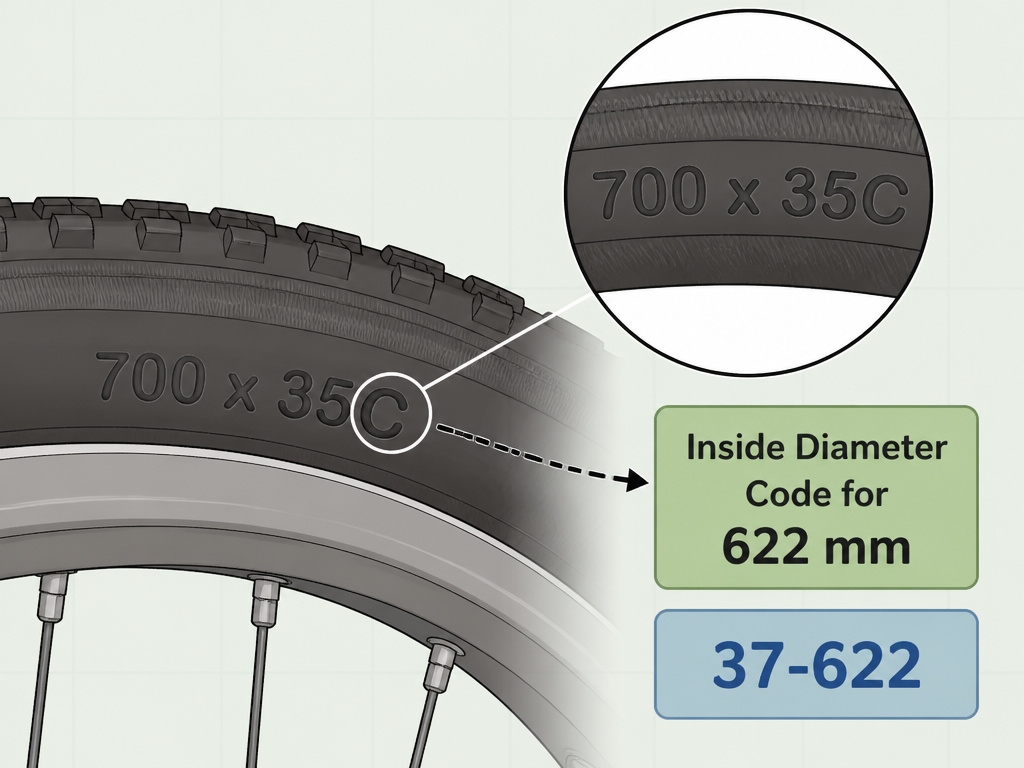
The 700 in 700 x 35C is an approximate outside diameter in millimeters, per Schwalbe. The C is the letter code for the inside diameter: C stands for 622 mm, per Schwalbe.
Michelin says road bike sizes are generally expressed in metric measurements, and MICHELIN road racing tires list the 700mm diameter first. The letter is a clue.
It isn’t a buying spec. I still need the ETRTO number.
I wouldn’t rely on a French label to match a rim. Use the ETRTO number beside it, because the letter only hints at the inside diameter.
Why 700c still means 622
Schwalbe says 700 x 35C and 37-622 use the same 622 mm inner diameter, so they can theoretically mount on the same rim. The French label doesn’t exist for all sizes.
Schwalbe says B, for example, isn’t used for MTB sizes in the 700 sizes. For a broader look at bike tire types, see how road, mountain, and hybrid designs choose width and tread.
Common labels by bike type:
- Road and gravel often show 700 x 32C, or ETRTO 25-622 and 28-622.
- Mountain and city often show inch labels, such as 29 x 2.10 or 29 x 2.25.
- Kids’ bikes: typical diameters are 20-inch and 24-inch, per REI.
Match tire width to rim width
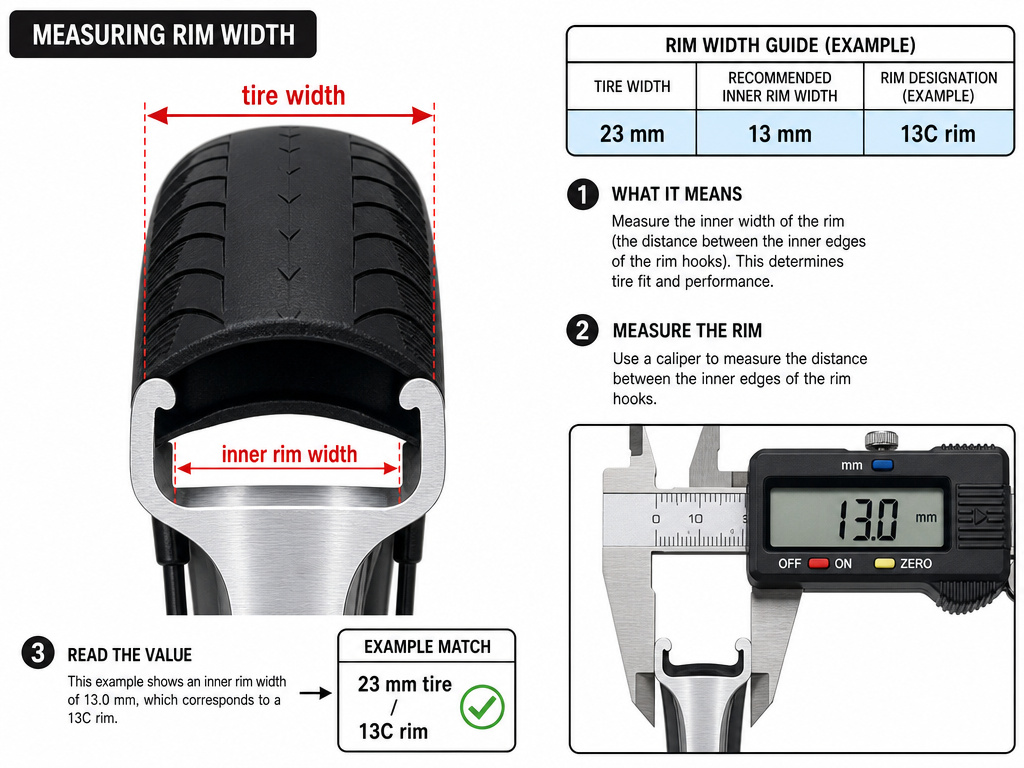
Two numbers decide fit: bead seat diameter and rim width. Continental’s mounting instructions include a rim width table for clincher and folding tires. The table pairs nominal tire width with inner rim width, such as 23 mm with 13C or 15C hooked-bead rims.
Michelin says the ETRTO width is measured at a given pressure and rim width. That means the same printed width can look different on different rims. I check the rim width before I worry about the tire’s advertised width.
When width changes the fit
A wider tire can touch a frame or fork. Michelin says different sizes can work if the difference is negligible. But if you want to change size, contact a certified professional or the bike manufacturer.
Continental warns that non-matching tire and rim combinations can cause sudden tube failure or tire detachment. I wouldn’t guess clearance from a catalog photo.
Pressure, storage, and wear checks after sizing
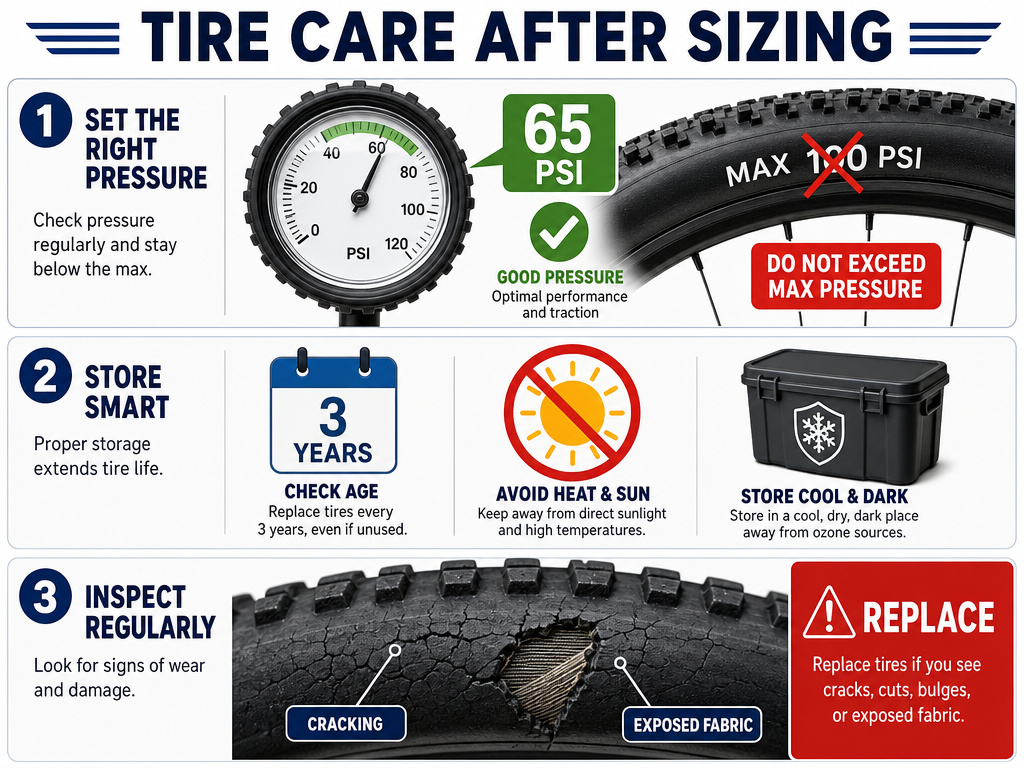
A perfect size still fails if the pressure is wrong. Michelin says never set pressure to match the sidewall number, because it is the maximum safe pressure. It isn’t the recommendation.
Michelin also says check pressure on cold tires. A tire that hasn’t been used for at least 2 hours gives an accurate reading. REI says tubeless tires can run down to 20 psi.
For the pressure side of the decision, the bike tire pressure guide covers how weight, tire width, bike specs, and conditions change the choice. I would rather run a wider tire at lower pressure than a narrow tire at the sidewall max, when the rim and frame allow it.
Before every ride
- Check tire pressure with a pump gauge, per Continental.
- Check the witness line to ensure the tire is properly seated, per Continental.
- Test the brakes in standing by pulling the levers firmly, per Continental.
Storage and age
- Continental says replace tires, tubes, and rim strips after three years, irrespective of mileage.
- Michelin says store tires in a cool, dry, clean, indoor place. If storage is one month or more, eliminate weight from the tires.
- Continental says don’t store in blazing sun or near heat, and keep tires sufficiently inflated during winter storage.
- A tire left flat for a long period can suffer structural damage, per Continental.
A tire with visible carcass fabric or cracking feels brittle and should be replaced, per Continental.
When the sidewall is unreadable
Can you still size a bike if the old tire is gone? Sometimes. Continental says measure rim width with a calliper from one hooked edge to the other when markings are no longer legible.
Michelin says contact a certified professional or the bike manufacturer if you want to change size. I wouldn’t guess from a photo.
If you are comparing old and new labels, the equivalent tire sizes page helps you avoid guessing by name.
Clean the code without ruining the tire
Michelin says wash tires with water or MICHELIN approved cleaning products only, because abrasive products may damage the tread or casing. Continental says don’t clean with solvents such as acetone, benzine, or thinner. I use water and a soft brush, then read the code before the rubber dries.
Tire size conversion chart or table
You won’t find a simple, universal conversion chart because the same inch label can hide different millimeter sizes. For example, tires labeled as 26-inch can have inner diameters of 559mm, 571mm, or 590mm. Tires called 28 inches might be 622mm or 635mm. This is why the ETRTO size, like 37-622, is the most reliable. The first number is the tire width in millimeters, and the second is the precise inner diameter in millimeters. To find a compatible tire, always match the ETRTO number, especially the second one for the rim diameter, rather than relying on inch names alone.
Common sizes by bike type (road, mountain, gravel, kids)
Different bike types tend to use different sizing conventions. For road bikes, tire sizes are generally expressed in metric measurements, often starting with a 700mm diameter. Mountain bike tires typically display their primary dimensions in inches. Gravel and city bikes may use either system. For kids’ bikes, typical wheel diameters are 20 inches and 24 inches, with smaller sizes available for very young children. Remember that a label like ’26-inch’ for a mountain bike can correspond to several different millimeter measurements, so checking the precise ETRTO code is the best practice for replacement.
Frequently Asked Questions
Is my bike 24 or 26 inch?
Use the ETRTO number, not the name. Schwalbe says 26-inch can cover 559 mm, 571 mm, and 590 mm bead seat diameters. If the tire has no code, measure the rim width with a calliper and ask the manufacturer.
What does 700c mean on a bike tire?
The 700 is an approximate outside diameter in millimeters. The C is a French letter code for the inside diameter, and Schwalbe says C stands for 622 mm. Michelin says road tires often use metric labels.
How can I tell what size bike tire I have?
Look for the ETRTO number, such as 25-622, on the molded sidewall code. Michelin says size is displayed on the tire sidewall. The ETRTO number, such as 25-622, is the clearest answer.
Is 29 and 700c the same size?
They can share the same 622 mm bead seat diameter. Schwalbe says 29-inch is an approximate outside diameter for wider mountain tires, while 700c is a French label. Check the ETRTO number before you assume fit.
Can I change my bike tire width?
Sometimes, if the difference is negligible, per Michelin. But rim width, frame clearance, and brake clearance matter. Michelin advises contacting a professional or the manufacturer, and Continental warns that mismatched tire and rim combinations can cause sudden failure.
Check It, Don’t Assume It
The fastest way to avoid a wrong bike tire is to read the ETRTO code before you order, and read it again before you leave. If the code is missing, measure the rim width with a calliper or ask the manufacturer. I would rather spend five minutes on a sidewall number than an hour chasing a tire that won’t seat.
If your tire is three years old, replace it even if the tread looks decent, per Continental. If the sidewall shows cracking, a visible thread pattern, or a distortion, stop using it now.
One final habit: check pressure on a cold tire, and never treat the sidewall maximum as your target.
