
Self Sealing Tires Pros and Cons: What the Specs Say
This post contains affiliate links. As an Amazon Associate, we earn from qualifying purchases.
Self sealing tires pros and cons are simple: a factory liner can seal small tread punctures, but it isn’t a permanent repair. The main limit is puncture size and location. A trained tire service technician must remove every suspect tire from the rim, inspect it inside, and repair or replace it.
That technician inspection is the part drivers miss. The sealant can hide a nail hole, yet the inner liner may still carry damage from low pressure or a prior puncture.
What follows: puncture limits, brand claims, repair steps, and the service rules that decide whether these tires help or hurt.
Key Takeaways
- Michelin Selfseal and Bridgestone B-SealS list a 6 mm (1/4 inch) tread puncture limit, while Volkswagen/Porsche and the Chinese standard GB/T 38510-2020 use a 5 mm limit.
- Continental uses a 1/4 inch threshold, while VW, Porsche, and GB/T 38510-2020 use a 5 mm limit, so the claim varies by source.
- Every suspect tire needs dismount for interior inspection, even if it holds air.
- Sealant is temporary, not a flat-proof solution and not a substitute for repair.
Self Sealing Tires Pros and Cons: How the Liner Works
A sealant tire starts with a factory-applied inner liner in the tread area. When a nail or screw penetrates that area, the liner closes around the object and limits air loss.
A sealant tire has a factory-applied inner liner in the tread area. When a nail or screw penetrates that area, the liner closes around the object and limits air loss. If the object leaves, the liner can seal the puncture channel, but the repair remains temporary and needs professional inspection.
The USTMA bulletin describes that liner as sticky and gum-like. VW and Porsche call it a self-adhesive, viscous layer from shoulder to shoulder. Those physical cues matter. Sticky doesn’t mean strong. Viscous doesn’t mean it survives low pressure.
The tire sealant drawbacks begin with that hidden nature. A sealed nail hole can look harmless while the liner hides prior damage.
The sealant layer is temporary
Porsche says self-sealing tires aren’t intended as a permanent tire repair solution. Continental says a specialist must promptly check a punctured tire. USTMA says repair punctures as soon as possible, even if no air loss shows.
Mounting can damage the liner
USTMA warns that rough handling during mounting or demounting can irreparably damage the sealant layer. That damage can reduce sealing and cause balancing issues. Store sealant tires like regular tires, per USTMA.
USTMA says sealant tires fit commonly available rim contours. Bridgestone says use standard inflation pressure for non-sealant tires. A sealant liner doesn’t add pressure. It only seals tread injuries, unlike self-inflating tires.
Are self-sealing tires worth it for a daily driver?
For a car with no spare, I lean yes. USTMA recommends keeping sealant tires on all positions for vehicles originally equipped with them. That matters when a jack, spare, and tools are not in the trunk.
Compared with run-flat pros and cons, a sealant liner doesn’t let you drive flat. VW and Porsche say the tire doesn’t support under-inflated or flat driving.
| Pro | Con | Sourced rule |
|---|---|---|
| No immediate roadside change | Temporary, not a repair | Continental allows continued travel; USTMA says repair soon |
| Same rims and pressure | Hidden damage risk | USTMA says check commonly available rims; GM says dismount |
| Natural rubber claim from Michelin | Repair limits and cost unknown | Michelin says natural rubber liner; sources do not give price |
When the convenience pays
If you commute a short distance and want fewer roadside stops, the convenience is real.
When to slow down
If you tow, haul, or drive in severe weather, check the load index and speed rating first. Rough handling during mounting can damage the sealant layer. USTMA says that can reduce sealing and cause balancing issues. Storage is ordinary. USTMA says sealant tires store like regular tires.
I won’t invent a price premium. The primary documents don’t quantify cost. Some utility setups use foam-filled tires, but that is a different hardware path.
Continental recommends using TPMS with ContiSeal. USTMA says a TPMS doesn’t replace a monthly gauge check. The documents don’t give a sealant lifespan. They do give a tire age limit.
Porsche’s Panamera bulletin says replace tires more than 6 years old. I have no owner-test data for sealant drying out, so I rely on the published age limit. Budget tires are fine for low-mileage commuters, but I wouldn’t skimp on tires for a family car. I wouldn’t chase the highest speed rating for a daily driver either.
What puncture size can a self-sealing tire actually seal?
This is where the spec sheets split. Michelin and Bridgestone say 6 mm (1/4 inch). Continental says 1/4 inch. VW, Porsche, and the Chinese standard say 5 mm. That split matters. A 5 mm limit and a 6 mm limit can decide whether a shop repairs or scraps a tire.
| Source | Claimed limit | Scope |
|---|---|---|
| Michelin Selfseal | 6 mm (1/4 inch) | Tread punctures |
| Bridgestone B-SealS | 6 mm (1/4 inch) | Temporary tread injuries |
| Continental ContiSeal | 1/4 inch | Nail-type tread damage |
| VW/Porsche | 5 mm | Foreign objects in tread |
| GB/T 38510-2020 | Not greater than 5 mm | Standard test scope |
The Chinese standard test method GB/T 38510-2020 tests at 250 kPa, freezes the tire for not less than 12 h, then checks after 24 h at room temperature. The NHTSA product information bulletin states B-SealS temporarily seals injuries up to 1/4 inch (6 mm).
Liquid sealant is different
Aftermarket tire sealants aren’t the same as a factory liner. A TUV Premium Seal test report measured leakage rates from 0.14 to 0.96 bar/min. The test used a 205/55 R16 Continental PremiumContact 2 with 600 ml of sealant.
The same report says liquid sealant sealed better when the puncture sat near 6 o’clock. That finding is about liquid sealant, not a factory liner. Even the best permanent sealant can’t replace a proper tire repair.
How do shops repair a self-sealing tire?
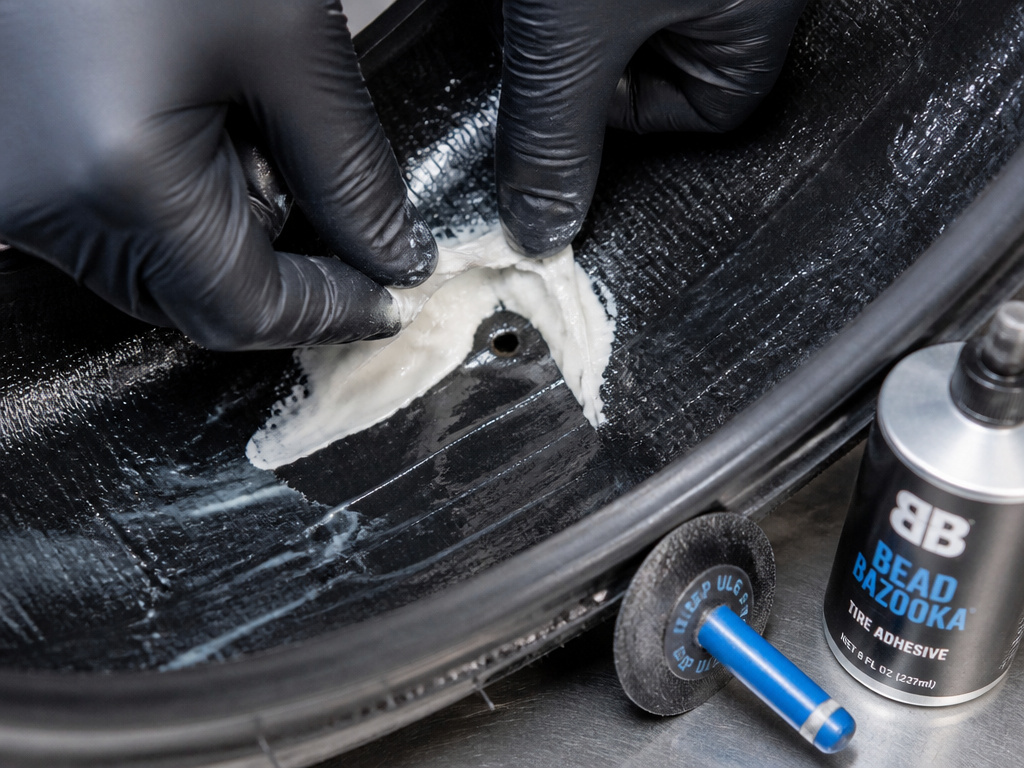
A shop can’t just plug it from outside. The Tire Information Service Bulletin 57 requires removing every sealant tire from the rim for interior inspection. GM says a trained tire service technician must inspect any Selfseal tire. Bridgestone says a tire service professional must inspect the tire to assess reparability.
Where this goes sideways: Ignoring a sealed puncture. USTMA says repair it as soon as possible to prevent further damage. Bridgestone says an improperly repaired tire can fail while in use.
Before you start: A sealed puncture can hide low-pressure damage. A detached liner can ruin balance. Only a trained tire service technician should dismount and inspect the tire.
For Michelin Selfseal, GM recommends using a one piece patch/stem unit. GM says replace the tire if the puncture is larger than that unit. The repair steps are strict. Skipping one can leave a path for air loss.
Michelin Selfseal steps
- Identify the puncture from the inside. This is the step that finds hidden prior damage.
- Bore the hole from the inside. Follow the object’s path, not the outside angle.
- Spread adhesive directly, without brushing. Let the adhesive dry. Brushing can disturb the adhesive layer.
- Insert the one-piece stem from the inside. Pull it smoothly from the outside. Jerking the stem can shift the plug.
- Roll the stem base from center to edge. Cut the outside part without pulling. Pulling breaks the seal.
Bridgestone repair limits
Bridgestone says low-pressure operation can cause run-flat damage. Speed, load, maneuvering, and temperature all affect reparability. Bridgestone adds its own steps. The shop must push B-Seal compound aside, clean the innerliner, then follow USTMA repair rules. The shop can reposition the compound over the repair area. Vehicle temporary mobility kits aren’t a substitute for proper repair. That process isn’t the same as airless tires, which have no air chamber to seal.
The NHTSA technical bulletin 2022 says a B-Seal tire isn’t repairable if the sealant is blistered, lifting, or detached.
- Blistered sealant: indicates low-pressure damage.
- Lifting sealant: the liner may not seal future punctures.
- Detached sealant: replace the tire.
Which brands offer self-sealing tires?
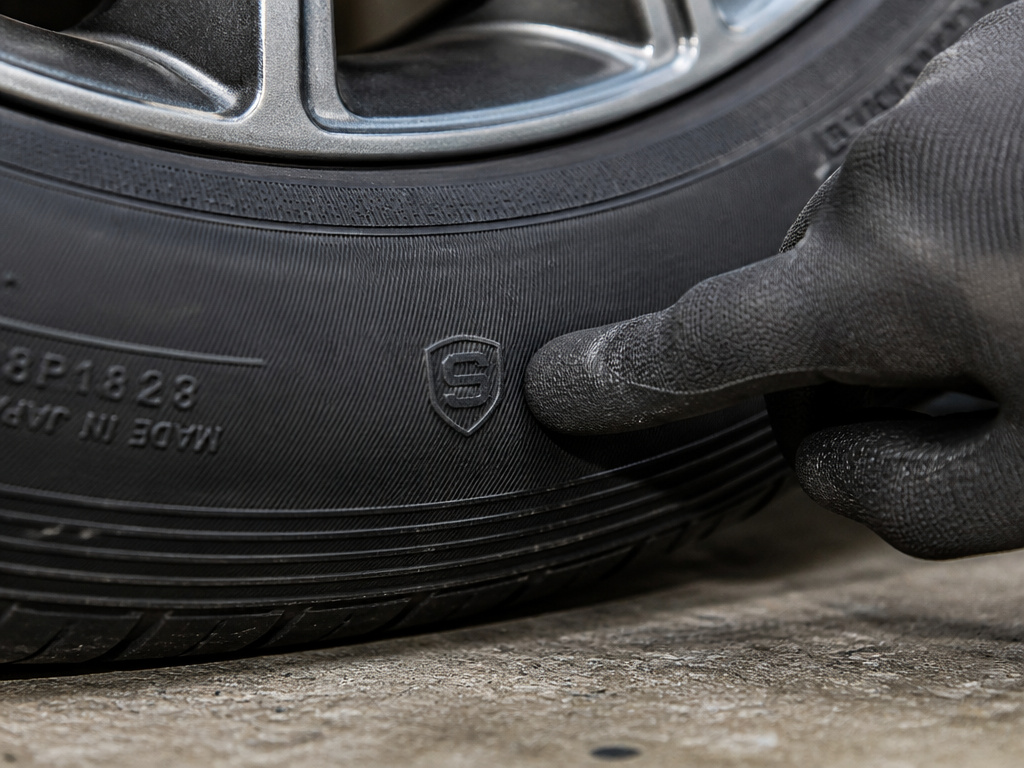
Michelin Selfseal appears on the Chevy Bolt. If your car came with one, I would match it with a Selfseal replacement. See it on Amazon.
Bridgestone B-SealS is a silicone-based rubber compound bonded to the innerliner. If you want a liner a shop can separate cleanly, ask about B-SealS. Check availability. Bridgestone says B-SealS can be used on any vehicle following standard application recommendations.
If you want a ContiSeal option, start with the OE fitment list, not a generic search. The product page on Amazon lists size options. Continental says driving performance remains identical to a non-sealant tire under normal operation.
Michelin says it has no impact on rolling resistance. The primary documents don’t cover disposal or recycling. That gap matters if you keep the tire for years.
Sealant tires carry a manufacturer symbol on the sidewall. Porsche’s Panamera bulletin says replace tires more than 6 years old. Read the sidewall first. The symbol matters more than the brochure.
- Check Primacy All Season or Energy Saver A/S fitments, then match the sidewall symbol.
- Ask about clean separation before choosing B-SealS.
- Start with the OE fitment list for ContiSeal sizes.
Self Sealing Tires vs Run Flat Tires
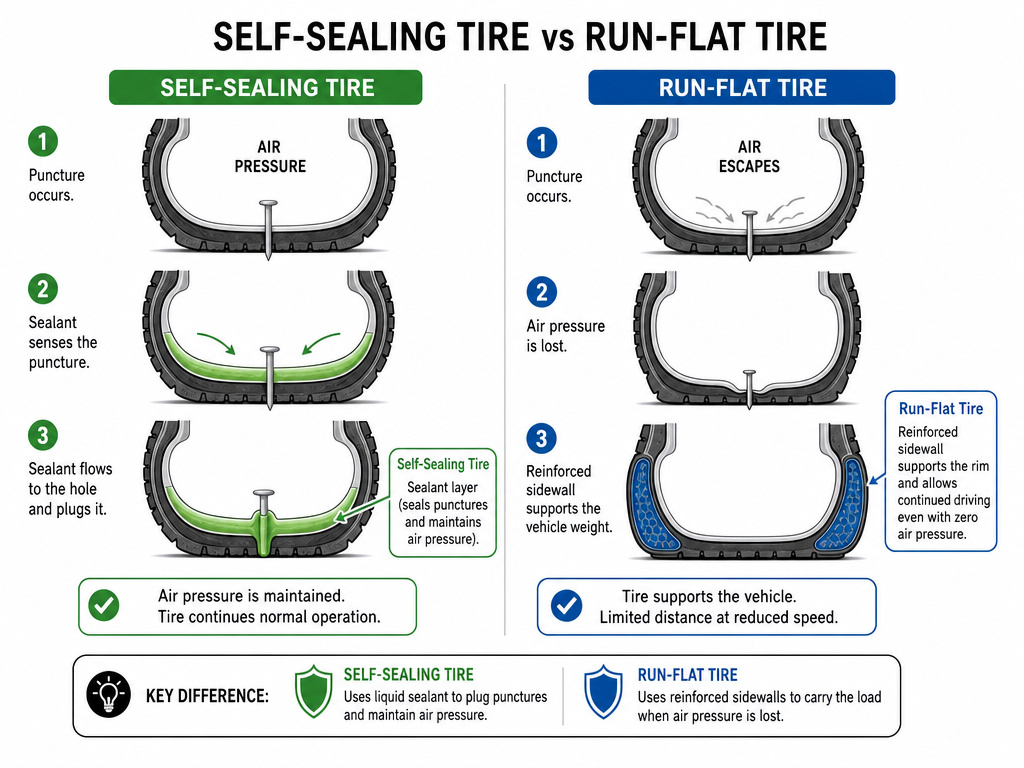
Self-sealing tires and run-flat tires solve the same problem differently. A self-sealing tire uses an internal sealant layer to plug a puncture as it happens, often allowing you to continue driving. Continental states it is not necessary to stop immediately for a tire change. Run-flat tires use a reinforced sidewall to carry the vehicle’s weight with little or no air pressure for a limited distance. The key difference is in the response. A sealed puncture still requires a professional inspection and repair as soon as possible, as the seal is a temporary fix. Run-flats are designed to get you to a service location without any immediate sealing action, but they also must be inspected and likely replaced after being driven deflated.
Frequently Asked Questions
Are self-sealing tires worth it?
They help when your car has no spare and you want to avoid an immediate roadside change. They fail when you expect to ignore a puncture. The sources require prompt professional inspection.
How long can you drive on self-sealing tires after a puncture?
No published distance limit appears in these documents. Continental says you can continue your journey, but a specialist must check the tire promptly. VW and Porsche say the tire doesn’t support under-inflated or flat driving.
Which self-sealing tire brand is best?
I would match the brand to the vehicle fitment first. Michelin Selfseal, Bridgestone B-SealS, and Continental ContiSeal have different published limits and repair notes. The best choice is the one that fits your car and your shop’s procedure.
How much do self-sealing tires cost?
The primary sources here don’t state a price premium. I wouldn’t guess a number. Get quotes for your exact size, then compare the sidewall specs, not the marketing label.
Can a self-sealing tire be repaired?
Yes, if the puncture is within the tread area and the tire passes inspection. The shop must remove the tire from the rim, clean the area, and follow the manufacturer’s sealant repair steps. If the liner is blistered, lifting, or detached, Bridgestone says replace it.
The Bottom Line
Self sealing tires pros and cons turn on one habit: check pressure and inspect the tire before a sealed hole becomes a structural problem. USTMA recommends checking pressure at least once a month and before every long trip, while Continental recommends inspecting ContiSeal™ tires once or twice a month and always before a long trip.
If a shop won’t remove the tire from the rim, walk away. If the TPMS light stays on after a nail, don’t assume the liner fixed everything. This week, find the sealant symbol on your sidewall and set a monthly gauge check.
If your car has no spare, matching sealant tires matters more than saving money on a different tire. If you drive a Porsche, follow the maker’s age rule: replace tires more than 6 years old. That one number can matter more than tread depth.
