
Should You Check Tire Pressure Hot or Cold? After Sitting
This post contains affiliate links. As an Amazon Associate, we earn from qualifying purchases.
You should check tire pressure hot or cold when the tires are cold. NHTSA (National Highway Traffic Safety Administration), Goodyear, Bridgestone, Polestar, and Tesla define cold as parked 3 hours or driven less than 1 mile. Tesla and Polestar say don’t bleed warm tires.
The placard number is a cold number, so a hot reading shows a higher number while the tire is still correct, which is central to the should you check tire pressure hot or cold question. Goodyear and Bridgestone give a 4 psi hot correction, while Tesla and Polestar warn against bleeding warm tires. The disagreement matters at the pump.
What follows: cold-tire rules, the psi swing, the hot-reading fix, the placard trap, and the monthly leak check.
Key Takeaways
- Wait 3 hours or drive under 1 mile before checking, per NHTSA (National Highway Traffic Safety Administration), Goodyear, Bridgestone, Polestar, and Tesla.
- Never bleed warm tires to match the placard; Tesla and Polestar warn a hot tire at or below the cold target is underinflated.
- Add 4 psi for a hot check when using Goodyear or Bridgestone guidance, then recheck when cold.
- Expect 1-2 psi per 10 degrees Fahrenheit from Goodyear, while GM, Polestar, and Tesla cite 1 psi.
- Use the door placard, not the sidewall maximum; Goodyear says sidewall pressure is maximum operating pressure.
What Counts as Cold Tire Pressure?
The placard number is a cold number. The vehicle manufacturer sets it as the target for tires at ambient (surrounding) temperature. It isn’t the pressure printed on the tire.
A cold tire is a tire parked for at least 3 hours or driven less than 1 mile, according to NHTSA, Goodyear, Bridgestone, Polestar, and Tesla. Toyota uses a 4-hour outdoor definition. The target pressure comes from the vehicle placard, not the tire sidewall maximum for the vehicle.
The NHTSA technical service bulletin on tire pressure defines a cold tire. It says sitting for at least 3 hours or driven no more than 1 mile. Goodyear, Bridgestone, Polestar, and Tesla use the same practical window. Toyota’s T-SB-0017-14 service bulletin is stricter. It treats a cold tire as not driven for 4 hours and parked outdoors.
The same relationship drives temperature and tire pressure across seasons.
| Source | Cold tire rule | Why it matters |
|---|---|---|
| NHTSA/General Motors | Parked 3 hours or under 1 mile | Matches placard target |
| Goodyear/Bridgestone | Parked 3 hours or under 1 mile | Monthly cold check |
| Toyota | Parked 4 hours outdoors | Stricter shop rule |
The placard is a cold target
The placard is a small sticker on the driver door edge or center pillar. It lists front and rear psi (pounds per square inch) for cold tires. The sidewall number is a maximum operating pressure, not a vehicle target. Goodyear says the sidewall maximum isn’t necessarily the correct pressure for the vehicle.
Should You Check Tire Pressure Hot or Cold?
A hot reading means the tire is warm. Check cold whenever you can, because the vehicle’s target pressure is a cold pressure. The NHTSA tire safety guide says a cold tire has not been driven for at least 3 hours, and the recommended pressure reflects that state.
Goodyear says air expands as the tire heats from driving, so a warm tire reads high.
Monthly regular pressure checks keep the habit simple. Goodyear says tires lose up to 2 or more psi per month. Goodyear also says check before a long trip, heavy loads, towing, and high speeds. Polestar, Bridgestone, and the federal TPMS (tire pressure monitoring system) rule say check monthly.
If a warm tire reads at or below the placard number, treat it as underinflated and fill, not bleed. Tesla and Polestar give this warning.
How Do You Handle a Hot Reading Without Bleeding Air?
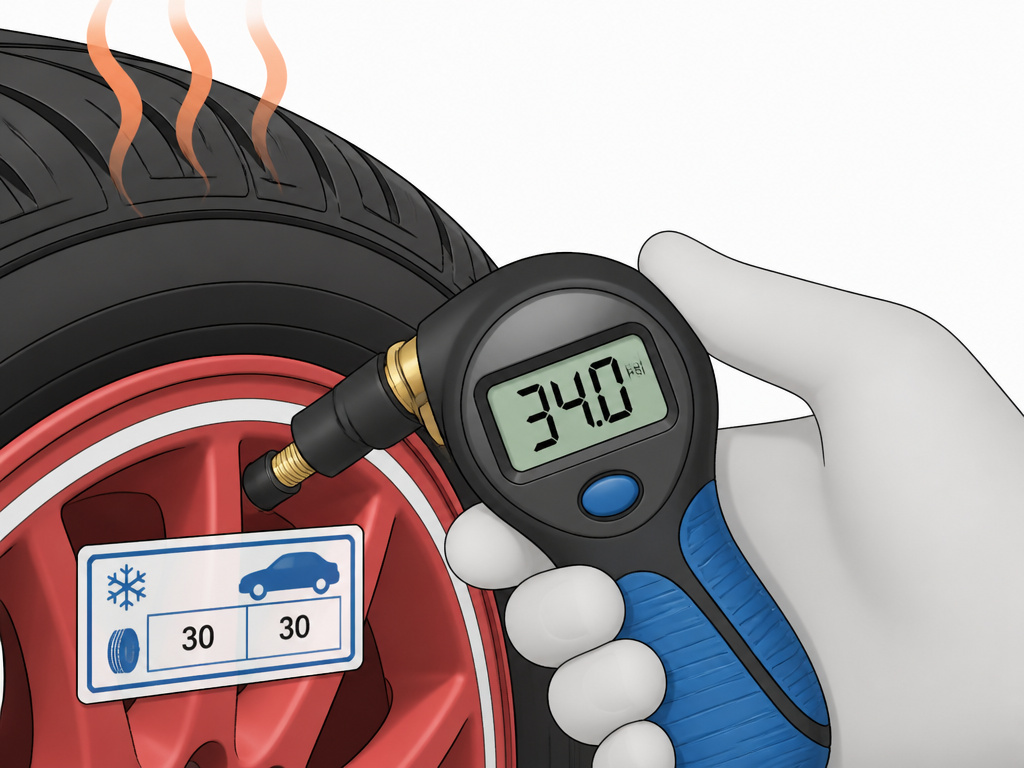
One mile of driving can move the reading. Tesla says about 1 mile of driving warms tires enough to affect pressure. If you must adjust hot, add air; don’t release.
The 4 psi hot correction
Goodyear says if you must check hot, add 4 psi to the recommended cold pressure. Bridgestone says set pressure to 4 psi above the recommended cold pressure, then recheck when cold. Tesla and Polestar say never release air from warm tires. Toyota uses a chart that changes with workshop and expected low temperature. I would rather add air than bleed a warm tire.
| Source | Hot tire rule | Next step |
|---|---|---|
| Goodyear | Add 4 psi to cold target | Recheck when cold |
| Bridgestone | Set 4 psi above cold target | Recheck when cold |
| Tesla/Polestar | Never release air | Fill to cold target later |
| Toyota | Use temperature chart | Match shop and low temp |
Summer roads add another layer to tires in hot weather. The correction from Goodyear or Bridgestone is a hot-reading fix, not a cold target. Recheck when cold. A tire at the placard number when cold can read about 4 psi higher after driving, per Goodyear and Bridgestone.
Common mistake: Bleeding air from a warm tire. Tesla and Polestar say a hot tire at or below the cold target is dangerously underinflated, and it can overheat during the next drive.
How Do You Check Tire Pressure Correctly?
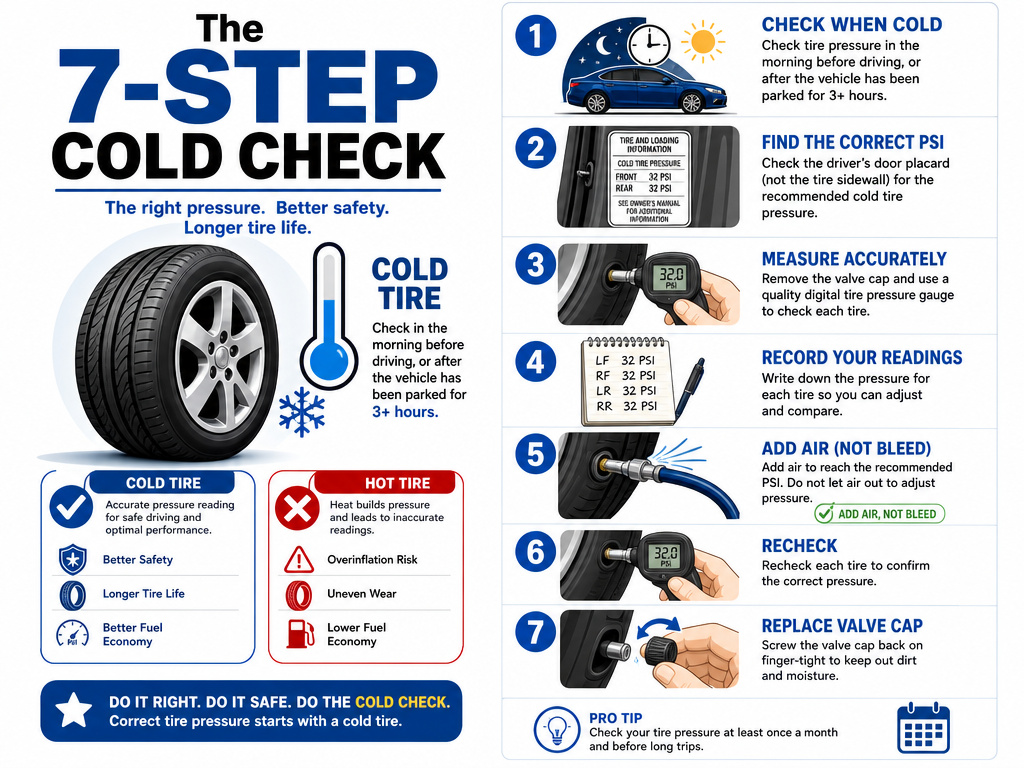
You pull into a gas station after a short drive, and the gauge reads high. The correct way to check tire pressure starts with a cold tire and a personal gauge. Service station hose gauges are less reliable, per Bridgestone and Polestar.
Before you start: Hot wheels and brakes can burn skin. Check only after the vehicle is parked, wheels are cool enough to touch, and the valve stem is clean. A warm tire can read high, and bleeding air can leave it dangerously underinflated.
Tools I reach for
I reach for a dial gauge for monthly cold checks. I keep a digital gauge in the glove box for bright days. A valve stem cap matters at every fill. Goodyear says cover the valve stem with a sealing cap to keep moisture and contaminants out of the valve core.
- A dial gauge for a battery-free cold check.
- A digital gauge for a quick screen reading.
- A valve stem cap, because Goodyear says a cap keeps moisture and contaminants out of the valve core.
The 7-step cold check
- Park for at least 3 hours, or confirm the car has driven less than 1 mile. Skipping this makes the reading compare to the wrong target.
- Find the placard pressure on the driver door edge or center pillar. Using the sidewall maximum instead can overinflate the tire.
- Remove the valve cap and press the gauge onto the stem until the hiss stops. A loose gauge gives a false low reading.
- Write the number for each tire. Skipping this hides a slow leak.
- Add air to low tires only. Don’t bleed a warm tire to match the placard, because Tesla and Polestar warn that can leave it underinflated.
- Recheck with the same gauge after filling. A different gauge adds a second error.
- Replace the cap. If the cap is missing, dirt can reach the valve core. Goodyear connects this to moisture and contaminants.
What Happens If Pressure Is Wrong?
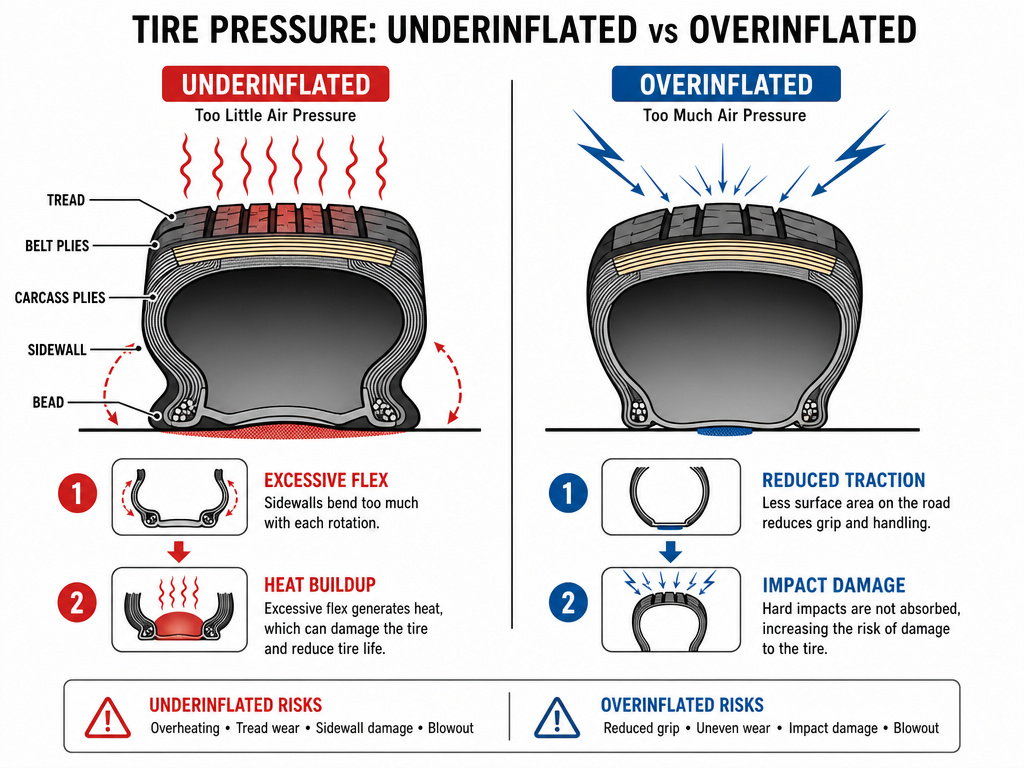
Wrong pressure costs grip. When a tire is underinflated, its sidewall flexes more, which generates heat. Goodyear says underinflation leads to excessive heat buildup, early removal from service, or tire failure. The Code of Federal Regulations on TPMS says driving on a significantly under-inflated tire causes overheating and can lead to tire failure.
Road speed and load raise tire operating temperature, so a hot reading is normal. The overinflation and underinflation effects show up in wear, handling, and heat. Bridgestone says overinflation can result in decreased traction, premature wear, and decreased impact absorption. Overinflation stiffens the tire, so it can’t absorb impacts as well.
The TPMS gap
I treat TPMS as a warning layer, not a gauge. The federal standard requires a warning not more than 20 minutes after pressure falls to or below 25 percent under the recommended cold inflation pressure, or a specified minimum. UNECE means the United Nations Economic Commission for Europe. A cold weather TPMS alert points to contracted air, not a new leak.
Easy to miss: The placard may list a maximum-load pressure for vans and light trucks with Load Range D or E (heavy-duty truck load ranges) tires. Goodyear says that can overinflate an unloaded vehicle. Use the owner’s manual or load and inflation tables.
- Towing: Tesla Model S and Cybertruck manuals say don’t use the Tire and Loading Information label pressure; use the towing section.
- Tires that aren’t the original size: Goodyear says use load and inflation tables, such as the Tire & Rim Association Yearbook.
- Different front/rear pressures:
The Bottom Line
The answer to should you check tire pressure hot or cold is simple: check cold. If you can’t, add air and recheck later. The trigger that matters most is a warm tire reading at or below the placard number. That tire is underinflated, not correct, and bleeding air makes it worse.
Here is the catch. The 4 psi hot correction from Goodyear and Bridgestone isn’t a substitute for a cold reading. Tesla and Polestar skip that bridge and say never release air. Toyota’s chart method is for shop temperature swings, not a quick gas-station fix.
Do one thing this week: park the car for at least 3 hours. Check all four tires with a personal gauge before the first drive, and write the numbers down. If one tire loses pressure by the next month, fix the leak.
Risks of underinflation vs. Overinflation
Under-inflation is the most common cause of tire failure. Driving on a significantly under-inflated tire causes it to overheat, which can lead to severe cracking, tread separation, or a blowout. This results in unexpected loss of vehicle control. Overinflation also poses risks. Never drive on overinflated tires, as this can decrease traction, lead to premature wear, and reduce the tire’s ability to absorb impacts. Both conditions compromise safety and tire longevity. Always aim for the vehicle manufacturer’s recommended cold pressure, found on the door placard, not the maximum pressure listed on the tire sidewall.
Should you adjust pressure for a hot day trip?
No, you should not adjust your target pressure upward for a hot day trip. Always inflate your tires to the vehicle manufacturer’s recommended cold pressure, which already accounts for normal operating temperature increases. Air pressure in a tire goes up with temperature. If you check or add air when the tires are already hot from driving, the reading will be higher than the true cold pressure. If you must adjust pressure on hot tires, some manufacturers advise setting them to a specific amount above the cold recommendation. However, the best practice is to check and adjust pressure when the tires are cold, before you begin your trip.
Frequently Asked Questions
Should I check tire pressure before or after driving?
Check before driving, when the tires are cold. NHTSA, Goodyear, Bridgestone, Polestar, and Tesla define cold as parked 3 hours or driven less than 1 mile. Toyota uses 4 hours outdoors.
Is a hot tire reading ever useful?
It is useful only as a warning sign. A hot tire reading at or below the cold placard number means the tire is underinflated, according to Tesla and Polestar. It isn’t a reason to bleed air.
Should I add 4 psi when tires are hot?
Goodyear and Bridgestone give a 4 psi hot correction, but Tesla and Polestar say never release air from warm tires. If you use the correction, recheck when cold. Toyota uses a chart for shop temperature and expected low temperature.
Does TPMS replace a gauge?
No. The federal TPMS standard warns within 20 minutes after pressure falls 25 percent below the recommended cold inflation pressure or a specified minimum. That is late for a slow leak. Use a personal gauge monthly.
Why does my pressure light come on when it gets cold?
Cold air contracts inside the tire. Tesla links a 10 degrees Fahrenheit drop to one psi loss. Polestar says a 10-degree drop causes a 1 psi drop. Goodyear says the change ranges from 1-2 psi per 10 degrees Fahrenheit.
