
10 Best Drive Tires For Semi Truck in 2026
This post contains affiliate links. As an Amazon Associate, we earn from qualifying purchases.
The best drive tire for most semi-trucks is the Firestone FD609 Drive Axle Truck Tire, which balances aggressive traction with durable, heat-shielded construction for varied commercial use. For mandated winter operations, the Continental Conti HDR 5 excels, while the Yokohama 714R offers superior wet grip for local work. Choosing the right drive axle tire directly impacts traction, fuel efficiency, and long-term cost.
Drive tires must transfer engine power to the road, requiring specific tread patterns and compounds for your primary routes and weather. The wrong choice leads to poor traction, uneven wear, or premature failure. A specialized drive tire is not interchangeable with a steer or trailer tire.
This guide was built by researching specifications, manufacturer design goals, and patterns in owner feedback across the market. We compare ten top options to help you match a tire’s strengths to your specific hauling application.
Top 10 Semi Truck Drive Tires in the Market
Certain content that appears on this site comes from Amazon. This content is provided "as is" and is subject to change or removal at any time.
The Best Semi Truck Drive Tires, Reviewed
Firestone FD609 Drive Axle Truck Tire

What We Like
- Solid shoulder design promotes even tread wear.
- Aggressive center lugs provide improved traction.
- Cap-base compound shields casing from heat damage.
- Suitable for multiple commercial driving applications.
Trade-offs
- Drive axle only, not for trailer or steer positions
- Specific load and speed ratings for the 11R22.5 size must be confirmed
The Firestone FD609 is built with a solid shoulder that distributes weight and torque evenly across the tread, which directly combats uneven wear and extends tire life in demanding commercial service. This design, combined with aggressive center lugs for traction and a heat-shielding compound for retreadability, makes it a versatile and durable choice for fleets and owner-operators handling a mix of long-haul and regional routes where consistent performance and cost-per-mile matter.
This Firestone drive axle tire is built for the long haul, literally. Its design targets semi-trucks in long-haul, regional, and pickup-and-delivery applications, meaning it’s engineered for the repeated stress and torque of powering a loaded rig down the highway. A solid shoulder construction helps evenly distribute that weight and torque to promote even tread wear over its service life.
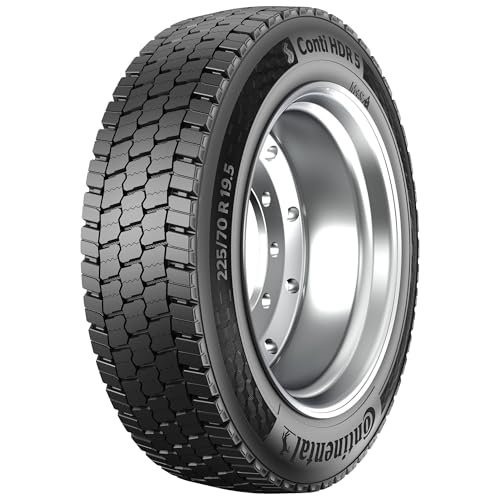
Continental Conti HDR 5 Drive Axle Tire
What We Like
- Certified for severe winter weather traction
- Steel belts reduce irregular tread wear
- Open shoulder design promotes even wear
- Retreadable casing extends overall lifespan
Trade-offs
- Weighs 61.3 lb, requiring proper handling equipment
- Specific 225/70R19.5 size limits fitment options
The Three Peak Mountain Snowflake certification is the concrete feature that defines this tire, meaning it’s legally approved for routes requiring severe winter service. That makes it a prime candidate for fleets or owner-operators who regularly face snow and ice, not just occasional cold weather. The full-width steel belt package fights the squirm that leads to irregular wear, a common headache on drive axles, so you can expect more even tread life between retreads. Continental’s backing through the BestDrive network also means easier access to service and monitoring solutions like ContiConnect, which is a solid perk for fleet managers.
With its Three Peak Mountain Snowflake certification, this Continental tire is approved for use in moderate to severe winter weather, which is a critical factor for fleet operators who must meet seasonal regulations. It’s a drive axle specialist, so it’s not intended as an all-purpose tire for trucks that only run in mild climates. When compared to a similar drive axle tire like the Yokohama 714R, the Continental’s documented winter certification is a clear, factual difference for operations facing snow.
Product photos
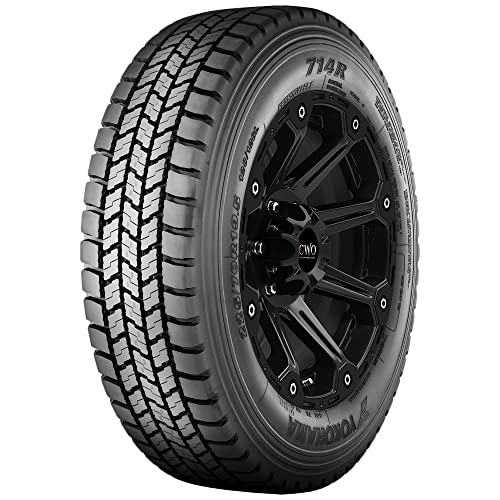
Yokohama 714R Drive Axle Commercial Tire
What We Like
- Open shoulder grooves boost wet traction
- Stone ejectors protect casing for longer life
- Advanced tread compound for low rolling resistance
- Tie bars reduce tread squirm for even wear
Trade-offs
- Weighs 67.7 lb, heavier than the 61.3 lb Continental HDR 5
- Designed for local and regional work, not long-haul highway use
Open shoulder grooves are the key feature here, actively channeling water away to maintain grip on slick roads. That makes the Yokohama 714R a strong candidate for drivers whose routes frequently involve rain or light winter conditions. Its wide tread pattern with integrated tie bars fights squirm, which translates to predictable handling and more even wear over time. The advanced tread compound also manages heat well, a benefit during stop-and-go delivery cycles where tires can get stressed. This is a tire built for the demands of pickup and delivery work where traction can’t be compromised.
Yokohama designed the 714R specifically for the drive axle of semi-trucks in local and regional pickup and delivery work. This means its construction is optimized for the stop-and-go demands of daily routes rather than continuous cross-country travel. At 67.7 pounds, it weighs more than the 61.3-pound Continental Conti HDR 5, which is a factor for handling during mounting. The tire’s open shoulder grooves and wide tread pattern are engineered to boost traction in wet or wintry conditions, a key feature for consistent daily performance.
Product photos
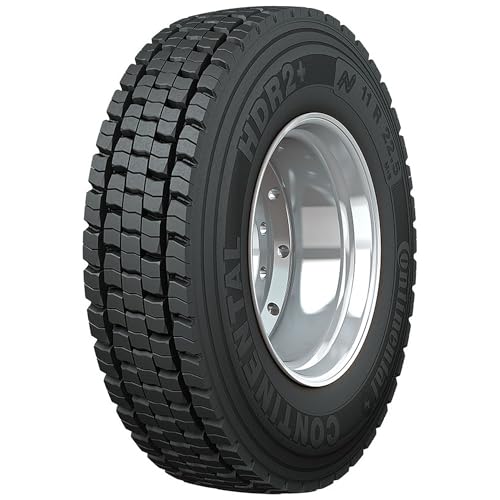
Continental HDR2+ Drive Axle Tire
What We Like
- Conti 3G Casing built for maximum retreadability
- Improved cap and base compounds for better wet traction
- Optimized contour extends tread life
- Chamfered blocks resist tearing and cracking
Trade-offs
- At 132 pounds, it's a heavy tire to handle and mount
- Specific to drive axle use, not an all-position tire
The Continental HDR2+ is built around the Conti 3G Casing, a feature that translates directly into a longer overall lifecycle for your tire investment. This focus makes it a prime pick for fleet managers and owner-operators who prioritize total cost of ownership and plan to retread. The improved tread compounds and chamfered block geometry work together to deliver solid wear and traction in regional on-/off-highway service, all while protecting the casing for its next life.
Built on the Conti 3G Casing for maximum retreadability, the HDR2+ is engineered for fleets where multiple tire lives are part of the long-term cost strategy. The trade-off is a specialized design, as this is a dedicated drive axle tire for trucks and buses, so it cannot be rotated to a trailer position like an all-position model. At 132 pounds, it is a substantial tire, a weight your service technicians will handle during mounting.
Product photos
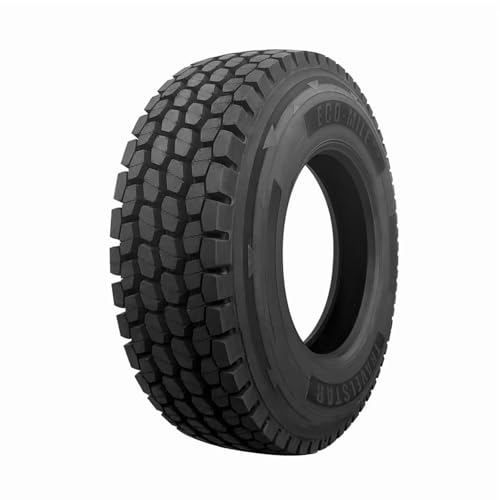
Travelstar Eco-Mile All-Position Truck Tire
What We Like
- All-position design for flexible fleet application.
- Heavy-duty 16PR construction for demanding loads.
- Five-year manufacturer warranty for long-term assurance.
- Highway-optimized tread for stable handling and long wear.
Trade-offs
- The 11R22.5 size limits fitment to specific wheel configurations.
- No specific mention of wet or winter traction compounds.
With a 146/143L load rating, the Travelstar Eco-Mile is built for demanding commercial trucking applications. Its all-position design allows for use on steer, drive, or trailer axles, providing flexible fleet application. The tread is optimized for long-haul highway and regional routes, which delivers stable handling. This tire is backed by a 5-year manufacturer warranty for commercial use.
The trade-off is in its physical size and weight. At 122 pounds and in an 11R22.5 fitment, it’s a substantial tire designed for traditional heavy-duty rigs. Its heft also means more physical effort during tire changes compared to lighter-duty options.
Product photos
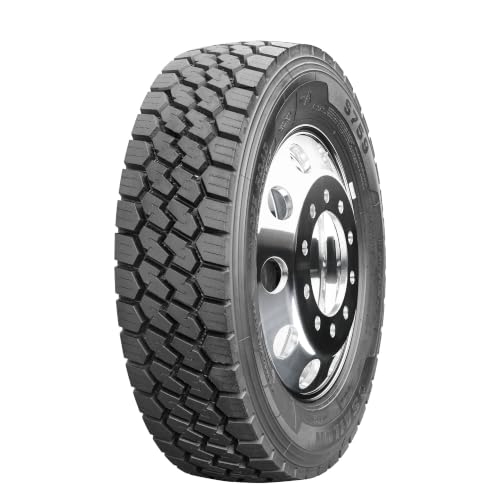
Sailun S759 Drive Axle Commercial Tire
What We Like
- Siped blocks provide better ice and snow traction.
- Aggressive tread pattern grips in muddy conditions.
- Open tread design offers self-cleaning properties.
- Formally certified for harsh winter performance.
Trade-offs
- Specific 225/70R19.5 size limits fitment options.
The Three Peak Mountain certification is the concrete proof that this tire is built for severe winter service, a must for drivers who can’t wait out a storm. Combine that with its siped tread blocks and aggressive, open pattern, and you have a drive tire designed to bite into snow and eject mud. This is the spec sheet of a tire for regional operators who face defined seasonal challenges and need predictable traction when the pavement disappears.
Its Three Peak Mountain certification confirms this is a winter-ready tire designed for harsh conditions, so it meets a specific performance standard for snow and ice. The aggressive, siped tread pattern and open shoulders are engineered for traction in mud and self-cleaning. This design has a clear purpose for regional drive-axle use where winter weather or unpaved sites are encountered.
Product photos
Kumho KLD02 All-Season Drive Radial

What We Like
- Closed shoulder ribs provide outstanding traction and wear resistance.
- Aggressive center rib buttons ensure excellent wet and dry grip.
- Advanced casing profile increases high-speed stability.
- Groove bottom protectors enhance retreadability.
Trade-offs
- Weighs 132 pounds
- Designed specifically for line haul use
Increased high-speed stability comes from the advanced casing profile, which improves overall contact pressure for a steadier ride on long highway runs. The closed shoulder ribs with intermediate support blocks provide outstanding traction and wear resistance. Excellent wet and dry traction is due to its 30/32″ molded rib/lug pattern and aggressive center rib buttons, making it suitable for commercial trucks in line haul applications.
Its weight of 132 pounds is significant, similar to the Continental HDR2+. For comparison, the Continental Conti HDR 5 weighs 61.3 pounds. This heft can make mounting and handling more demanding than with lighter tires.
Arisun AD759 Drive Axle Truck Tire

What We Like
- Circumferential grooves prevent hydroplaning
- Angled tread blocks boost traction and grip
- Reinforced construction prevents uneven wear
- Solid shoulder ribs maintain surface contact
Trade-offs
- Weighs 124 pounds, requiring more effort to mount
- Large 41.6-inch diameter needs compatible wheel clearance
- Designed only for drive axle, not all positions
Designed for the drive axle in regional and long-haul applications, the Arisun AD759 features circumferential grooves that force water out of the tread to prevent hydroplaning. Its reinforced construction helps maintain the tire’s ideal shape to prevent uneven wear, while angled tread blocks are intended to bite into the road for traction. Solid shoulder ribs are also included to maintain surface contact.
The trade-off for this wet-weather performance is a substantial physical package. Compared to a lighter drive tire, the AD759 is built for maximum durability and water evacuation, not for minimizing unsprung weight. Its design is purpose-built for the drive axle, where features like its angled tread blocks and circumferential grooves can be fully utilized.
Product photos
Roundrule MLD30 Drive All Steel Tire
What We Like
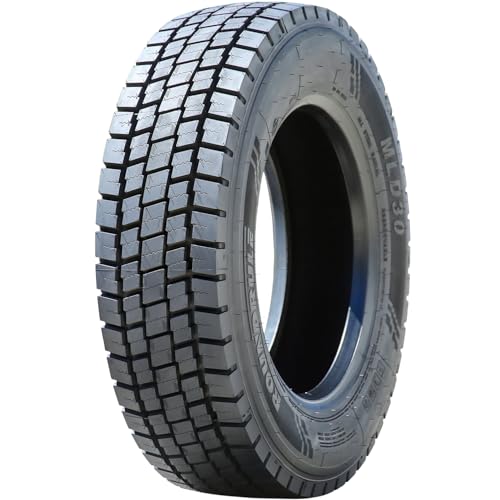
- High load capacity supports heavy-duty hauling
- All-season traction for varied highway conditions
- M speed rating suitable for highway speeds
Trade-offs
- Weighs 72 pounds, requiring more effort to mount
- Specific 245/70R19.5 size limits fitment options
- No included wheel or rim, just the tire
This tire is built for the operator whose primary concern is maximizing payload without sacrificing on-road security.
Each tire weighs 72 pounds, so proper shop equipment is necessary for mounting and service. The Continental Conti HDR 5 in a similar size, for example, is listed at 61.3 pounds, making the Roundrule heavier by comparison.
Product photos
Lanvigator DL011 Drive Radial Tire
What We Like
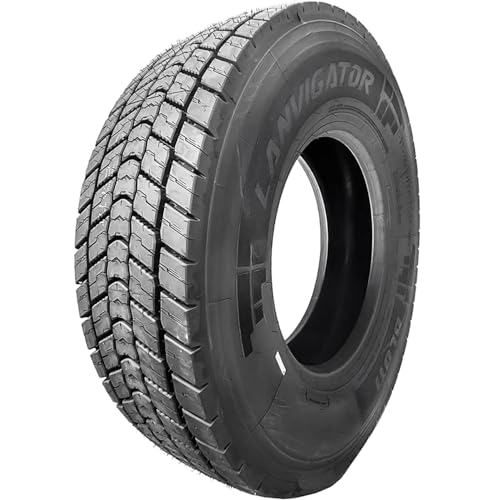
- 18-ply construction for heavy-duty durability
- All-season traction for varied weather driving
- Certified for sustained 75 mph highway speeds
Trade-offs
- At 93 pounds, it is heavier than most 19.5-inch competitors
- Specific 285/70R19.5 fitment limits wheel compatibility
The Lanvigator DL011 is built for operators who prioritize maximum legal payload over every other factor. Its 18-ply radial construction and all-season compound are engineered to handle that weight mile after mile, making it a solid choice for long-haul freight or bulk carriers where every pound counts.
That capability comes with physical trade-offs. The tire’s 93-pound weight and 33-inch overall diameter make it a more substantial piece of hardware to mount and balance compared to lighter options. You’re choosing brute strength and high load capacity, which is perfect for its role but means it won’t fit applications seeking a lighter-weight drive tire.
Product photos
How We Evaluated Semi Truck Drive Tires
Our evaluation is based on comparing published specifications, manufacturer data on tread compounds and casing construction, and expert round-ups of commercial tire performance. We analyzed patterns in owner feedback from fleet managers and drivers to identify consistent strengths and trade-offs for real-world use.
We prioritized three criteria for drive tires. First, traction design, focusing on lug patterns and siping for wet, winter, or dry highway grip. Second, casing durability and retreadability, which are critical for long-term cost per mile. Third, application specificity, as a tire built for long-haul stability differs greatly from one designed for regional mud and snow.
A research-led evaluation cannot replicate millions of miles of fleet wear testing. Our assessment highlights design intent and reported performance, but your specific load, maintenance, and route conditions will determine the final lifespan and value.
What To Look For In Semi Truck Drive Tires
Selecting a drive tire requires matching its engineered purpose to your dominant route conditions, load demands, and maintenance strategy. The tread pattern, casing strength, and intended application are more important than brand name alone.
Look for a tread pattern suited to your climate, closed shoulders for highway stability, open lugs for mud, and sipes for ice. Prioritize a retread-ready casing for cost savings. Always confirm the exact size, load index, and speed rating for your vehicle’s specifications.
Tread Design & Traction
The tread pattern dictates a tire’s grip. For long-haul highway stability, look for continuous rib designs or closed shoulders that reduce tread squirm and promote even wear. For regional work with mixed weather, open shoulder grooves and angled blocks enhance wet traction and resist hydroplaning. In severe winter or off-road conditions, deeply siped blocks and aggressive, self-cleaning lugs are essential; some tires are formally certified for severe snow service.
Casing Durability & Retreadability
The tire’s underlying casing is a major long-term investment. A high-quality, multi-retreadable casing uses strong steel belts and advanced rubber compounds to resist heat damage and physical impacts from road debris. Features like stone ejectors and chamfered block edges help protect the casing. For cost-conscious fleets, a tire built specifically for multiple retread cycles, like those with a dedicated casing warranty, offers the lowest cost per mile over its total life.
Application & Specifications
Drive tires are engineered for specific service types. A line-haul tire prioritizes high-speed stability and fuel efficiency, while a local delivery tire focuses on wet traction and durability for stop-and-go wear. Always verify the exact size (e.g., 11R22.5 or 225/70R19.5), load index (e.g., 135/133), and speed rating (e.g., M for 81 mph). An all-position tire offers fleet flexibility but may not match the optimized performance of a dedicated drive axle tire.
- Confirm the tire is marked for drive-axle use only, not for steer or trailer positions.
- Check the tire’s weight, as heavier models require proper handling equipment.
- Ensure the tread depth and wear indicators meet your company’s safety standards.
- Verify any manufacturer warranty covers your expected mileage or retread cycles. For mixed fleets, consider if an all-position design simplifies your tire inventory.
The single most important factor is matching the tire’s designed purpose to your most common driving conditions.
Semi Truck Drive Tires Compared
The table below provides a direct comparison of key specifications and design focuses for our selected drive tires.
| Product | Application / Design Use | Key Feature / Technology | Weight |
|---|---|---|---|
| Firestone FD609 Drive Axle Truck Tire | Drive axle, long-haul, regional-haul, pickup & delivery | Cap-base compound for retreadability | N/A |
| Continental Conti HDR 5 Drive Axle Tire | Drive axle | Full-width steel belt package | 61.3 Pounds |
| Yokohama 714R Drive Axle Commercial Tire | Drive axle, local/regional | Stone ejectors built into tread grooves | 67.7 pounds |
| Continental HDR2+ Drive Axle Tire | Drive axle, commercial trucks/buses | Conti 3G Casing | 132.0 pounds |
| Travelstar Eco-Mile All-Position Truck Tire | All positions (steer, drive, trailer) | 5-year manufacturer warranty | 122.0 Pounds |
| Sailun S759 Drive Axle Commercial Tire | Drive axle, regional semi-trucks | Open tread for self-cleaning | 65.0 Pounds |
| Kumho KLD02 All-Season Drive Radial | Drive axle, line-haul | Advanced casing profile | 132.0 Pounds |
| Arisun AD759 Drive Axle Truck Tire | Drive axle, regional/long haul | Reinforced construction | 124.0 pounds |
| Roundrule MLD30 Drive All Steel Tire | Drive Axle | All Season Traction | 72.0 Pounds |
| Lanvigator DL011 Drive Radial Tire | Drive Axle | All Season Traction | 93.0 pounds |
Frequently Asked Questions
What is the difference between steer and drive tires?
Steer tires are for the front axle and are designed for precise handling, stability, and wear resistance. Drive tires are for the powered axles and are engineered primarily for traction, with deeper, more aggressive lug patterns to transfer engine power to the road. Using a drive tire on a steer axle is unsafe and will cause poor handling.
Can I use an all-position tire on my drive axle?
Yes, an all-position tire can be used on a drive axle, and it offers inventory flexibility for fleets. However, it will typically not provide the same level of optimized traction, wear resistance, or retreadability as a tire specifically engineered for the high-torque demands of the drive axle position.
How important is the load index on a drive tire?
The load index is critical. It indicates the maximum weight each tire can safely support at its specified inflation pressure. Exceeding this rating risks catastrophic tire failure, uneven wear, and unsafe handling. Always choose a drive tire with a load index that meets or exceeds the gross axle weight rating of your vehicle.
What does retreadability mean for a truck tire?
Retreadability refers to the ability of a tire’s underlying casing (the steel and fabric structure) to be reused multiple times by having new tread rubber applied to it. A high-retreadability casing is built with durable, heat-resistant materials and is a major factor in reducing the long-term cost per mile of operation.
Do I need special winter drive tires?
If you operate in regions with frequent snow, ice, or legally mandated winter tire requirements, you need a drive tire certified for severe snow service (often marked with a mountain/snowflake symbol). These tires use specialized, flexible rubber compounds and deeply siped tread blocks that remain effective in freezing temperatures.
The Bottom Line
For most fleet managers and owner-operators seeking a durable, versatile drive tire, the Firestone FD609 offers the best overall combination of traction, even wear, and retread-ready construction. Its aggressive lugs and heat-shielded casing suit a wide range of commercial hauling applications.
Budget-focused operations in regional haul should examine the Continental HDR2+ for its exceptional retreadability, while those in severe winter climates must consider the certified Continental Conti HDR 5 or the Sailun S759 for mud. For complete fleet simplification, the Travelstar Eco-Mile provides reliable all-position versatility.
Ultimately, the most critical step is matching the tire’s engineered purpose, from tread design to load capacity, to your specific routes and hauling demands. A tire perfect for long-haul interstate stability will struggle in muddy winter yards, so choose based on your real-world conditions.
