
10 Best Semi Truck Tires in 2026
This post contains affiliate links. As an Amazon Associate, we earn from qualifying purchases.
Our best overall semi truck tire is the Continental HSL 3 All-Position Commercial Tire for its balance of long removal mileage, fuel efficiency, and retreadability. For those on a budget, the Sailun S637SP offers solid performance, while the Bridgestone R123 Ecopia is the top choice for maximum fuel savings.
Choosing the wrong tire for your axle position or operation costs money through premature wear, poor fuel economy, or insufficient traction. This guide is based on specifications, manufacturer data, and patterns in owner feedback to help you select the right tire for your fleet’s specific needs.
Top 10 Semi Truck Tires in the Market
Certain content that appears on this site comes from Amazon. This content is provided "as is" and is subject to change or removal at any time.
The Best Semi Truck Tires, Reviewed
Continental HSL 3 All-Position Commercial Tire

What We Like
- Advanced tread compound for long removal mileage
- Fuel Saving Edge technology increases fuel efficiency
- Stiff belt package promotes even tread wear
- Conti 3G casing maximizes retreadability
Trade-offs
- Its 41-inch diameter requires compatible wheel well clearance.
Designed for use on all positions, including the steer axle, the Continental HSL 3 is built to handle the demands of both regional and long-haul service without needing a dedicated tire set for each axle. Its advanced tread compounding delivers long removal mileage, while the increased stiffness in the belt package helps it wear smoothly and evenly over time. This combination of versatility and durability makes it a supremely practical choice for fleets and owner-operators looking to simplify maintenance and maximize uptime.
Fuel Saving Edge technology aims to increase fuel efficiency and application flexibility, which can lower operating costs over the tire’s lifespan. This focus on long-term value is matched by the Conti 3G casing, designed for maximum retreadability to extend service life. As an all-position tire, the HSL 3 is engineered for use on steer, drive, and trailer axles in regional and long-haul service.
Product photos
Sailun S637SP All-Position Commercial Tire

What We Like
- Shallow tread design lowers rolling resistance for fuel economy
- Sidewall ribs resist curbing, abrasions, and cuts
- Tread wall grooves help reduce irregular wear
- Multi-sipes enhance wet traction and dissipate heat
Trade-offs
- The 135/133L load rating is suited for regional, not maximum long-haul, weights
A 135/133L load rating and all-position design make this tire a versatile fit for regional pickup and delivery trucks where extreme long-haul capacity isn’t the priority. The shallow tread is engineered specifically to cut rolling resistance, which translates directly to better fuel economy over countless city and highway miles. It’s built for the fleet manager or owner-operator who needs a dependable, multi-use tire that works on every axle without demanding a premium investment.
The trade-off is in its scale and intended service. Weighing just 50 pounds, the Sailun S637SP is built for a lighter class of commercial vehicle compared to a heavyweight like the 114-pound Continental HSL 3. Its strength is efficient, cost-effective regional service, not the absolute maximum load-carrying and mileage potential of a dedicated long-haul steer or drive tire. For the right truck in the right application, its design delivers smart, budget-conscious value.
Product photos
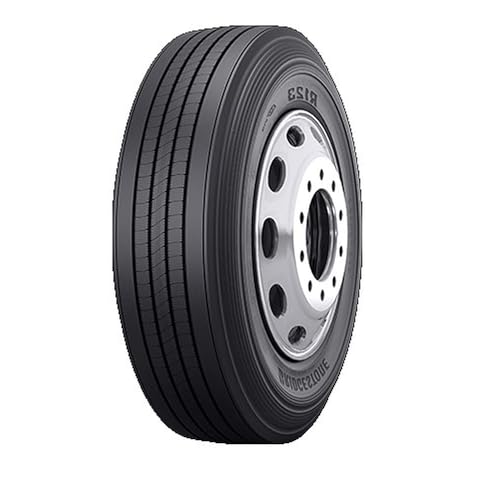
Bridgestone R123 Ecopia Commercial Tire
What We Like
- NanoProTech reduces rolling resistance for fuel savings.
- Shallower tread depth promotes even wear and stability.
- Reinforced sidewall improves scuff and damage resistance.
- Optimized belt package enhances retreadability.
Trade-offs
- At 103.8 pounds, it is heavier than the 50-pound Sailun S637SP.
- Weighs 103.8 pounds, requiring more effort to mount
Bridgestone’s NanoProTech technology is designed to improve fuel efficiency, which can help drivers manage a significant operating expense for fleets and owner-operators. This focus on lowering rolling resistance makes the R123 Ecopia a strong candidate for those prioritizing long-term fuel economy. Its design also promotes even tread wear, enhancing value over the tire’s lifespan.
Weighing 103.8 pounds, the tire is substantially heavier than some all-position options like the 50-pound Sailun S637SP. Its reinforced sidewall and optimized belt package are engineered for highway durability and improved retreadability. The shallower tread depth fights tread squirm to boost trailer stability and promote even wear.
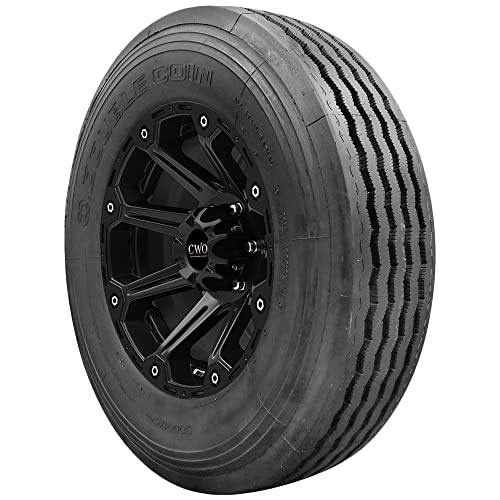
Double Coin RR150 Premium All-Position Tire
What We Like
- Deep 19/32-inch tread for long life
- 5-rib design promotes even wear
- Enhanced siping for wet/dry traction
- All-position versatility for fleet use
Trade-offs
- At 118 lb, it's heavier than the 114-lb Firestone FS560 Plus
- Specific 11R22.5 size limits fitment options
A 19/32-inch tread depth is the key number here, giving this tire a substantial amount of rubber to wear down over the miles. That depth, combined with the even-wearing five-rib pattern, makes the RR150 a logical pick for fleets or owner-operators who prioritize maximizing miles between replacements. The all-position rating adds flexibility for rotations, which further extends the overall tire life across your rig.
You pay for that longevity with physical weight; at 118 pounds, it’s a notably heavier tire to mount than some competitors like the Continental HSL 3. That heft translates to durability, but it’s a trade-off. For a dedicated long-haul steer axle where ultimate mileage is the goal, the RR150’s design delivers. If you need a lighter tire for fuel efficiency or easier handling, the spec sheet points you toward other options.
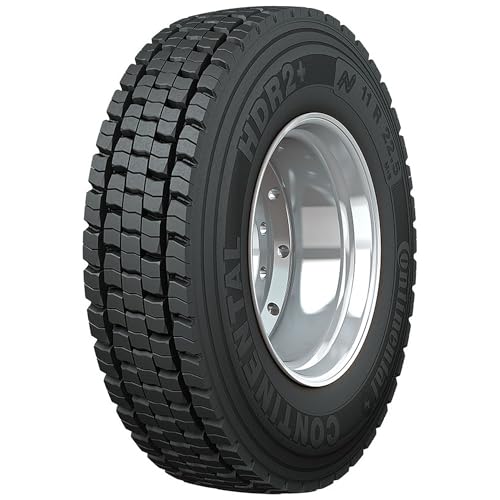
Continental HDR2+ Commercial Drive Tire
What We Like
- Chamfered tread blocks resist tearing and cracking
- Conti 3G Casing enables multiple retreads
- Optimized footprint for extended tread life
- Improved tread compound enhances wet traction
Trade-offs
- At 132 pounds, mounting requires professional equipment
- Specific for drive axles, not a steer or trailer tire
- Regional haul focus limits extreme long-haul specialization
Chamfered tread blocks are engineered to withstand high drive axle torque, which reduces wear conditions like tearing and cracking. This geometry, combined with an optimized contour, aims for extended tread life in regional haul and on- and off-highway applications. The tire is built on the Conti 3G Casing for maximum retreadability.
Weighing 132 pounds, the tire’s construction requires professional installation and handling. Its improved cap and base tread compounds target better wear performance and wet traction. The design is intended for the drive axle of commercial trucks and buses in regional service.
Product photos
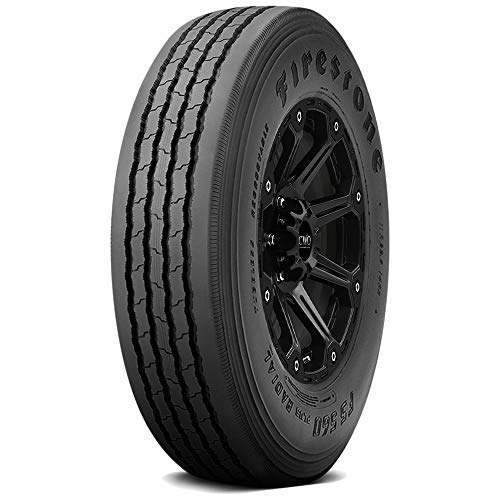
Firestone FS560 Plus Commercial Truck Tire
What We Like
- Standard 22.5-inch rim size for compatibility
Trade-offs
- At 114 lb, mounting requires professional equipment
- Listed load capacity is zero kilograms
This Firestone is built for the fleet manager or owner-operator whose primary focus is maximizing removal mileage from a drive or trailer axle position. The substantial 114-pound weight points to a tough casing that can handle repeated recaps, making it a candidate for high-cycle applications where long-term cost-per-mile is the ultimate metric.
You need to verify the exact load index for your application. Compared to a tire like the Continental HDR2+, which is also a heavyweight contender, the Firestone’s value hinges entirely on that deep tread offering a longer initial life, assuming all other performance specs align.
Product photos
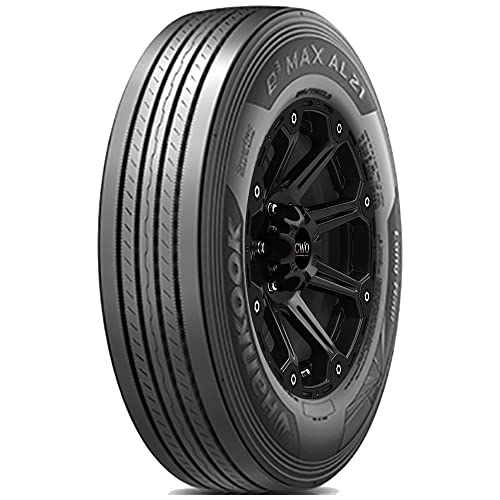
Hankook AL21 Long Haul Steer Tire
What We Like
- Rounded sipe edges resist tearing and cracking
- Stabilized footprint promotes longer mileage
- Lateral and semi-groove sipes enhance traction
- Design reduces uneven wear for superior performance
Trade-offs
- At 125 pounds, it is heavier than the 114-pound Firestone FS560 Plus
- Specific long-haul steer design limits its use as an all-position tire
A stabilized footprint is the core engineering principle here, directly targeting the uneven shoulder wear that plagues long-haul steer axles. This makes the AL21 a focused tool for fleet managers and owner-operators whose profitability hinges on maximizing tread life and controlling cost-per-mile. Its optimized siping works in tandem with that footprint, aiming to deliver consistent traction while the rounded sipe edges are a smart detail to fight off the cracks that can shorten a tire’s service life.
At 125 pounds, the Hankook AL21 is a heavy-duty steer tire, so it will add more unsprung weight to your front axle than some competitors. Its design focuses squarely on long-haul steering with features aimed at maximizing mileage and preventing uneven wear. The rounded shape at the edge of the sipe is intended to prevent tearing and cracking, while a stabilized footprint and optimized siping work to enhance even wear over many highway miles.
Product photos
Michelin XRV Commercial Radial Tire

What We Like
- 14-ply radial construction for durability
- Made in the United States
- G speed rating for sustained highway travel
Trade-offs
- At 80 pounds, it's a heavy single tire to mount
- Single tire packaging requires individual procurement
A G speed rating and 14-ply construction indicate a tire built for sustained highway use, meeting the demands of commercial trucking. The Amazon listing categorizes it as a summer traction tire for motor homes and RVs, with a common 22.5-inch diameter. Michelin’s research notes their semi truck steer tires are generally designed for long mileage and operator comfort, though the XRV’s specific application isn’t detailed. Its specifications point toward warm-weather, highway-oriented service.
The product title specifies this as a summer traction tire, meaning its performance is intended for warmer conditions. This specialization suits operations where seasonal use is planned. Compared to other listed products like the Continental HDR2+ drive tire, the XRV’s design focus appears narrower. For consistent highway travel in summer, this targeted approach defines its purpose.
Product photos
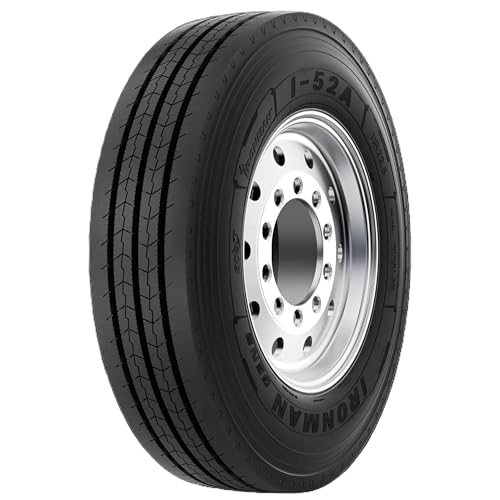
Ironman Gen 2 I-52A Commercial Tire
What We Like
- Advanced compound reduces rolling resistance.
- Design prioritizes improved fuel efficiency.
- Reduces heat buildup for durability.
Trade-offs
- Weight of 100.8 pounds
An advanced tread compound designed for low rolling resistance is the central feature of the Ironman Gen 2 I-52A. This engineering choice aims to improve fuel efficiency and reduce heat buildup during highway use, which can directly impact operating costs for commercial vehicles.
That fuel-saving design does involve a trade-off in weight and potential traction specialization. Buyers should pair it with the Ironman’s drive or trailer counterparts for a matched set. Its compound is engineered for a system-wide efficiency gain, not for standing out in mixed or severe service conditions alone.
Product photos
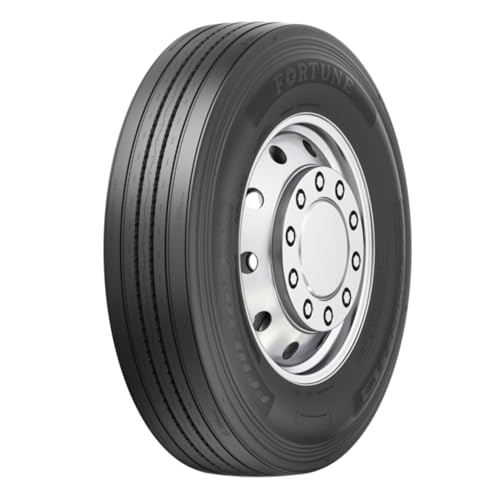
Fortune FFH130 Commercial Steer Tire
What We Like
- SmartWay design for lower fuel consumption
- Retreadable casing extends service life
- Decoupling groove combats irregular wear
- Stone ejectors protect casing from debris
Trade-offs
- The 41.4-inch diameter requires compatible wheel well clearance.
- Designed specifically for steer axes, not a multi-position tire.
SmartWay certification means this tire is engineered with low rolling resistance, which enhances fuel efficiency for long haul applications. The Fortune FFH130’s retreadable construction and decoupling groove are designed to prevent irregular wear and extend service life.
You do pay a weight penalty for this durability. It’s a trade-off: the heft points to a sturdy casing designed for retreading and extended service, but it’s a physical burden compared to some competitors.
Product photos
How We Evaluated Semi Truck Tires
We based our evaluation on manufacturer specifications, engineering documentation, industry expert round-ups, and consistent patterns found in owner feedback. The key criteria were durability and tread life, fuel efficiency technology, correct application for wheel position, and overall value relative to the tire’s intended use. The most critical factor for any commercial tire is its total cost-per-mile, which includes initial price, fuel economy, wear rate, and retread potential.
A research-based evaluation cannot replicate millions of real-world miles, so we focused on the design features and construction that industry sources link to long-term performance.
What To Look For In Semi Truck Tires
Selecting semi truck tires requires matching the tire’s design to its specific job on the truck. The wrong tire can increase operating costs and create safety issues.
Focus on the wheel position first, steer, drive, or trailer, then consider tread life, fuel-saving technology, and retreadability. Your operation type (long-haul vs. Regional) dictates the necessary load rating and tread depth.
Wheel Position & Application
Tires are engineered for specific roles. Steer tires prioritize steering stability and even wear to maintain alignment. Drive tires need aggressive tread patterns and reinforced casings for traction and torque transfer. Trailer tires focus on rolling resistance and durability under constant load. All-position tires offer versatility for fleets that want to simplify inventory but may sacrifice peak performance in any single role. Our guide to semi truck tire positions explains the distinct roles and construction differences.
Tread Life & Retreadability
Original tread depth, measured in thirty-seconds of an inch, is a key indicator of potential mileage. Deeper treads, like the one on the Double Coin RR150, promise longer initial life. The true value of a premium tire often lies in its casing quality, which determines how many times it can be safely retreaded.
A durable casing, like Continental’s Conti 3G, is an investment that pays over multiple lives. For dedicated applications, consult resources on the best drive tires for semi trucks and best semi steer tires, which highlight models built for maximum longevity.
Fuel Efficiency & Rolling Resistance
Fuel is a top operating cost, making a tire’s rolling resistance critical. Technologies like Bridgestone’s NanoProTech or specialized low-rolling-resistance compounds reduce the energy needed to keep the tire moving. Shallower tread depths and optimized tread designs also contribute to better fuel economy. These savings compound over hundreds of thousands of miles, making fuel-efficient tires a smart choice for high-mileage fleets. When building a full set, also consider fuel-saving options from our list of the best tires for semi trailers.
- Check the load rating and speed symbol to ensure they meet or exceed your rig’s requirements.
- Verify the exact tire size and rim diameter (e.g., 11R22.5) for compatibility with your wheels.
- Consider the tire’s weight, as heavier tires are more durable but require professional mounting.
- Look for features like stone ejectors and reinforced sidewalls that protect the casing from damage.
- Review warranty details and retread policies offered by the manufacturer or dealer.
Semi Truck Tires Compared
The following table compares key specifications for all ten picks to help you see the differences at a glance.
| Product | Weight | Size | Application/Type | Key Technology/Feature |
|---|---|---|---|---|
| Continental HSL 3 All-Position Commercial Tire | 114.0 pounds | 295/75R22.5 | All-position, steer axle | Fuel Saving Edge |
| Sailun S637SP All-Position Commercial Tire | 50.0 pounds | 215/75R17.5 | All-position commercial radial | Sidewall protection ribs |
| Bridgestone R123 Ecopia Commercial Tire | 103.8 pounds | 285/75R24.5 | Commercial Truck | NanoProTech, Intellishape sidewall |
| Double Coin RR150 Premium All-Position Tire | 118.0 pounds | 11R22.5 | Steer/All-Position | 5-rib design |
| Continental HDR2+ Commercial Drive Tire | 132.0 pounds | 11R22.5 | Commercial Drive Tire | Conti 3G Casing |
| Firestone FS560 Plus Commercial Truck Tire | 114.0 pounds | 11/R22.5 | Commercial Truck Tire | N/A |
| Hankook AL21 Long Haul Steer Tire | 125.0 pounds | 11R22.5 | Long Haul Steer | Stabilized footprint |
| Michelin XRV Commercial Radial Tire | 80.0 pounds | 235/80R22.5 | Commercial Highway Summer | N/A |
| Ironman Gen 2 I-52A Commercial Tire | 100.8 pounds | 315/80R22.5 | Commercial Tire | Advanced low rolling resistance |
| Fortune FFH130 Commercial Steer Tire | 122.0 pounds | 11R22.5 | Steer axle, long haul | Decoupling groove, stone ejectors |
Frequently Asked Questions
What is the best tire brand for semi-trucks?
There is no single “best” brand for all applications. Top-tier manufacturers like Michelin, Bridgestone, and Continental consistently produce high-quality, durable tires for various positions. The best brand for you depends on your budget, operational needs (long-haul vs. Regional), and whether you prioritize fuel savings, initial tread depth, or retread potential.
What are the top 5 best truck tires?
The top tires vary by axle position. For an all-position tire, the Continental HSL 3 offers excellent balance. For drive axles, the Continental HDR2+ provides durable traction. The Hankook AL21 is a top long-haul steer tire. The Bridgestone R123 Ecopia excels at fuel savings, and the Double Coin RR150 is built for maximum original tread life.
What are the top 3 best tires?
If we must narrow it to three for different critical needs, consider the Continental HSL 3 as the best versatile all-position tire. The Bridgestone R123 Ecopia is the best for fuel cost reduction, and the Hankook AL21 is the best dedicated tire for long-haul steer axle performance and wear.
What tires should I stay away from?
Avoid tires that do not match your axle position or operational weight requirements. Using a trailer tire on a drive axle, or a regional tire for maximum long-haul loads, leads to rapid failure. Steer clear of tires with unspecified load ratings, and be wary of deep-discount options that may use casings unsuitable for retreading, increasing long-term cost.
How many tires does a semi-truck have?
A standard tractor-trailer configuration has 18 wheels and tires, which is why they are called 18-wheelers. This typically includes 10 tires on the tractor (two steer tires and eight drive tires) and eight tires on the trailer. Configurations can vary with different axle setups.
The Bottom Line
For most fleets and owner-operators needing a single, reliable tire for multiple wheel positions, the Continental HSL 3 All-Position Commercial Tire is the best overall choice. Its durable construction, fuel-saving features, and excellent retread potential make it a strong all-around performer. If your primary concern is minimizing upfront cost for regional work, choose the Sailun S637SP All-Position Commercial Tire.
For operators solely focused on reducing fuel expenses over extreme distances, the Bridgestone R123 Ecopia Commercial Tire is the clear pick. Always select a tire designed for its specific wheel position, steer, drive, or trailer, as this is the most important factor for safety, performance, and total cost of ownership.
