
10 Best Tire Balancer Machines in 2026
This post contains affiliate links. As an Amazon Associate, we earn from qualifying purchases.
The ATLAS WBT-210 Professional Wheel Balancer is our best overall pick for its massive capacity, self-diagnosing features, and automatic operation that handles passenger cars to semi-trucks. The XK Tire Changer and Balancer Combo is the best shop combo, and the KATOOL KT-B760 offers the best automatic measurement for reducing manual errors.
Choosing the right balancer means matching machine capacity to your tire sizes and workflow speed to your shop’s volume. A mismatch can leave you unable to service certain vehicles or create frustrating bottlenecks.
Top 10 Tire Balancer Machines in the Market
Certain content that appears on this site comes from Amazon. This content is provided "as is" and is subject to change or removal at any time.
The Best Tire Balancer Machines, Reviewed
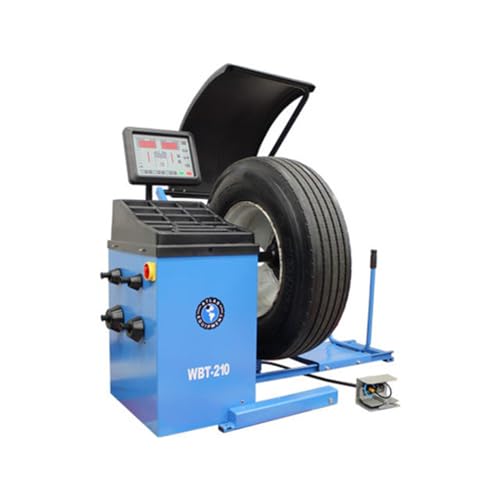
ATLAS WBT-210 Professional Wheel Balancer
What We Like
- Handles passenger cars to semi-trucks
- Self-diagnosis displays error codes
- Includes multiple cone sets for different wheels
- Automatic operation optimizes workflow
Trade-offs
- Weighs 725 pounds, requiring a permanent installation spot
- 52-inch width demands significant floor space
A 40 mm shaft and capacity for 300-pound semi-truck tires mean this machine won’t flinch under the heaviest workloads a professional shop can throw at it. The ATLAS WBT-210 is built for the garage that services everything from compact sedans to commercial trucks. Its self-diagnosis and self-calibration features let you troubleshoot and adjust in-house, avoiding costly service calls. The automatic start/stop tied to the hood position streamlines repetitive balancing tasks, making it a productivity workhorse.
Weighing 725 pounds, this balancer needs a permanent spot on a solid, level shop floor. Its 52-inch width requires a dedicated bay, making it a stationary tool for regular use rather than something you’d roll between jobs. You’re giving up portability for industrial-strength construction and the ability to handle everything from passenger cars to heavy-duty trucks.
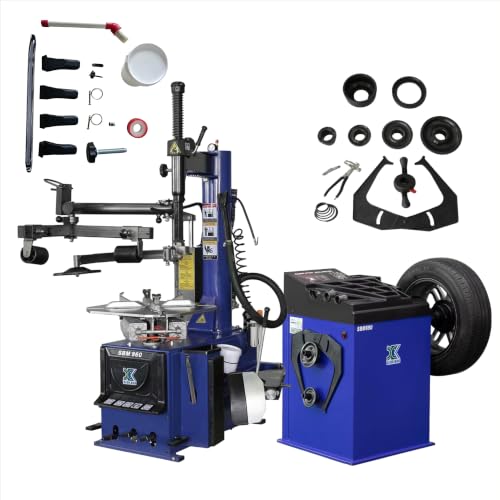
XK Tire Changer and Balancer Combo
What We Like
- Includes a powerful 5600-lb bead breaker.
- Handles large 37-inch diameter tires.
- Balancer offers multiple modes including motorcycle.
- 110V power suits many standard shop outlets.
Trade-offs
- At 880 lbs, it requires a dedicated shop floor space.
- Requires a 120-145 psi air supply for full operation.
With a 37-inch maximum tire diameter and 5600 pounds of bead break force, this XK combo can mount oversized off-road tires and break loose stubborn run-flat beads. Its matching balancer handles rims from 10 to 24 inches and includes dynamic, static, and motorcycle modes, providing a full mounting and balancing station. Research mentions this powered changer-and-balancer package targets buyers who need a more complete shop setup.
The trade-off is its substantial size and 880-pound weight, which demands a permanent installation. You’ll also need an air compressor that can deliver 120 to 145 PSI to run its bead blaster and pneumatic piston. For a shop that already has a tire changer, a standalone balancer like the ATLAS WBT-210, which also handles heavy wheels, would save floor space.
Product photos
WEIZE Tire Changer and Balancer Combo

What We Like
- Powerful 2700kg bead breaker for stubborn tires
- Includes multiple balancing modes for versatility
- Quiet operation suitable for indoor shops
Trade-offs
- 717.8 pound weight demands permanent installation
- Max wheel weight of 143 lbs excludes heavy-duty trucks
This combo’s 2700kg bead breaker pressure means you can pop stubborn beads on light truck tires without a struggle, a real advantage in a home garage. Its 28-inch rim capacity and multiple balancing modes let you handle everything from small car wheels to larger SUV rims. This makes it a practical single purchase for a serious DIYer or a small shop that needs broad capability without separate machines, built for users who want to cover most passenger vehicles.
For a dedicated bay, that’s fine, but it lacks the portability of a standalone balancer. Compared to the dedicated ATLAS WBT-210 balancer, the WEIZE’s 143-pound max wheel weight is lower, so if you regularly service dual-wheel pickups or commercial vans, you’ll hit its limit. This combo excels at general-purpose work, not specialized heavy-duty tasks.
Product photos
KATOOL KT-B760 Automatic Wheel Balancer

What We Like
- Automatic measurement eliminates manual input errors
- Advanced circuitry resists workshop dust and moisture
- Extended shaft accommodates SUV and light truck tires
- Pure copper motor windings for better heat dissipation
Trade-offs
- Optional wheel guard means extra purchase for scratch protection
The KATOOL KT-B760’s automatic measurement ruler instantly inputs wheel distance and diameter values. This feature removes the most common source of human error in the balancing process, making consistent results far easier to achieve. It’s built for the demanding environment of a busy shop, with a computer board protected against static electricity and contaminants. That combination of automation and durability makes it a strong fit for anyone who values repeatable precision, from a meticulous DIYer to a technician who needs to move quickly without sacrificing accuracy.
The trade-off for that automated ease is that you need to check your specific needs against the missing specifications. Without a stated maximum tire weight or exact rim size range in the provided facts, you must ensure it matches your typical workload. For example, the ATLAS WBT-210 clearly lists a 300 lb capacity, while the KATOOL requires a bit more homework. Its longer shaft adapter handles wider wheels well, but the optional wheel guard is an add-on for full protection.
XK-950-690 Tire Changer and Balancer Combo

What We Like
- Handles large 41-inch tires and 155-pound wheels
- Includes both dynamic and static balancing modes
- Comes with a powered tire changer and bead blaster
- Offers specialized motorcycle balancing mode
Trade-offs
- Requires a dedicated 110V power outlet and 120-145 psi air supply
- 580-pound shipping weight demands permanent shop floor space
This combo’s 41-inch maximum tire diameter and 155-pound maximum wheel weight allow it to handle larger passenger and light truck tires that smaller changers can’t. The 5600-pound bead break force and integrated air blast are designed for stubborn beads, a common challenge with modern low-profile tires. Its balancer offers a -1g to +1g accuracy range, a specification typical for shop-grade equipment aiming for precise balancing.
You’ll need to plan for its 580-pound shipping weight and confirm your air system can maintain the required 120-145 PSI operating pressure. The combo’s footprint is significant, so it requires dedicated floor space unlike a portable balancer. This makes it a permanent shop fixture, best for those who regularly perform both mounting and balancing tasks.
Product photos
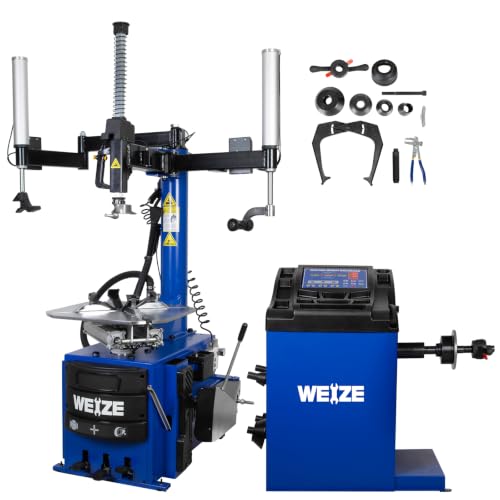
WEIZE Dual Arm Tire Changer Combo
What We Like
- Dual assist arms for low-profile and run-flat tires
- Integrated air bead blaster with 2700 kg break-force
- Wide rim clamping range from 10 to 24 inches
- Quiet balancer operation for comfortable shop use
Trade-offs
- Weighs 794.8 pounds, requiring substantial floor space and a permanent location
- No model number specified for precise parts or manual lookup
A 2 HP motor and capacity for tires up to 41 inches in diameter allow this machine to handle passenger cars, light trucks, and heavy-duty applications. Its standout feature is the dual assist arms, which press the bead down during mounting to prevent roll-back. Acting like a second pair of hands, this system is particularly effective for stubborn run-flat and low-profile tires, significantly reducing installation time and physical effort for shops that frequently handle them.
Weighing 794.8 pounds, this combo is a substantial commitment for a shop floor. Its integrated air bead blaster delivers a 120-145 psi blast to seat tough beads instantly, an advantage over dedicated balancers such as the ATLAS WBT-210 that lack this feature. While the ATLAS unit is a self-diagnosing balancer for a separate station, the WEIZE combo excels as an integrated workstation for both mounting and balancing.
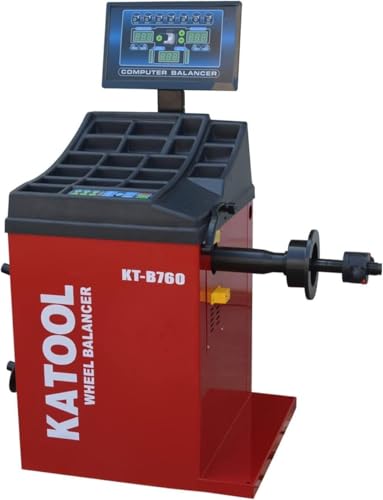
KATOOL ME Enhanced Shaft Wheel Balancer
What We Like
- Extended shaft provides stable mounting for wide wheels
- Copper-wound motor manages heat for longer life
- Specialized modes adjust calibration for different rim designs
- Precision circuit board minimizes inconsistent readings
Trade-offs
- No self-diagnosing feature mentioned like the ATLAS WBT-210
- Not a combo unit; requires a separate tire changer
The extended shaft is the core advantage here, creating a rock-solid platform for larger rims and custom wheel setups. This design eliminates wobble and the need for extra adapters, making it a specialized tool for shops that frequently handle wide or non-standard wheels. The high-end copper-wound motor and precision circuit board are engineered to deliver consistent, accurate balances job after job, which translates to fewer re-dos and faster turnarounds. For a garage focusing on performance vehicles or custom builds, this machine’s enhanced capability directly targets a common pain point.
This is a dedicated balancer, not a combo machine like the VEVOR Electric Tire Changer and Balancer Combo, so you’ll need a separate tire changer to mount and dismount wheels. While its intelligent modes and thermal management are built for busy shop use, it lacks certain automated features, such as the self-diagnosing capability noted on the ATLAS WBT-210. It’s a premium tool for a specific task, not an integrated workstation for a generalist.
Motool Technology Professional Portable Balancer
What We Like
- Manual self-calibration for precise adjustment
- Handles special motorcycle and racing tires
- ALU function balances uniquely shaped rims
Trade-offs
- Manual calibration requires user skill and time
- No automatic cycle like the KATOOL KT-B760
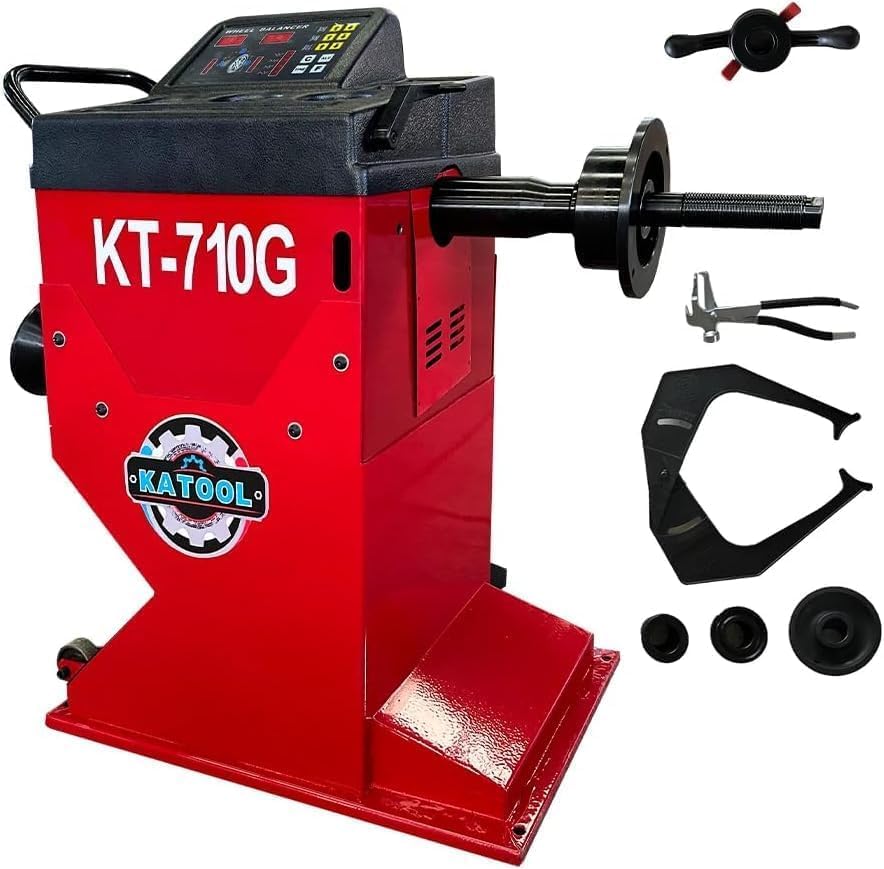
With 1g balancing accuracy and a self-calibration system, the Motool KT-710G can be adjusted to a degree many automatic balancers cannot match. This makes it suitable for a technician who values granular control, especially for specialty work. It supports rim diameters from 10 to 24 inches and can balance tires for special vehicles like motorcycles and racing cars. The ALU function also allows it to balance rims of various special shapes, which is useful for custom wheel designs.
Speed is the trade-off here. Every calibration and balancing cycle is manual, so reviewers report it requires more operator time to achieve its precision. For a high-volume shop focused on standard passenger tires, an automatic model like the KATOOL KT-B760 would process wheels faster. You choose the Motool for its tuning capability, not its throughput.
Product photos
VEVOR Electric Tire Changer and Balancer Combo
What We Like
- Universal compatibility for 12-24.4 inch rims
- Multi-function assist arm eases tire mounting
- Precision balancer with auto calibration
- Upgraded clamping jaws protect rims from damage
Trade-offs
- 37.8 inch max tire diameter excludes some large truck tires
- Requires a separate air compressor for operation
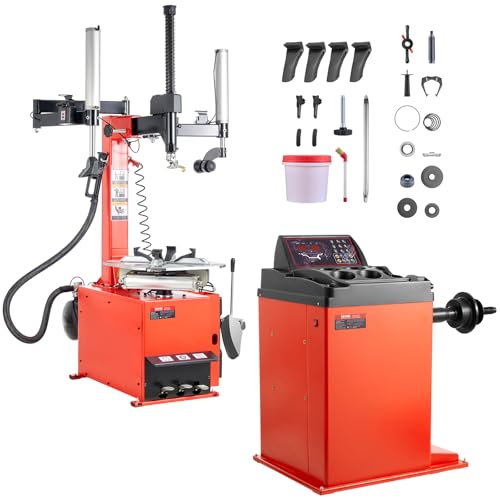
A 2.0HP motor and 155-pound tire capacity provide the muscle needed for the larger, heavier wheels common on SUVs and pickups. This combo unit handles the demanding tire changes these vehicles often require. The universal clamping range from 12 to 24.4 inches means it can service everything from a compact sedan to a full-size truck. For a shop that regularly deals with light trucks, the integrated balancer with its sealed sensor and ±1g accuracy ensures a smooth ride without needing a separate machine.
This combo’s substantial 720.9-pound footprint demands dedicated floor space and a solid setup, making it a shop fixture rather than a portable tool. Its 155-pound wheel weight limit is more suited to consumer-grade light trucks than commercial heavy-duty applications, especially when you consider a dedicated balancer such as the ATLAS WBT-210 that handles tires up to 300 pounds. You get a capable integrated machine for a specific vehicle class, but its size and weight capacity define its practical limits.
Product photos
Albott Tire Changer and Balancer Combo

What We Like
- Integrated bead blaster with 8-10 Bar pressure
- Dual assist arms for stiff tire sidewalls
- Safety hood starts balancing cycle automatically
- Heavy-duty steel build for stable support
Trade-offs
- At 719 pounds, it requires a permanent shop installation
- A 76.8-inch height demands significant vertical clearance
The integrated safety hood system is the decisive feature here, automatically starting the balancing cycle when closed. This hands-off operation is a major efficiency boost for any shop dealing with high volume, as it standardizes the process and keeps debris contained. The Albott combo suits technicians who prioritize a streamlined, protected workflow for cars, SUVs, and light trucks. Its dual assist arms and powerful bead blaster tackle low-profile and run-flat tires, making it a solid fit for garages that see a wide variety of wheel sizes up to 41 inches.
Weighing 719 pounds, this combo unit is clearly meant to be a permanent shop fixture rather than a portable tool. Its integrated design saves floor space compared to separate tire changer and balancer units, such as the ATLAS WBT-210, and provides a unified workflow for the jobs it’s built to handle. The product is intended for cars, SUVs, and light trucks, offering a reliable, integrated package with safety features for those applications.
Product photos
How We Evaluated Tire Balancer Machines
Our evaluation focused on manufacturer specifications, technical documentation, and patterns in professional user feedback to assess real-world performance. We prioritized three key criteria: machine capacity (maximum wheel diameter and weight), workflow efficiency features (like automatic measurement or self-diagnosis), and physical installation requirements (weight, power, and air supply demands).
These factors determine whether a balancer can handle your specific vehicle mix and fit within your shop’s space and infrastructure. Because this is a research-led evaluation, we cannot verify long-term durability claims or provide hands-on performance data, but we highlight consistent owner-reported strengths and trade-offs for each model.
What To Look For In Tire Balancer Machines
A tire balancer is a significant investment for any garage. The right machine blends capability with your shop’s workflow and spatial constraints, turning a chore into a smooth, repeatable process. Understanding the core specifications prevents buying a machine that’s either overkill or insufficient for your needs.
Key buying criteria include machine capacity (wheel diameter and weight), balancing methods (dynamic, static, motorcycle modes), and installation needs (power, air supply, and floor space). The choice between a standalone balancer and a tire changer combo depends on your existing shop equipment.
Capacity and Compatibility
The first check is whether the balancer can physically handle your wheels. Look for the maximum wheel diameter and weight specifications. A balancer for passenger cars might max out at 24-inch rims and 80 pounds, while a unit for mixed fleets will handle 37-inch or larger tires and wheel weights exceeding 150 pounds, like a commercial wheel balancer. Also verify the included cone set; a versatile machine provides multiple cones to accommodate different hub bore sizes, from small car hubs to large truck center holes.
Balancing Modes and Automation
Modern balancing machines offer various modes to handle different wheel types. Dynamic balancing is standard for correcting side-to-side wobble on car and truck tires. Look for additional modes like static balancing for simpler checks, ALU modes for calibrating to alloy rim designs, and specialized functions for motorcycle wheel balancing. For workflow speed, automatic measurement arms eliminate manual data entry errors, a key feature in our Best Automatic Measurement pick. Understanding the difference between static and dynamic balancing ensures you select a machine with the correct correction methods for your work.
Power, Air, and Installation
A balancer’s physical demands dictate where it can be installed. Heavy units require a permanent, level concrete floor installation. Check power requirements: most shop-grade units need 110V, but some high-capacity models require a different voltage. If the machine is part of a tire changer bundle, verify the air compressor requirements, often 120-145 psi for the integrated bead blaster. Don’t overlook vertical clearance; some combo units can be quite tall.
- Measure your available floor space, including room to load wheels onto the machine.
- Confirm your shop’s electrical service and air compressor output before purchasing.
- Consider future needs; buying a machine at its maximum capacity limit offers no growth room.
Always match the machine’s hardest specs, maximum weight, diameter, and power needs, to your most demanding job, not your average one.
Tire Balancer Machines Compared
The following table compares the key specifications of our top picks to help you see the differences in capacity, features, and requirements at a glance.
| Product | Max Tire Diameter | Power Supply | Weight |
|---|---|---|---|
| ATLAS WBT-210 Professional Wheel Balancer | N/A | N/A | 725.0 Pounds |
| XK Tire Changer and Balancer Combo | 37 inches | 110V | 880.0 pounds |
| WEIZE Tire Changer and Balancer Combo | 39.4 inches | 110V/60Hz | 717.8 pounds |
| KATOOL KT-B760 Automatic Wheel Balancer | N/A | N/A | N/A |
| XK-950-690 Tire Changer and Balancer Combo | 41 inches | 110V, 60HZ | N/A |
| WEIZE Dual Arm Tire Changer Combo | Up to 41 inches | 110V | 794.8 Pounds |
| KATOOL ME Enhanced Shaft Wheel Balancer | N/A | N/A | N/A |
| Motool Technology Professional Portable Balancer | N/A | N/A | N/A |
| VEVOR Electric Tire Changer and Balancer Combo | 37.8 in | N/A | 720.9 Pounds |
| Albott Tire Changer and Balancer Combo | Up to 41" diameter | 110V 60Hz | 719.0 pounds |
Frequently Asked Questions
What is the difference between a wheel balancer and a tire changer?
A wheel balancer is a machine that spins a mounted tire and wheel assembly to detect weight imbalances, indicating where to add correction weights. A tire changer is a separate machine that physically mounts and dismounts a tire from a wheel rim. Many shops use a tire machine combos that integrates both functions into one station.
Can I balance my own tires at home?
Yes, with the right equipment. For basic static balancing on trailers or low-speed vehicles, a portable bubble balancer works. For accurate dynamic balancing on cars and trucks driven at highway speeds, you need a computerized spin balancer, which requires a dedicated shop space, proper power, and an initial investment.
How often should tires be balanced?
Tires should be balanced whenever they are first mounted on a wheel and again if you feel a vibration in the steering wheel or seat at highway speeds, typically between 55-70 mph. Rebalancing is also recommended after a tire repair, such as a patch, or if you notice uneven tread wear.
What does “road force balancing” mean?
Road force balancing is an advanced technique where a roller simulates the road’s pressure against the spinning tire. It detects hard or stiff spots in the tire casing that normal spin balancing cannot fix, helping technicians match-mount the tire to the rim to minimize vibration. This is typically a commercial shop service.
What is the most important feature in a professional wheel balancer?
For professional shop use, the most important features are reliable, repeatable accuracy and a capacity that matches your customer fleet. This includes solid construction, precise sensors, and workflow features like automatic measurement to minimize errors and maximize throughput throughout the day.
The Bottom Line
For professional shops servicing a mixed fleet from cars to heavy-duty trucks, the ATLAS WBT-210 Professional Wheel Balancer is the best overall choice. It offers exceptional capacity, self-diagnostic features, and automatic operation. If your budget is tighter or you primarily service passenger cars and light trucks, the WEIZE Tire Changer and Balancer Combo offers remarkable value and capability. Before you purchase, the single most critical step is to verify the machine’s maximum wheel dimensions and weight against the largest tire you plan to service. This ensures it will meet both your current and future needs.
