
How to Choose Tires for a Sports Car: Step-by-Step
This post contains affiliate links. As an Amazon Associate, we earn from qualifying purchases.
To choose tires for a sports car, match the size and load/speed code on the doorjamb label. Then pick a tire type for your weather and driving style. Check the DOT date code, compare UTQG grades, and replace tires worn to 2/32 inch or aged past 6 to 10 years.
Those steps matter because some sports cars use staggered sizes, low-profile tires, and heat-sensitive compounds. A wrong choice shows up quickly: longer wet braking, uneven wear, or a harsh daily drive.
What follows: a five-step order for matching specs, a look at tire types, and the grading labels that actually help.
Key Takeaways
- Check the DOT date code before buying; Porsche’s TSB states tires should not be older than 6 years, while NHTSA notes some vehicle and tire manufacturers recommend replacement at 6 to 10 years.
- For a single tire replacement on an axle, keep tread depth within 30 percent of the other tire, per Porsche’s 911 GT3 bulletin.
- Use the driver’s doorjamb label for pressure, not the sidewall maximum; cold means the car hasn’t been driven for at least three hours.
- Replace tires at 2/32 inch tread depth, the NHTSA safety floor.
- Compare UTQG traction and temperature grades separately; traction doesn’t measure cornering grip.
How to Choose Tires for a Sports Car: The Five-Step Order
The doorjamb label is the first place to look. The sidewall number isn’t the car’s target pressure.
“Tire selection starts with the vehicle label, not the sidewall. The label lists recommended cold inflation pressure and original size. A sports car may use staggered front and rear sizes. The DOT Tire Identification Number shows production week and year. The last four digits matter before any treadwear claim is trusted.”
Before you start: Use jack stands on level ground; never trust a hydraulic jack alone. Let brakes cool before touching wheels. Keep tires inflated to the doorjamb cold pressure, because underinflation and overloading are a major cause of tire failure per NHTSA.
- Fix the size, load index, and speed code. Check the owner’s manual or the Tire and Loading Information Label on the driver’s side doorjamb. A wrong size changes fitment and load capability.
- Match the tire type to climate and driving style. If you skip this, a summer tire will feel dead in cold weather, and a sport tire will wear fast on the street.
- Check the DOT date code. Look on both sides for the last four digits. The code shows production week and year; 2201 means the 22nd week of 2001.
- Compare UTQG (a government grading system for treadwear, traction, and temperature) grades. Traction grades measure straight-ahead braking, not cornering grip. A high treadwear number doesn’t promise long life on your roads.
- Confirm cold pressure. Check balance, alignment, and a rotation plan. New tires should always be balanced when installed. Skipping balance causes shake; skipping alignment causes uneven wear. Use an accurate pressure gauge. Check the spare too.
A tire selection guide can sort the same labels for a normal car, but the core of how to choose tires for a sports car is different. Use a size selector only as a first pass, then verify the result against the door label and the owner’s manual.
I check the date code before the brand.
Which Tire Type Fits Your Climate and Driving Style?
A cold morning in a coastal garage, then a dry canyon road by noon. That mix forces a trade-off. A tire tuned for warm grip will feel hard and slow in cold weather.
Do you drive on cold streets, dry highways, or track curbs?
Summer, All-Season, Winter, and Sport Tyres
Porsche says a car takes lateral loads up to 1.3 g when cornering. Porsche says summer tyres are built for high-temperature stability and low rolling resistance. The same page warns that winter tyres use rubber that doesn’t harden in the cold. Winter tread patterns deflect water and pick up snow, which increases grip.
For dry-road driving, best summer tires fit the season, but cold weather changes the answer. If you hate seasonal swaps, best all-season performance tires are the compromise, not the track answer.
| Tire Type | Best For | Watch For |
|---|---|---|
| Summer | Warm, dry, and wet roads | Cold weather grip loss |
| All-Season | Drivers who skip swaps | Compromise in heat or snow |
| Winter | Snow, ice, and cold | Nordic tyres in mild weather |
| Sport | Racing circuits | Street wear and cold starts |
Porsche also says sport tyres have shallower tread and are built for racing circuits. Nordic winter tyres should be used only in very bad weather conditions. Porsche says only N-marked tyres are tested and approved for performance, handling, and safety. The EU tyre label rates fuel efficiency and wet grip from A to E, but Porsche says it isn’t a replacement for the N-mark.
Daily Driving, Spirited Road Driving, and Track Days
A sports car that sits in a garage on weekdays still needs a tire that survives cold starts. If you only drive hard on public roads, compare performance tire pros and cons as part of learning how to choose tires for a sports car before chasing grip. If you do track days, the track tires vs street tires split matters more than a brand badge.
Budget is real. A cheaper tire that fails size, code, or date isn’t a saving.
What Do UTQG, DOT, and Doorjamb Codes Actually Mean?
Two numbers on the sidewall can mislead you. The treadwear grade is a government-course comparison, and the traction grade doesn’t measure cornering.
UTQG: Treadwear, Traction, and Temperature
The UTQGS federal regulation text explains why treadwear is a government-course comparison. UTQGS means the Uniform Tire Quality Grading System. A tire graded 150 would wear 1.5 times as well on that course as a tire graded 100.
The 2024 DOT consumer tire guide lists traction grades. They run AA to C. Grade C may have poor traction performance. The traction grade is based on straight-ahead braking tests, not cornering traction.
I used to rank tires by the treadwear number alone. After comparing government test-course wording and real wear reports, I now treat it as a rough guide within one brand, not a cross-brand verdict.
Temperature grades run A to C. Grade C is the minimum all passenger car tires must meet under Federal Motor Vehicle Safety Standard No. 109. Excessive speed, underinflation, or excessive loading can cause heat buildup and possible tire failure.
UTQG applies to new pneumatic passenger car tires. UTQG doesn’t apply to deep-tread winter tires or space-saver spares. It also excludes tires with 12-inch or smaller rims and limited production tires. UTQG isn’t a safety rating or a guarantee of tire life. Driving style, car type, roads, and maintenance influence real performance.
Use this quick read:
| Code or Label | What It Means | What It Doesn’t Prove |
|---|---|---|
| UTQG treadwear | Wear rate on government course | Real-life mileage on your roads |
| UTQG traction | Straight-ahead wet braking grade | Cornering grip or dry handling |
| UTQG temperature | Heat resistance on test wheel | Safe high-speed performance if underinflated |
| DOT TIN | Production week and year | Remaining tread life or storage quality |
| Doorjamb label | Car’s recommended cold pressure | Tire’s maximum pressure |
Once the codes pass, best performance tires reviews become useful. The doorjamb label still wins over any marketing badge.
Speed, Load, and Size Codes
The load index is a two- or three-digit number for the weight each tire can support. The speed symbol appears after the size. Porsche’s 911 GT3 bulletin lists the Michelin Pilot Sport Cup N1 in 235/35 ZR19 and 305/30 ZR19 (102Y) XL sizes.
Porsche bans repairs to V and W tires. It also bans Y and ZR repairs. For a Porsche GT3-style fitment, the Michelin Pilot Sport Cup N1 is the sourced example. If you shop another car, shortlist a Michelin, Continental, or Bridgestone tire. Check the size and load. Then check the speed code and date.
The ‘R’ stands for radial. Radial ply construction of tires has been the industry standard for the past 20 years.
Which Tire Age and Rotation Rules Apply to a Sports Car?
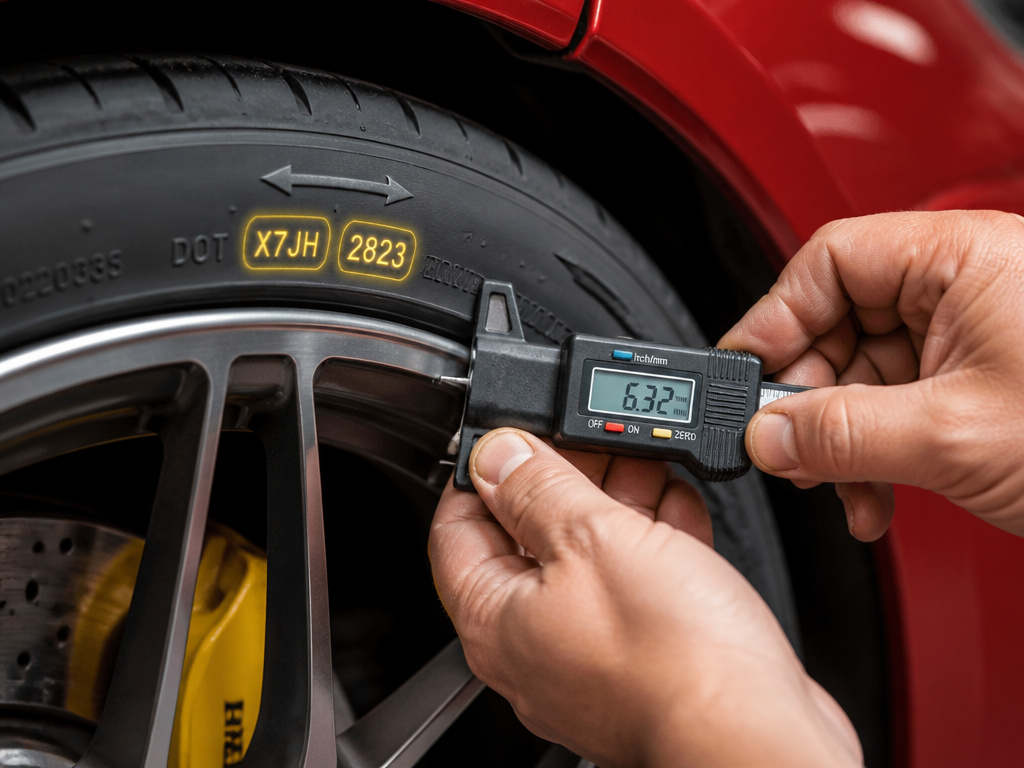
Do you follow the NHTSA rotation range or the Porsche bulletin? On a sports car, the answer depends on the model.
The NHTSA TireWise safety portal, from the U.S. Road safety agency, gives the monthly cold-pressure check and the 2/32-inch tread rule. It also says tires aren’t safe and should be replaced at 2/32 inch tread depth.
Porsche’s 911 GT3 bulletin says tires shouldn’t be older than 6 years. NHTSA says some vehicle and tire manufacturers recommend replacing tires that are 6 to 10 years old. The two rules overlap, but Porsche’s is stricter.
NHTSA suggests rotating tires every 5,000–8,000 miles or as per the owner’s manual, while Porsche’s TSB for the 911 GT3 does not specify a rotation interval, implying it may not be recommended for that model with staggered sizes. The Porsche 911 GT3 bulletin doesn’t list a rotation interval. Staggered sizes and axle-matching rules explain why a one-size rotation plan fails.
NHTSA warns against using a spare as a replacement for worn tires. Some owners use a full-size matching spare instead of buying a new pair. That practice is risky when the spare’s date, tread, or spec code doesn’t match.
Rotation and Axle Matching
Porsche says tires of the same make, type, and specification code must be used on each axle. If you replace one tire, keep the tread depth within 30 percent of the other tire on the axle.
Easy to miss: The DOT TIN may not appear on both sides. Check both sidewalls before you buy, because
For a high-output car, best high performance tires specs still need a date-code check. I start with the date code, not the brand.
When Should You Walk Away From a Sports Car Tire Deal?
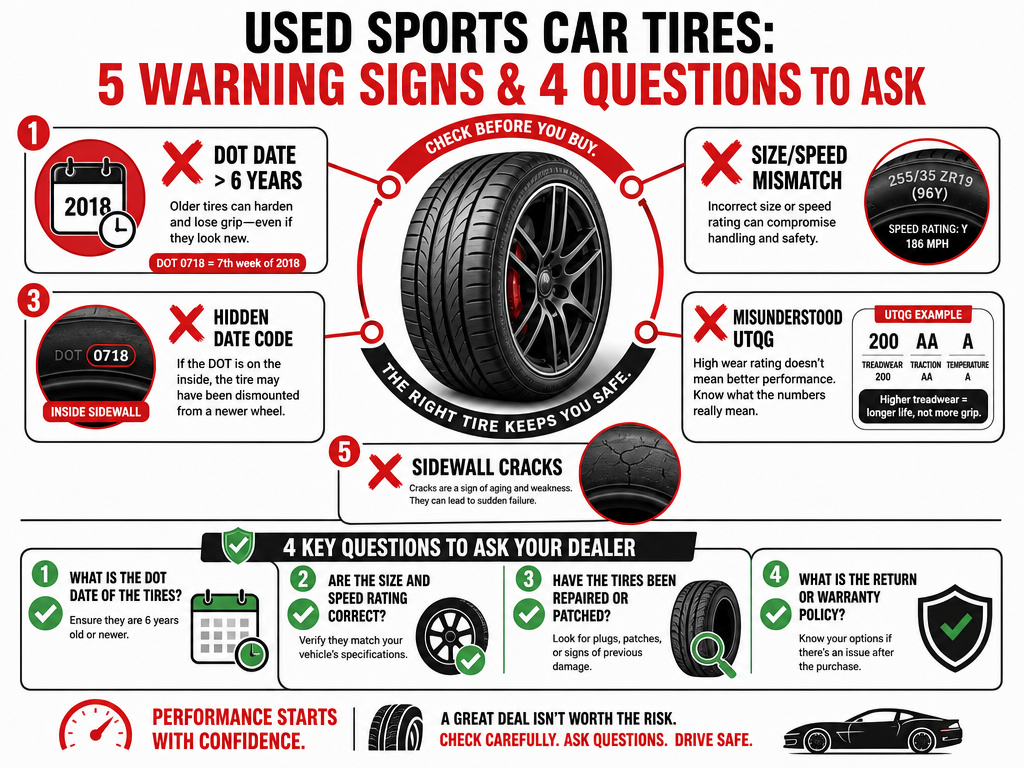
A good price isn’t a good tire if the specs fail. Check these red flags before the tire touches the road.
- The DOT date code shows a tire older than 6 years.
- The size, load index, or speed symbol doesn’t match the door label or owner’s manual.
- The shop won’t let you see the date code on both sides.
- You expect UTQG traction grades to predict dry cornering grip.
- The tire looks deep but has hairline sidewall cracks.
Can the shop show you the date code?
Owner forums and enthusiast groups are useful for wear, noise, and wet-brake reports. Enthusiast threads about best street racing tires reveal noise and wear complaints that spec sheets miss. A forum consensus doesn’t override the door label, the date code, or the axle-matching rule.
Ask the dealer these questions:
- What is the DOT date code on both sides?
- Does this tire match the load index and speed symbol on my door label?
- If I replace one tire, how close must the tread depth be?
- What is your balance and alignment plan for new tires?
How to Use Forums and Owner Clubs
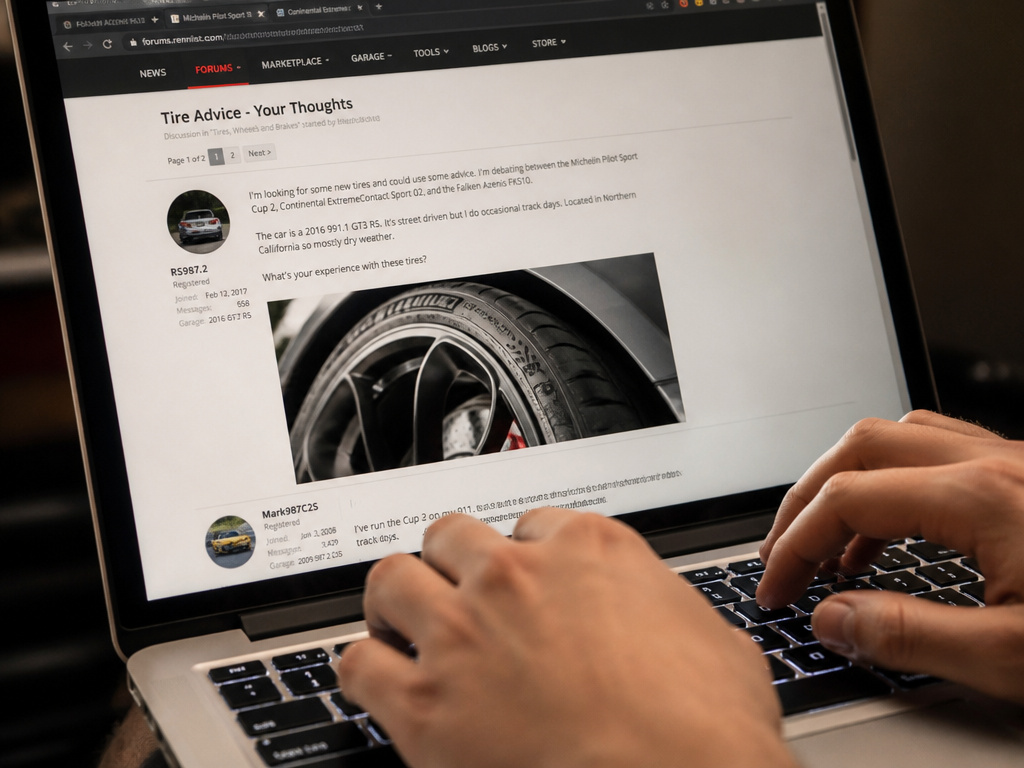
Real-world experience from other sports car owners is invaluable. Forums and dedicated clubs are where you learn how a specific tire model performs on your exact car, not just on a test track. Members can share feedback on noise, daily driving comfort, and how a tire’s characteristics change as it wears. They often discuss which tire shops are familiar with high-performance fitments and proper mounting procedures to avoid damage. Remember, official manufacturer recommendations, like using specific approved tires or not mixing types on an axle, should always take precedence over general forum advice.
Frequently Asked Questions
What tires are best for sports cars?
Start with the car’s approved size, load index, and speed symbol. Then choose a summer or all-season tire for mild weather. Choose a winter or sport tire for snow or circuits. The Michelin Pilot Sport Cup N1 is a sourced Porsche GT3 example, not a universal answer.
What is the 3 rule for tires?
I can’t verify a universal “3 rule” from NHTSA or Porsche guidance. The sourced age rules are Porsche’s 6-year limit and NHTSA’s note that some makers recommend replacement at 6 to 10 years.
What is the 7 7 rule for tires?
The same caution applies. No 7/7 rule appears in the NHTSA, DOT, or Porsche sources used here. Use the DOT date code, 2/32-inch tread rule, and the car’s own manual instead.
Can I replace only one tire on a sports car?
Only if the tread depth difference on the same axle stays within 30 percent, per Porsche’s 911 GT3 bulletin. Otherwise replace the pair and keep make, type, and specification code matched.
Do all-season performance tires work in winter?
They handle mild cold, but Porsche says winter rubber stays grippy in cold. A summer or sport tire loses characteristics in cold weather. Nordic winter tyres are for very bad conditions, not mild wet roads.
The Bottom Line
When you choose tires for a sports car, start with the DOT date code this week. If the last four digits show a tire more than six years old, treat it as expired, even if tread looks deep.
Porsche’s 6-year rule is stricter than the NHTSA 6-to-10-year range. On a car taking 1.3 g lateral loads, I wouldn’t gamble.
If your car uses staggered sizes, write down the front and rear sizes, load index, and speed symbol before you talk to a shop.
Specs first, opinions second.
