
Causes of a Thumping Noise From Tires: How to Diagnose It
This post contains affiliate links. As an Amazon Associate, we earn from qualifying purchases.
The main causes of a thumping noise from tires are tire damage, a separated belt, a flat spot, uneven wear, a loose suspension bolt, or an imbalance after mounting. Check speed, wear, and valve-stem marks first. A shop can measure runout and force variation.
The valve-stem mark is the fastest free clue. It tells you whether a tire is sliding on the rim after a recent mount. The rest walks through sound type, speed band, mounting history, and the checks that separate a tire problem from a suspension problem.
Key Takeaways
- Mark the valve stem before driving; a shift points to wheel slip.
- A thump over bumps can come from a loose torsion bar linkage.
- Drive the GM minimum before force variation checks.
- Stop if the thump is new and paired with steering shake or tire damage.
- Foam-lined tires hide noise but complicate repairs.
What does a thump sound like, and how do you isolate it?
The NHTSA NVH diagnostic guidelines define a thump as a dull beat caused by two items striking together. It is different from a hum, which rises with speed. They also separate it from shake, slap, and tick.
A thump is a dull beat caused by two items striking together, per NHTSA. Low-frequency vibrations often relate to tires or wheels. Common causes include out-of-balance tires or wheels, bent wheels, damaged tires, and worn suspension or driveline components. A loose torsion bar linkage can also create thumping over bumps.
I start with these notes because a thump hides its source. I wouldn’t chase a thump with a balance machine first.
- When it happens: at a steady speed, over bumps, during braking, or right after a tire change.
- Where you feel it: steering wheel, seat, floor, or one corner.
- What changed: new tires, alignment, or a curb strike.
Causes of a Thumping Noise from Tires: Start With the Free Tests
A recent tire change is the first suspect. GM says most wheel slip occurs immediately after mounting. GM also says to inspect tire pressure, damaged wheels, damaged tires, lug nut torque, and wear irregularities. GM lists alignment, new tires, and tire rotation as history clues.
Before you start: Support the vehicle on rated jack stands before touching wheels. Drive gently for up to 24 hours after a mount, because GM says lubricant needs time to dry. Don’t drive on a damaged tire, and stop if the thump pairs with steering shake.
Mark the valve stem and drive
- Clean the bead seat areas and use a paste type lubricant. GM says this helps align the wheel flange to the tire bead. GM says lubricate the safety humps when mounting tires, leave the rim flanges dry, and lubricate the drop center area only for difficult to mount tires. If you skip this step, the tire can slide and the thump may come back immediately after mounting.
- Mark the valve stem. Drive at normal speed. If the mark shifts more than one inch, treat the mount as suspect. If it shifts less, look elsewhere.
- Drive a minimum of 24 km (15 mi) before any force variation check. GM says this removes temporary flat-spotting. If you skip it, a shop may measure a false defect and replace a tire that is fine.
Simple.
The 15-mile drive is meant to clear temporary flat spots, not to fix permanent ones. If the noise feels like unbalanced tires at highway speed, don’t stop at a basic balance. GM says wheel slip is most common on clear coated or chrome wheels with very smooth bead seat areas.
I would rotate the wheel before buying tires. If the thump moves with the wheel, suspect the tire or rim. If it stays in the corner, suspect the hub, bearing, or suspension.
Ask for a calibrated measuring machine
Ask whether the shop uses a Hunter GSP9700 or a Snap-On RFV 2000. Check availability at a shop that lists road-force balancing, which measures tire stiffness and wheel shape. A Snap-On RFV 2000 is also accepted, so current reviews on Amazon can help you recognize the machine. GM’s bulletin recommends using a paste type lubricant. GM also says the equipment must be calibrated for each vehicle.
Bottom line: The valve-stem mark separates a bad mount from a bad tire.
200 Nm is the number for some front-axle thumps
A thump over bumps can move through suspension bolts. A Daimler AG technical bulletin for thumping noises describes a loose threaded connection at the torsion bar linkage, stabilizer bar, or suspension strut. The fix is to retighten those connections to 200 Nm.
BMW describes a control-arm remedy for front-axle tire noise. Its cause is the combination of factory wheels, approved tires, control arms, and the front axle. The remedy is to install vibration absorbers on the left and right control arms.
Check the torsion bar linkage bolts
Lug nut torque is part of a tire/wheel check, but it doesn’t explain a thump that only appears over bumps. The torsion bar linkage is a different joint. If a shop only rebalances the wheel, the noise can come back after the next dip. I would check the torsion bar bolts before I blame the tire.
Runout is the measured wobble of the wheel and tire as they turn. GM sets maximum wheel/tire runout on the vehicle at 0.050 in (1.27 mm). Mounting surface runout must stay under 0.005 in (0.127 mm). Wheel stud runout must stay under 0.008 in (0.203 mm).
| Problem | Sourced clue | Next check |
|---|---|---|
| Wheel slip | Mark moves more than one inch | Remount with paste lubricant |
| Front-axle thump | Noise over bumps | Check torsion bar linkage bolts |
| Runout | Above GM limit | Measure on vehicle |
| Hub centering | Mounting surface runout too high | Check hub and studs |
If the sound is a droning whir, compare it with wheel bearing noise. If the steering wheel taps your hand, compare it with steering wheel shaking. If a shop can’t measure runout, don’t buy tires there.
Does the thump change when you brake, turn, or coast?
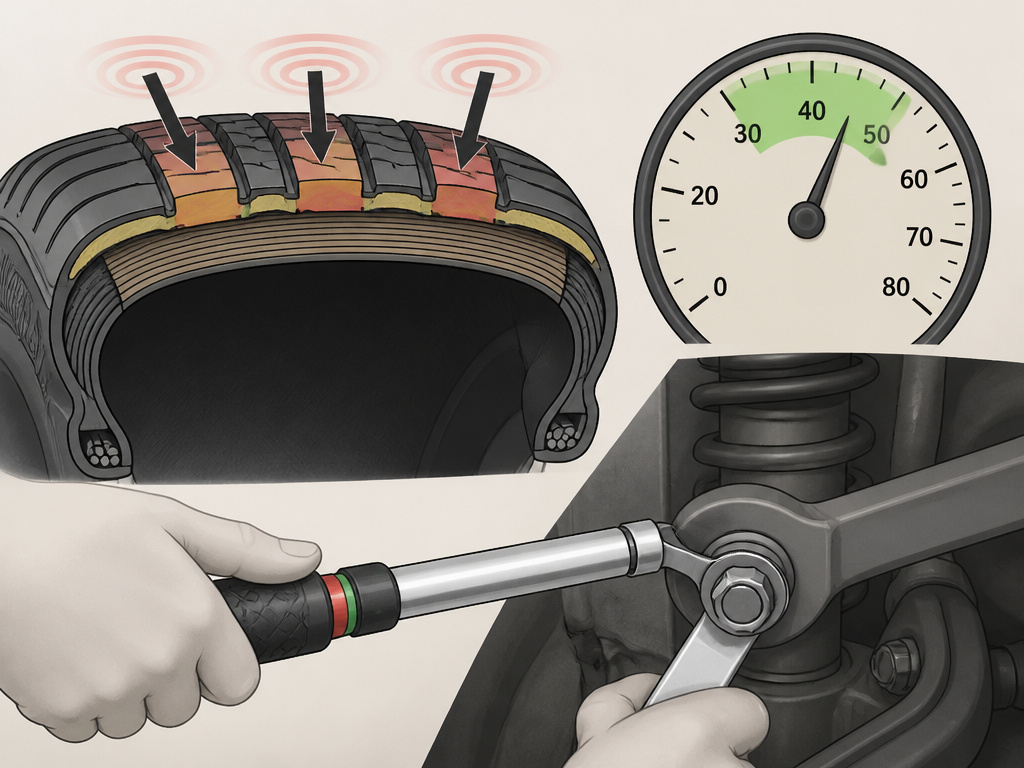
Speed band matters. GM describes vibration at 35-45 mph or 60-70 mph, felt in the seat or steering wheel. Audi notes that vibration can be felt at a constant speed. BMW reports front-axle tire noise in the 30 to 50 mph range.
Balance vs force variation vs wheel slip
A balanced tire can still thump if the tire has uneven stiffness. Audi’s NHTSA Technical Service Bulletin says radial force variation, which is the tire’s uneven springiness, can cause steering wheel vibration at a constant speed. Rear tire force variation can shake the whole vehicle. Wheel slip changes the balance point after the tire rotates on the rim. A peer-reviewed tire-pavement interaction noise study says uneven tire stiffness can raise radial force variation from 70 N to 180 N.
If the thump is tied to a recent mount, check wheel slip before buying tires. If the thump is tied to a steady highway speed, check force variation and runout before balancing. If the thump is tied to bumps, check suspension torque first.
If the symptom looks like tire vibration only at highway speed, start with force variation and runout. If the tread shows tire cupping, fix the wear cause before buying tires. If you notice symptoms of an out-of-round tire, measure runout on the vehicle.
| Condition | Likely clue | Best first test |
|---|---|---|
| Constant speed | Steering wheel shake | Check front tire force variation |
| Seat shake | Rear tire issue | Check rear force variation |
| Over bumps | Suspension bolt | Torque linkage bolts |
| After mount | Valve-stem mark moves | Check wheel slip |
These speed bands overlap. A single number won’t solve every case.
Stop driving if these signs appear
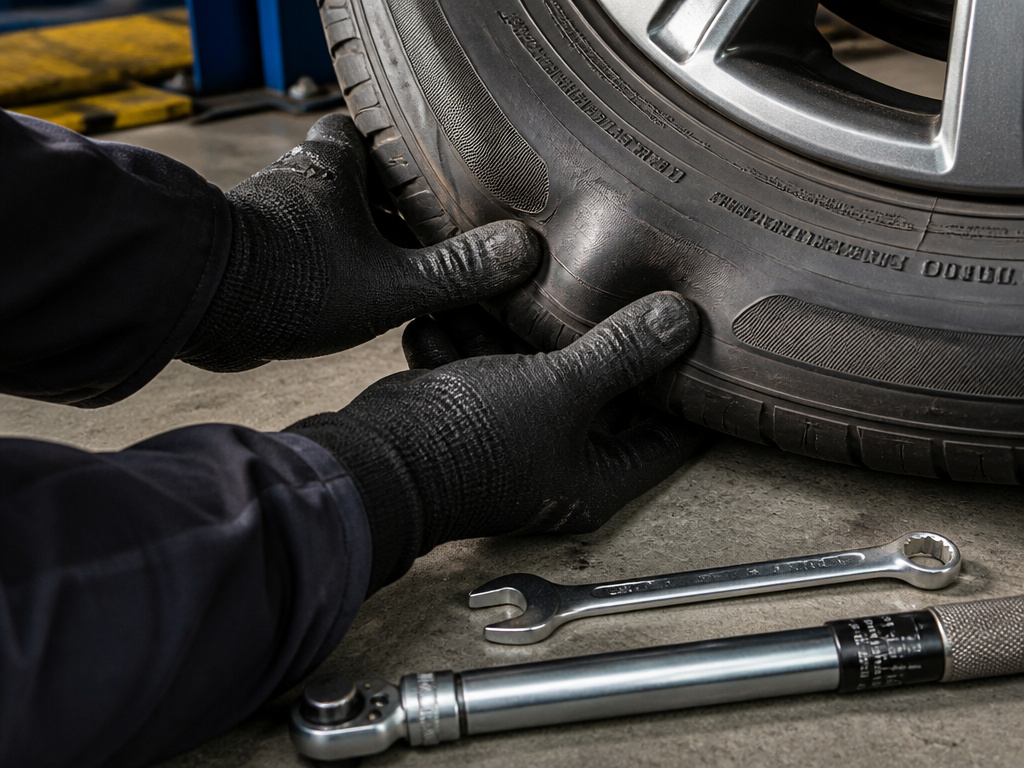
A thump can signal a problem. A shop can inspect for a tire belt shift, but that check doesn’t replace torque and runout tests.
Common mistake: Rebalancing a tire without checking for wheel slip. The thump can return right after the mount.
I would not buy a foam-lined tire to hide a thump. The foam is a layer bonded inside the crown. It can cut cabin noise, but it makes patching harder because the adhesive area has to stay clear. Some shops cut the foam away locally, and others refuse the job. Ask before the tire is on the lift.
- A new thump with steering shake can mean a tire defect or a loose suspension joint. Stop and inspect.
- A damaged tire means stop.
- A mark that shifts too far after a mount can mean the tire is sliding on the rim.
Check it, don’t assume it. If you’re unsure, stop.
How a bad wheel bearing causes a thump
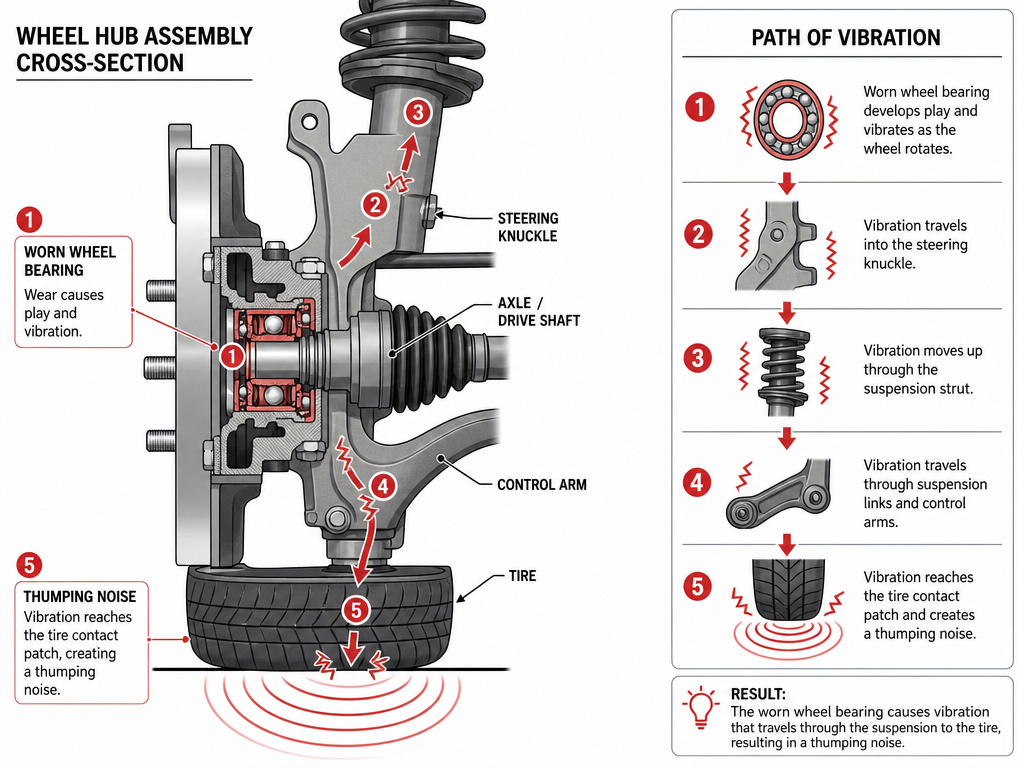
A worn wheel bearing can cause a thumping noise as the damaged components within the bearing strike together during rotation. This is a direct example of the thump definition: a dull beat caused by two items striking. The noise often changes with speed and may be accompanied by a growling or humming sound. Since low-frequency vibrations are often related to tires or wheels, a faulty bearing can also transmit a vibration through the suspension. Worn bearings are considered a damaged suspension component, a common cause of vibration. The noise may be more noticeable when turning, as load shifts on the bearing.
Can loose lug nuts cause a thumping noise?
Yes, loose lug nuts can absolutely cause a thumping or knocking sound from the wheels. When lug nuts are not properly tightened, the wheel is not securely clamped to the hub. This allows for slight movement, creating a scenario where the wheel can shift and strike the hub or studs, producing a distinct thump. This condition is a safety hazard and should be addressed immediately. Technicians will check lug nut torque as a standard diagnostic step. Proper retightening of bolted connections, as seen in procedures for other suspension components, is critical to eliminate such noises and ensure safe operation.
Thumping from a bent or out-of-round wheel
A bent wheel or one that is out-of-round is a classic source of a thumping noise and vibration. As the wheel rotates, the bent section strikes the road surface with more force, creating a periodic thump. This fits the definition of a thump as a dull beat from two items striking. General Motors specifies maximum allowable runout measurements for wheels on the vehicle. An out-of-round condition creates increased radial force variation in the tire-wheel assembly, which can cause vibration felt in the steering wheel or the entire vehicle. This is listed among the common causes of vibration alongside damaged tires and worn suspension parts.
Frequently Asked Questions
Why do my tires make a thudding sound?
Thudding sound points to tire damage, wheel slip, or a loose suspension joint. Check the speed, the bump response, and the valve-stem mark before replacing tires.
Why does it sound like my tires are knocking?
Knocking and thumping are similar. A loose torsion bar linkage can create a dull beat over bumps. A separated belt or damaged tire can also make a thud once per rotation.
Why does my car make a rhythmic thump when I drive straight?
Steady-speed thump points to the rotating assembly. Check force variation and runout before buying tires. GM says work must go beyond basic balancing.
Can balancing fix a thumping noise?
Balancing alone doesn’t fix every thump. A balanced assembly can still have force variation or runout. GM says work must go beyond basic balancing.
Do new tires cause thumping right after mounting?
New tires can thump if they slip on the rim. GM says most slippage occurs immediately after mounting. A valve-stem mark can show that fault.
Before You Go
The causes of a thumping noise from tires split into two camps: the rotating assembly and the suspension joints.
This week, put a paint pen mark at each valve stem. Drive normally for a short loop, then compare the mark to the stem. If it moves too far, go back to the installer. If it stays put, use the speed-band table before buying tires.
If the thump happens only over bumps, the tire may be innocent. A Daimler AG bulletin points to a retighten job on torsion bar linkage bolts. That is a shop job, not a guess.
One honest limit: these checks separate likely causes, but they don’t replace a calibrated runout or force variation test. If a shop can’t measure runout and force variation, don’t buy tires there.
