
How Long Does a Tire Plug Last? Temporary or Permanent?
This post contains affiliate links. As an Amazon Associate, we earn from qualifying purchases.
A plug has no dependable lifespan. How long does a tire plug last depends on hidden damage, puncture size, and driving. AAA calls a plug a temporary fix under 50 mph. A combination plug and patch from inside is the accepted permanent repair.
The 50 mph limit is the part that makes a plug a ride to the shop, not a repair plan. That ride can be short. A hidden liner injury can turn a sealed puncture into a slow leak or a sudden failure.
What follows: three repair states, two hard limits, and one roadside rule for getting to a shop.
Key Takeaways
- A plug is temporary. AAA says drive under 50 mph and go straight to a shop.
- Plug alone fails standards. USTMA and TIA require a plug plus an inner patch.
- The repair zone matters. Sidewall or shoulder damage means replacement, not repair.
- Combination repairs can last. A professionally installed combination patch can serve the tire’s remaining life.
- No brand lifespan is proven. No maker gives a plug kit mileage number.
How Long Does a Tire Plug Last?
You plug it on Tuesday. The gauge holds. It can hold for months.
I used to think a plug that held air was close enough. The USTMA tire repair basics page, from the U.S. Tire Manufacturers Association, states a plug alone is unacceptable. That changed my view.
AAA calls a plug a temporary fix under 50 mph. Hagerty says a properly installed plug can last for thousands of miles, while industry authorities like AAA and TIA state it is only a temporary emergency fix. Those views don’t match. The safer answer is that a plug’s lifespan is no reliable number. That is the wrong question. Ask what the tire did before the hole appeared.
A temporary string plug seals air by wedging rubber in the puncture, with no chemical bond to the tire. Industry repair standards require removing the tire, inspecting the liner, filling the injury, and applying a patch. Hidden sidewall damage, steel belt corrosion, and serious tread belt separation remain possible after weeks.
Why a Plug Alone Is Not a Repair
The 1/4 inch (6mm) limit is not a suggestion. A plug wedges rubber into the hole. Air pressure helps push it against the sides. That seal has no bond to the liner. Water can still reach the steel belts and corrode them.
The Tire Industry Association repair guide says a plug by itself isn’t acceptable. It doesn’t permanently seal the innerliner (the tire’s air seal layer). A patch alone has the opposite flaw. It seals the liner but leaves the void open. USTMA says a rubber stem must fill the injury and a patch must seal the liner.
I don’t call an outside plug a repair. I call it a short trip to a shop.
Aerosol sealants are a trap. Slime aerosol can mask damage and complicate a professionally installed combination patch repair. Toyo warns that aerosol sealants can contain flammable gas. That risk matters when a technician removes the tire. I treat sealants as emergency mobility, not repair.
When a Plug Is Safe: Limits That Decide It
The repair zone is the first filter. Before you plug anything, check the tire repair zone. Puncture repairs are limited to the center of the tread area. Sidewall and shoulder injuries are not repairable.
The 1/4 Inch Limit
A clean tread puncture can be plugged only if it is no larger than 1/4 inch (6mm). Continental sets the 1/4 inch (6mm) limit for passenger and light truck tires through Load Range E (a light truck size class). Toyo writes 1/4 inch (6.4mm), while other sources specify 1/4 inch (6mm). A hole that size damages the belts beyond a safe seal.
The Shoulder and Sidewall Rule
If the injury extends into the shoulder or sidewall, replace the tire. USTMA and Continental both ban repairs in that area. Driving with a nail can be temporary, but the nail’s location decides the repair. The location decides the outcome.
Tread Depth and Run-Flat Limits
Never repair a tire worn to 2/32 inch remaining tread. TIA, Continental, and Toyo agree on that floor. Run-flat tires split the sources. Goodyear says run-flat tires may be repaired in the same manner as the wall chart. Continental doesn’t recommend repair or reuse of Continental SSR tires (self supporting run-flat tires). That conflict is real.
- Center tread crown. The puncture sits in the center tread crown.
- 1/4 inch or smaller. The hole is 1/4 inch (6mm) or smaller.
- No flat driving. The tire was not driven flat.
- Above 2/32 inch. The tire has more than 2/32 inch (1.6mm) tread.
- Inside inspection. A shop can remove it and inspect the liner before the job is called done.
Plug vs. Patch vs. Combination Repair
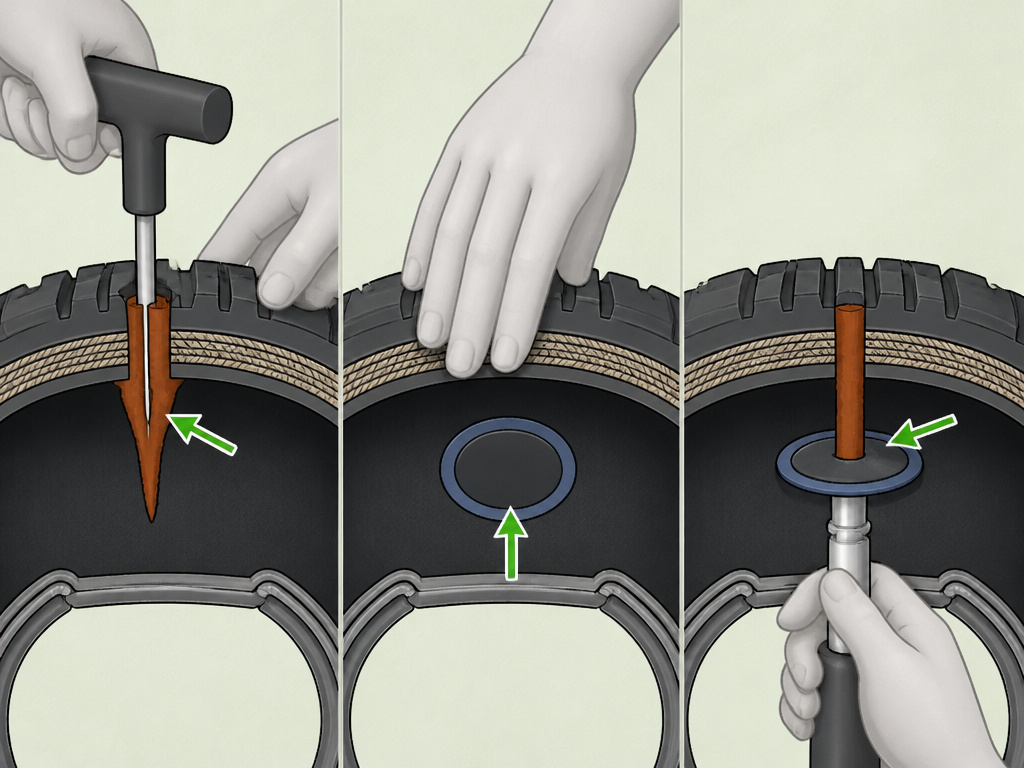
The method decides the lifespan.
| Repair Method | What It Seals | Industry Status | Expected Life |
|---|---|---|---|
| Plug from outside | Puncture channel only | Temporary | No reliable lifespan |
| Patch from inside | Innerliner only | Incomplete alone | Not a full repair |
| Plug and patch from inside | Channel and liner | Accepted permanent method | Can last tire life |
A plug alone gets you moving. A patch alone is also not an acceptable repair. A combination plug and patch is the accepted permanent repair. BFGoodrich says the industry standard for a permanent repair is a combination patch-and-plug installed from inside after a full internal inspection. The plug vs patch choice becomes simple when you compare what each method seals.
Speed rating changes the math. Goodyear allows only one properly performed puncture repair on H and above speed rated tires (H is a speed symbol, not a brand). AAA says a professional combination repair restores the tire’s full-speed rating, though some manufacturers like Toyo state that a repair may reduce the speed rating. Toyo says that for its tires, properly repaired high-speed ratings like (Y), Y, W, Z, V, VR, and H become H, with a maximum speed of 130 mph. That matters on performance tires.
Warranty is where the sources disagree. Continental says a repair invalidates its manufacturer’s warranty. Goodyear’s document discusses speed rating maintenance, not warranty.
Cost can tempt a driver to choose a plug, but the repair zone and inspection decide. For a temporary kit, a combination plug-and-patch unit is the industry-accepted method for a permanent repair, though a plug alone is only a temporary fix. I keep aerosol sealants only as a last resort, noting that Toyo warns they can contain flammable gas.
How to Make a Temporary Plug Last Until a Shop
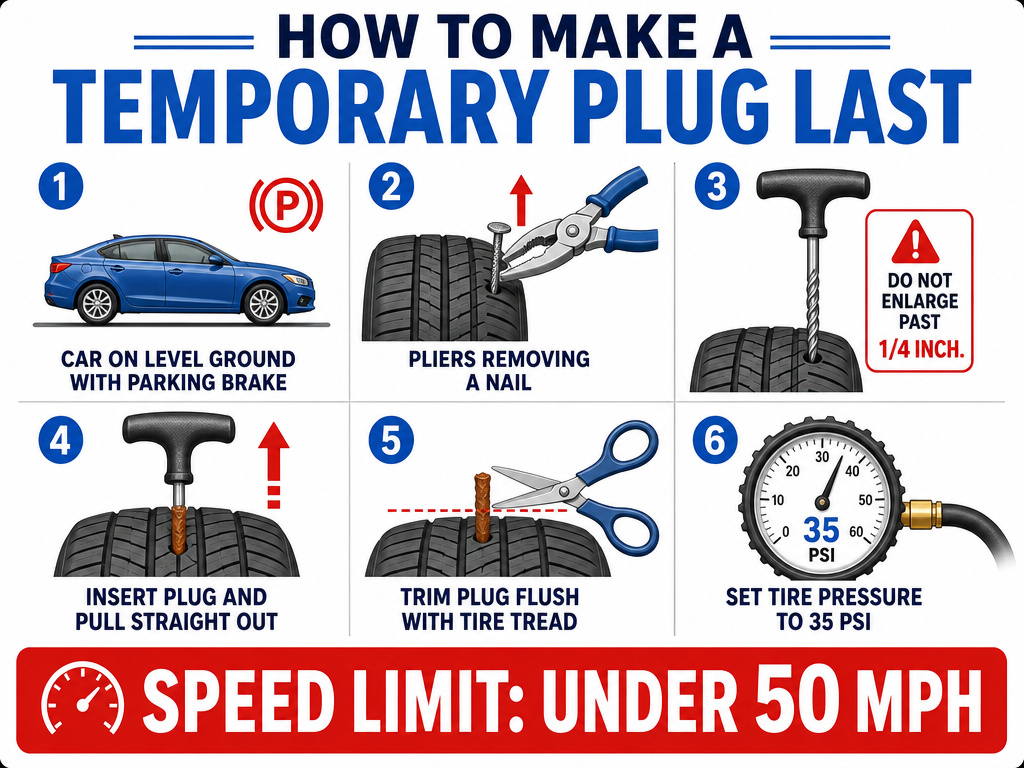
Can you drive with a plug on the highway? Only if the trip is short and the speed stays under 50 mph. AAA makes that limit explicit. Continental says a consumer shouldn’t repair a damaged tire. I treat home plugging as emergency mobility only.
A basic tire plug kit can get you moving, but it can’t inspect the inner liner. If you are learning how to plug a tire, treat the job as a short trip, not a permanent fix.
Before you start: Aerosol sealants can contain flammable gas, so tell the technician if you used one. A plugged tire can hide liner damage, so keep speed under 50 mph. A tire driven flat can have internal heat damage, so inspect before reinflating.
- Level ground. Put the car on level ground and set the parking brake. If you skip this, the tire may roll as you work.
- Pull the object. Remove the object with pliers, not by wiggling it free. Wiggling can widen the channel and make the plug sit loose.
- Ream with care. Use a reamer (a pointed cleaning tool) only inside the puncture channel. The reamer drags through rubber with a gritty chew. If you tear the hole larger than 1/4 inch (6mm), the tire is no longer repairable.
- Insert straight. Insert a plug with the tool, then pull the tool straight out. Pulling at an angle can leave the plug uneven and cause a slow leak.
- Trim flush. Trim the plug flush after it seats. Leaving a long tail can snag on road debris and pull the plug loose.
- Check pressure. Inflate with a 12V compressor to the recommended pressure and check with a gauge. A plug that holds at rest can still leak when hot and loaded.
Easy to miss: A plug that holds air can still hide liner damage. Get an inside inspection before your next highway trip.
What Signs Mean a Plug Is Failing?
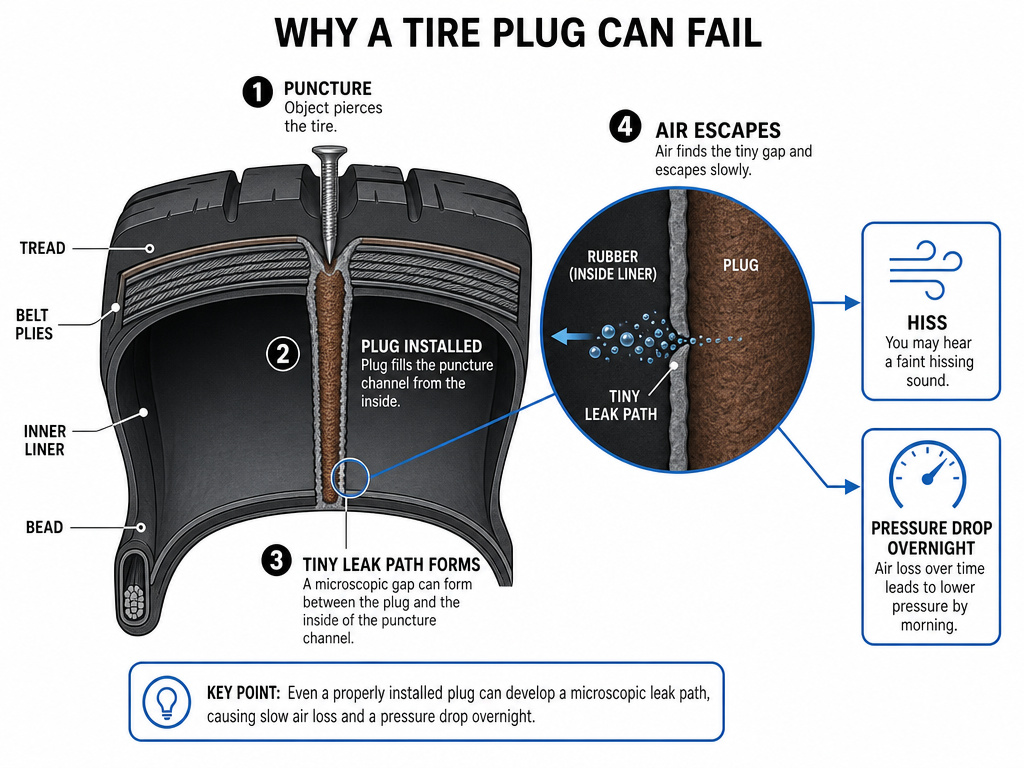
A failing plug can start with a hiss. Then the gauge drops after the tire sits overnight. The hiss is a physical leak path. Soapy water can show tiny bubbles at a leak.
The best tire plugs are combination units, not rope plugs. The best plug kits include a reamer, insertion tool, and plugs. For plugged tire safety, the answer is no for any long trip.
| Symptom | Likely Cause | Action |
|---|---|---|
| Sidewall bulge | Internal structure damaged | Replace tire |
| Plug weeps after heat | Channel not sealed | Shop inspection |
| Pressure drops after sitting | Leak path open | Inside repair or scrap |
| Tread at 2/32 inch | Tire worn out | Replace tire |
- Sidewall or shoulder. The puncture is in the sidewall or shoulder.
- Bulges end it. A sidewall bulge means replace the tire.
- Larger than 1/4 inch. The hole is larger than 1/4 inch (6mm).
- Driven flat. The tire was driven flat, even briefly.
- Overlap repair. A new repair would overlap an old repair, so scrap the tire.
Continental says only a trained tire specialist can decide if a tire is repairable.
If a plug holds air but the tire never came off the rim, the repair is incomplete.
Cost of plug vs. Patch
A plug kit is cheap and the job seems simple. A professionally installed combination patch repair costs more. The difference is not just price, it’s a difference in what you get. A plug is a temporary, emergency fix only meant to get you to a shop. A professionally installed combination patch, most often a plug-and-patch combination, is the only industry-accepted method for a permanent, safe repair. The higher cost of a professional repair covers removing the tire from the rim for a full internal inspection, filling the void with rubber, and sealing the innerliner. This restores the tire’s full-speed rating for normal driving. A plug alone does not.
Frequently Asked Questions
How long can you drive with your tire plugged?
AAA says stay under 50 mph and drive only the distance to a repair shop. That is not a long-term highway plan.
Is a plug just as good as a patch?
No. USTMA and TIA say a plug alone isn’t acceptable. A combination plug and patch from inside is the accepted repair.
Can a tire plug cause a blowout?
Plug can fail if it hides liner damage or if the tire was driven flat. Continental warns that improper repairs can fail by tread belt separation.
Can a tire be plugged twice?
Only if a trained technician finds the tire meets every limit. USTMA says repairs can’t overlap, and Continental says an existing improper repair means the tire must be scrapped.
Does a tire plug void the warranty?
Manufacturer policies differ. Continental says a repair invalidates its tire warranty. Goodyear allows one proper repair to maintain the speed rating, but that isn’t a warranty statement.
Before You Go
If you only remember one number, make it 50 mph. AAA ties a temporary plug to that speed and a direct trip to a shop. Above that, you are gambling with a seal that has no bond to the liner.
Before you buy a kit, decide what you are buying. A roadside plug can get you off the shoulder. A combination plug and patch from inside is the repair. That difference is where the risk lives.
How long does a tire plug last is the wrong first question. Ask if the tire came off the rim. If it didn’t, the answer is incomplete.
I don’t recommend leaving a plug in place for years. For me, I would rather see a spare mounted and a shop visit. That stance sounds old-fashioned. It keeps the decision tied to the data, not to luck.
