
Ultra High Performance Tires Pros and Cons: Worth It?
This post contains affiliate links. As an Amazon Associate, we earn from qualifying purchases.
Ultra high performance tires pros and cons hinge on grip and compromise. They deliver strong dry adhesion for sports cars, but reduced tread depth, cold-weather limitations, and stricter inflation rules make them poor matches for many daily drivers. Check the sidewall speed rating and the car maker’s cold pressure before you buy.
Reduced tread depth means there is less rubber to trade for cornering grip. That trade shows up in wet braking, cold stiffness, and the sidewall markings you must match to the vehicle. The same soft compound that bites on dry pavement can harden below 40 F, which is why GM and Porsche bulletins warn about winter use.
What follows: sidewall markings, cold-weather rules, age limits, runflat limits, and the daily-driving decision I’d make for a street car.
Key Takeaways
- Read the sidewall. Look for ZR, W, Y, or V speed ratings and Porsche N0 or N1 codes before assuming a tire is street-approved UHP.
- Set pressure cold. Porsche specifies about 68 F (20 C) for its pressure charts, and GM says warm cold-soaked tires above 5 C (40 F) for 24 hours before inflating.
- Expect a shorter wear window. UHP designs use reduced tread depth, so tread life is a real trade for dry grip.
- Use age rules strictly. NHTSA recommends replacing tires more than 10 years old, while Porsche recommends replacing tires more than 6 years old.
- Don’t chase grip you won’t use. If your car sees cold, wet, or rough roads, a grand-touring or all-season tire may fit better.
What Sidewall Markings Prove a Tire Is UHP?
The first place to look is the sidewall, not the marketing page. Read the sidewall first.
Before you buy, compare max performance tires with UHP tires using the car’s placard and the tire’s speed rating, not a review headline about ultra high performance tires pros and cons.
Ultra high performance tires use reduced tread depth, lower aspect ratio constructions, and speed ratings such as V, W, Y, or ZR. Porsche approvals add codes like N0 or N1 near the tire type designation. These markings tell shops which pressures and repairs apply. The sidewall also shows size, load rating, and manufacture date.
Speed Ratings and Sidewall Codes
Speed ratings are not stickers. They tell the shop what the tire was built to handle. Porsche’s service notes say sports tires are permitted on public roads and satisfy road safety criteria, but they also say repairs to “V”, “W”, “Y”, and “ZR” tires are not permissible. Porsche also says inner tubes in tubeless tires are not permissible. That rule changes who can touch your flat tire.
| Sidewall Marking | What It Tells You | Why It Matters |
|---|---|---|
| ZR, W, Y, V | High-speed rating family | Porsche says repairs to these tires are not permissible. |
| N0 or N1 | Porsche tire approval code | Pressure and fitment rules follow the approved tire. |
| M+S | Winter listing marking | Porsche winter tires use M+S; UHP summer tires may not carry it. |
UHP Summer vs UHP All-Season
The GM and Porsche bulletins focus on UHP summer tires and winter tires, not a single UHP tire that does everything. If a tire carries M+S, it is not a winter tire by itself. If it carries a Porsche N0 or N1 code, it has been approved for a specific car and pressure chart.
When I shortlist best high performance tires, I check maker approval codes before review videos. For a Porsche 911 GT3 or 911 R with 20-inch wheels, the standard cold pressure is 29 psi front and 33 psi rear. For a 911 GT2 RS with 20-inch summer tires, standard pressure is 35 psi front and 29 psi rear. With Michelin Pilot Sport Cup 2 R, Porsche gives a performance pressure of 36 psi front and 32 psi rear.
Where UHP Tires Help and Where They Hurt
Do you actually need dry grip you can only use twice a year? The answer depends on the road, the temperature, and how much noise you tolerate. That advantage is real. The trade is real.
The ultra high performance tires pros and cons question sits in the gap between dry grip and daily compromise. A UHP tire on rough pavement sends a short thud through the wheel and a higher hum into the cabin. I treat a curb hit as a tire inspection event, not a cosmetic event, because NHTSA says a damaged tire may not show visible harm yet fail later.
The Wear and Ride Trade
UHP tires use reduced tread depth, so there is less rubber to wear before the 2/32 inch limit arrives. A broader best performance tires list should separate track use from street use. Low profile tires also raise curb damage risk, so the wheel and tire become one repair decision.
- Dry grip. The tire bites harder on warm pavement, and steering response feels tighter.
- Shorter tread life. Reduced tread depth gives less rubber to trade for grip.
- Harsher ride. Low profile sidewalls transmit more road through the wheel.
- Noise. The cabin hum rises on coarse asphalt.
- Cost. You pay more in tires, replacements, and damage risk.
Why Cold Weather Changes the Decision
Below 5 C (40 F), GM says summer UHP tires have reduced capability. Porsche says it is advisable to mount winter tires below 7 C (45 F), because summer tire driving characteristics are reduced at low temperatures. Extremely low temperatures can cause permanent damage to summer tires.
Cold-soaked summer rubber can feel board-stiff. The tread may show tiny shoulder cracks before the car even moves. GM says the rubber loses flexibility and may develop surface cracks in the tread or shoulder area.
A GM bulletin states that surface cracks are cosmetic and will not result in a loss of air. It also says tires used in cold climates that show tread cracks should be discarded. I do not gloss over it.
The summer tires category has the same cold warning: reduced capability below 5 C (40 F).
For Corvette owners, GM names Michelin Pilot Super Sport ZP and Pilot Sport 4S ZP tires. The bulletin says to avoid driving, moving, or test-driving below -7 C (20 F).
For Camaro ZL1 and 1LE models, Goodyear F1 Supercar G2 tires are not intended for snow, ice, or road surfaces below -7 C (20 F).
Cadillac CTS Vsport owners with Pirelli P-Zero Nero tires get the same -7 C (20 F) warning.
The 2014-2017 Chevrolet SS is equipped with Bridgestone ultra-high performance summer tires, and GM states ultra-high performance summer tires have reduced capability below 5°C (40°F).
| Issue | Position | Who Holds It |
|---|---|---|
| Tire age | Replace after 10 years | NHTSA tire maintenance manual |
| Tire age | Replace after 6 years | Porsche service bulletin |
| Storage | Store summer tires above -7 C (20 F) | GM bulletins |
| Storage | Store in a cool, dry, dark room | Porsche bulletin |
| Cracking | Cosmetic, no air loss | GM bulletin |
| Cracking | Discard used tires with tread cracks | GM bulletin |
I keep a thermometer in the garage because 20 F is not a suggestion. If tires have been subjected to -7 C (20 F) or less, GM says to warm them first. Warm them in a heated space to at least 5 C (40 F) for 24 hours or more before installing or inflating. Do not apply direct heat.
How to Maintain UHP Tires Without Ruining Them
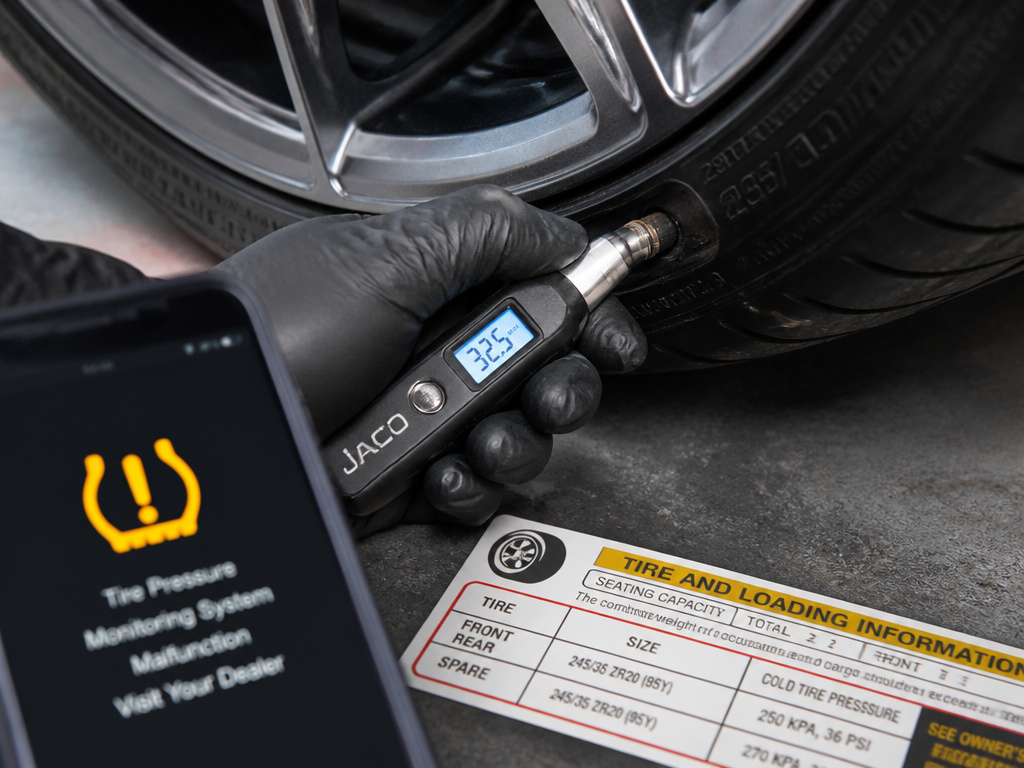
A garage floor at 20 F can turn a new tire into a wait-and-see problem. Cold rules are not optional. The NHTSA tire maintenance manual sets the cold pressure rule: check after three hours parked or after driving less than 1 mile at moderate speed.
Before you start: Cold summer tires can crack below -7 C (20 F), so warm them above 5 C (40 F) for 24 hours before inflating. A recently low-pressure runflat gets hot enough to burn your hands, so let it cool. Never bleed pressure from a hot tire to reach cold spec, because under-inflation can cause sudden failure.
The Tire Information Service Bulletin says runflat tires need an operational TPMS, the tire pressure monitoring system, and regular gauge checks. It gives common low or zero inflation limits: no greater than 50 mph and no greater than 100 miles. Some runflat tires must be replaced after low or zero inflation, and some manufacturers require special rims with internal support rings or extended humps. The repair policy varies by manufacturer. USTMA says to allow a runflat tire that has recently been run low or at zero-inflation to cool before handling.
Performance tires trade comfort for response, so the car’s intended use matters. I check the date code before the brand, because age can hide under good-looking tread.
- Check pressure when the tire is cold. If you skip this, a hot tire reads high, and bleeding pressure can leave you dangerously under-inflated.
- Set the pressure from the vehicle placard. Porsche specifies about 68 F (20 C) for its pressure charts. If you skip this, handling can become unpredictable.
- If it is necessary to adjust inflation pressure when your tires are ‘hot,’ set their pressure to 4 psi (28 kPa) above the recommended cold inflation pressure.
- Check pressure monthly and before long trips. A loss above 2 psi per month points to a damaged tire, valve, or wheel.
- Measure tread depth at the built-in indicators. At 2/32 inch or less, the tire is dangerously worn.
Are They Worth It for Daily Driving?
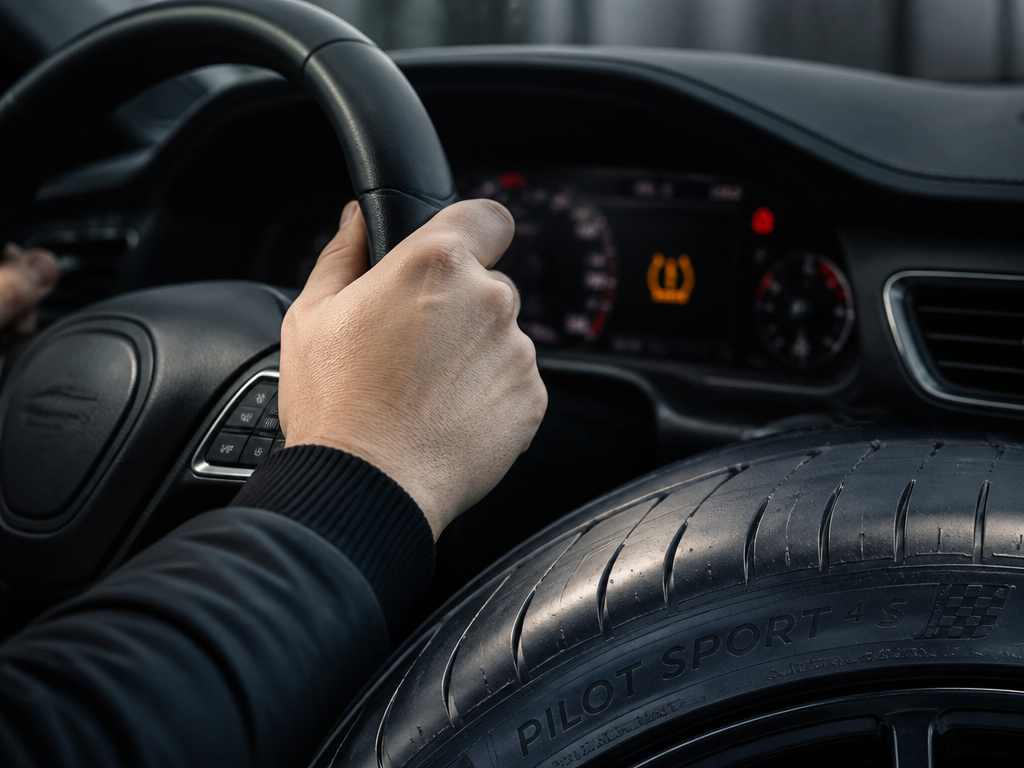
I once steered a daily driver toward a high-performance tire because the reviews were excellent. The mistake was mine. I checked grip, not the owner’s priorities.
I won’t sell a UHP summer tire to a commuter who has never seen a tire’s cold pressure chart. The grip is real, but the noise and cold limits are real too.
For tires for daily driving, I prefer a tire that stays usable in rain and cold. Touring tires give a quieter ride, but they do not match UHP dry grip. That gap is why I steer mild-climate drivers toward an all-season or grand-touring tire before a UHP summer set.
- Skip UHP summer tires if your commute starts below 5 C (40 F). The compound stiffens, braking feels dull, and GM warns to fit winter tires below that temperature.
- Skip UHP summer tires if your roads have sharp curbs.
- Skip them if you will not check pressure monthly.
The 2020 – 2021 Corvette with the Z51 Performance Package is equipped with Michelin Pilot Sport 4S ZP run flat tires. It at least matches the approved size. The approval ties the tire to the car’s pressure chart.
2012-2015 Camaro ZL1 and RPO 1LE vehicles come with 285/35ZR20 and/or 305/35ZR20 Goodyear F1 Supercar G2 ultra high performance summer tires as standard equipment.
UHP tires vs all season or touring tires
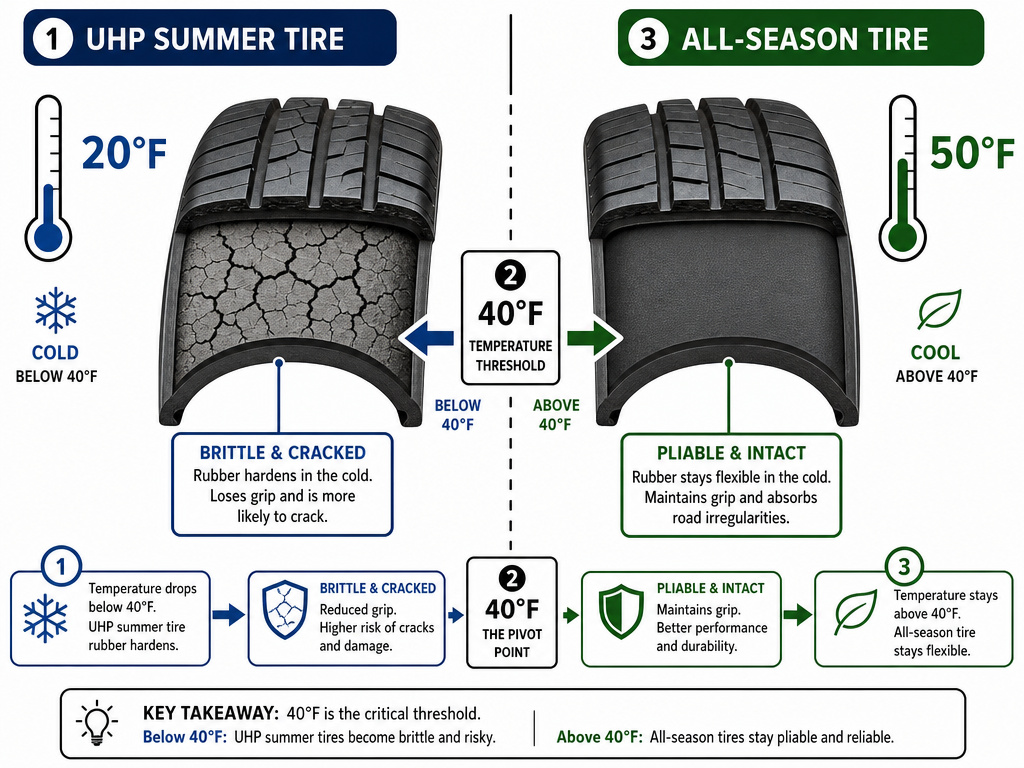
The primary difference is operating temperature. Ultra-high performance summer tires have reduced capability below 40°F and can be permanently damaged by cold. It is recommended to fit suitable winter tires below this temperature. In contrast, all-season or touring tires are designed for a wider temperature range. For UHP tires, driving or even moving the vehicle in sub-freezing conditions is strongly discouraged, as the rubber can lose flexibility and develop cracks. These tires are for warm, dry performance, not year-round convenience in cold climates.
What tire speed ratings mean
Speed ratings are engineering codes, not suggestions. They indicate the maximum speed a tire is certified to sustain under its specified load. Higher ratings like ‘V’, ‘W’, and ‘Y’ correspond to tires built for sustained high-speed operation, often found on ultra-high performance vehicles. These ratings come with specific service rules. For instance, manufacturer notes state that repairs to tires with ‘V’, ‘W’, ‘Y’, and ‘ZR’ speed ratings are not permissible. This restriction directly impacts where you can get a flat tire fixed and often means the tire must be replaced.
Frequently Asked Questions
Are ultra high performance tires worth it?
Only if your driving uses the grip. For a street car that sees cold mornings, wet commutes, or rough pavement, the noise, tread wear, and cold limits outweigh the dry grip.
How long do ultra high performance tires last?
They use reduced tread depth, so check for 2/32 inch tread depth, age, and damage. NHTSA says replace tires over 10 years, while Porsche says replace tires over 6 years.
What tires should I stay away from?
Stay away from UHP summer tires if you cannot warm cold-soaked tires above 5 C (40 F) for 24 hours before inflating.
What’s the best ultra high performance all season tire?
No UHP summer tire in these bulletins is a true all-season tire. Look at all-season or grand-touring options if you need one tire for mixed weather.
The Bottom Line
If your car sees below 5 C (40 F), skip UHP summer tires until you have a winter set. That one threshold decides most of the argument.
Start by reading the sidewall. Match the speed rating, the maker approval code, and the cold pressure chart to your car before you judge marketing claims.
Check the placard first.
