
Winter Tires Pros and Cons: Is It Worth It?
This post contains affiliate links. As an Amazon Associate, we earn from qualifying purchases.
Winter tires pros and cons include cold traction, warm wear, storage needs, and cost. Certified snow tires improve grip below freezing. Soft compounds lose handling on hot pavement. Check the Three-Peak Mountain Snowflake and sustained temperature, not just a calendar date, before swapping.
The snowflake mark carries a real test standard. In the United States and Canada, certified winter tires must meet ASTM F1805 and display the Three-Peak Mountain Snowflake symbol.
What follows: traction data and warm-weather penalties. Then storage rules and AWD limits. Studded options and temperature lines close the choice.
Key Takeaways
- Snowflake symbol matters: ASTM F1805 certification and the Three-Peak Mountain Snowflake show tested snow traction.
- Warm pavement punishes soft tread: winter tires wear faster and feel mushy in hot conditions.
- Storage is part of the cost: indoor space, wheel sets, and about 6 psi extra pressure for stored assemblies add work.
- AWD does not fix braking: traction starts at the tires, and USTMA warns against front-axle-only winter tires.
- Temperature beats calendar: Kia and Porsche say 45 F, Ford and GM say 40 F for reduced summer tire capability.
Winter Tires Pros and Cons: Traction vs. Warm Wear
A winter tire earns its place when the road surface stays cold. It also helps in wet and snowy conditions. The tread blocks flex and bite, and the tire hums differently on packed snow.
A certified winter tire in the United States or Canada must meet ASTM F1805 snow traction testing and carry the Three-Peak Mountain Snowflake symbol. In Europe, ECE R117 covers related wet grip. The snowflake mark matters more than a marketing name, because the mark shows tested snow traction, not only mud and snow claims.
The UMTRI winter tire testing report, from the University of Michigan, says winter tires reduce crash frequency during winter months. That is the main pro. You get more stable braking and cornering when temperatures drop.
How to Identify a Real Winter Tire
Check for the Three-Peak Mountain Snowflake symbol. In the United States and Canada, certified winter tires must meet ASTM F1805 and carry that symbol. In Europe, ECE R117 covers related wet grip. A Mud and Snow mark alone is weaker.
I read wet braking distances first. A significant wet braking gap from 60 mph is a real difference on public roads. A half-second lap gap isn’t. I don’t run a tire lab. I read published tests and owner reports.
Do Winter Tires Hurt Handling in Warm Weather?
I used to think the newest tires belonged on the front axle. A wet rear-axle slide corrected that fast. The USTMA, the U.S. Tire Manufacturers Association, says rear tires need comparable or higher traction than front tires.
Warm weather is the other penalty. Soft winter rubber squirms on dry pavement. Steering feels mushy. The tread wears faster on warm pavement.
A winter tire on a hot road is like butter left on the counter. It spreads. It slides. It loses shape.
The risks of summer driving on winter tires show up as faster wear, longer braking, and vague steering. The all-season vs. Winter tires choice becomes obvious once warm months arrive.
Storage and Swapping Costs You More Than Rubber
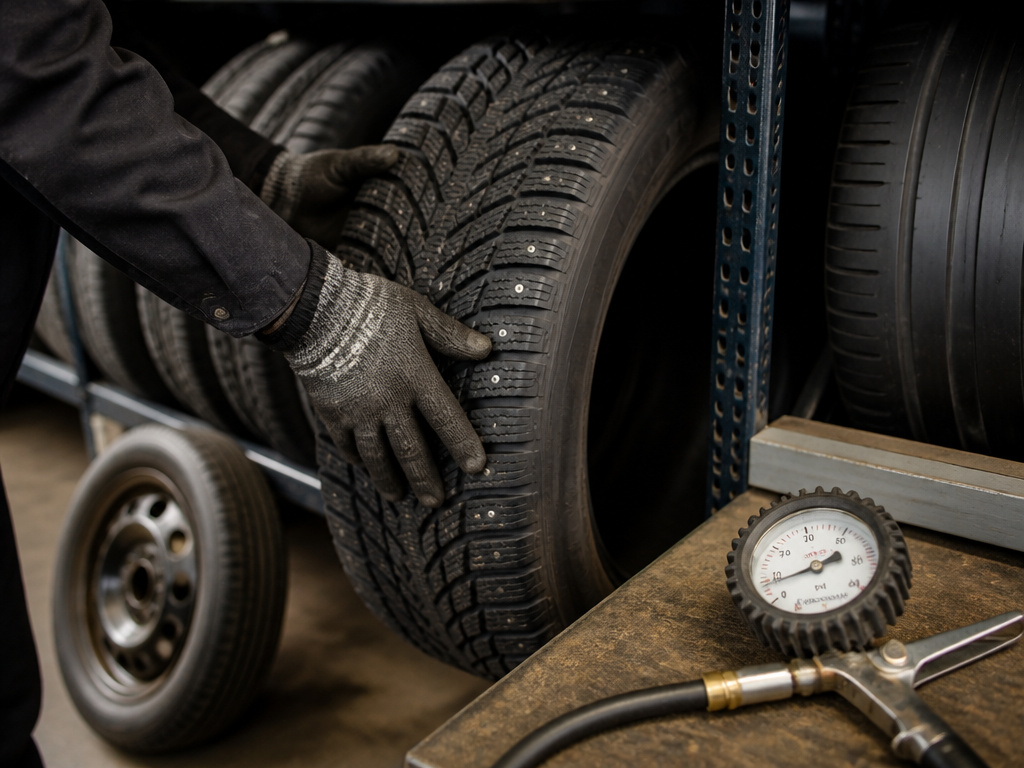
6 psi is one storage number that surprises owners. The NHTSA storage bulletin, from the U.S. Safety regulator, says to increase tire pressure by about 6 psi for complete wheel and tire assemblies. The same bulletin says summer tires must not be stored where ambient temperatures fall below 5 F.
The NHTSA technical service bulletin from GM gives a stricter indoor storage rule. It recommends storing summer tires above 20 F. If they have been at 20 F or lower, warm them in a heated space to at least 40 F for at least 24 hours before mounting.
Easy to miss: Cold-stored summer tires can crack if mounted too soon. GM says warm them to at least 40 F for at least 24 hours before installation.
Storage needs space. You need a shelf, bin, or rack. A second wheel set saves repeated mounting and bead wear. I prefer steel wheels for winter because they take curb hits better and keep the alloy wheels clean.
Cost, Wear, and Warranty
The real cost has several parts. Tires and mounting count. Storage and labor count too. Over several winters, mounting and storage can outweigh the tire cost.
A set of all-season tires lasts longer when it spends winter months off the car. That is the quiet pro. The summer tire wears less when winter does the work.
Warranty terms change the math. The NHTSA tire manual says Bridgestone winter tires have no free replacement period. Coverage runs up to 5 years from purchase or 6 years from manufacture, with a pro-rated replacement charge. A tire worn to 2/32 inch loses coverage.
The government of Manitoba offers low-interest loans for winter tires to a maximum of $2,000 per vehicle, for up to 48 months.
When Should You Install or Remove Winter Tires?
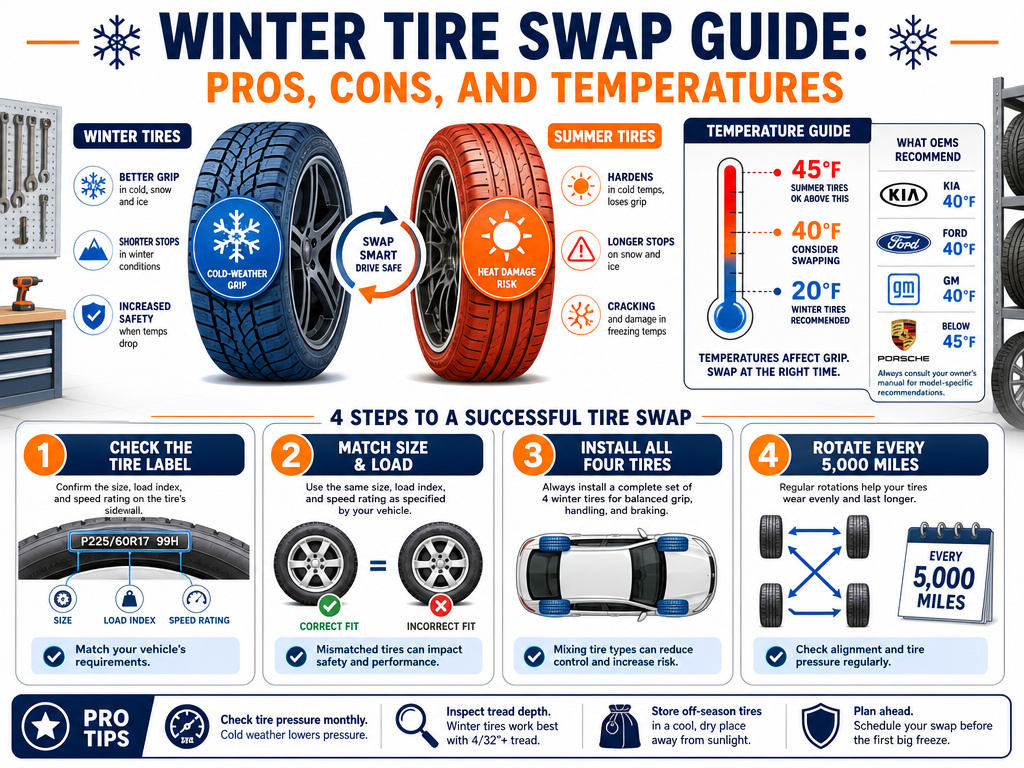
Use sustained temperature, not a date. Quebec requires winter tires from December 15 to March 15, but that law is a calendar rule. In most places, road temperature decides.
The maker guidance disagrees on the summer tire cutoff. Kia and Porsche say 45 F. Ford recommends against summer tires at about 40°F or below, while GM recommends winter tires below 40°F and warns of damage below 20°F. GM also warns that high-performance summer tires can be damaged below 20 F.
| Source | Temperature guidance | Action |
|---|---|---|
| Kia | No summer tires below 45 F | Switch when cold nights repeat |
| Ford | No original summer tires at about 40 F | Fit winter or all-season tires |
| GM | Winter tires below 40 F; damage below 20 F | Warm stored tires before mounting |
| Porsche | Install winter tires below 45 F | Treat 45 F as the swap line |
Before you start: Jacking on cold, slippery pavement can let the jack slip. Use a level, solid surface. Add wheel chocks and jack stands before working under the vehicle. Cold summer tires can crack if mounted too soon. Tighten wheel nuts to the vehicle’s tightening spec after the first drive.
- Check the tire label. Kia says snow tires should carry 4 psi more than standard tire pressure, or up to maximum sidewall pressure, whichever is lower. Skipping this hurts handling and wear.
- Match size and load. Ford lists acceptable Fiesta ST winter sizes as 205/40 R17 and 195/45 R16. A wrong size can rub or overload the tire.
- Install all four. USTMA says winter tires on the front only must not happen. The rear needs comparable or higher traction. Front-only fitment can cause loss of control.
- Respect speed ratings. Kia caps snow tire speed at 75 mph. Ford allows lower speed-rated winter tires, but vehicle speed must stay within the tire rating.
- Rotate on schedule. The NHTSA tire manual says rotate every 5,000 miles if the vehicle maker gives no interval. Skipping rotation wastes tread life.
What About AWD, Studded Tires, and EVs?
All-wheel drive helps a car start moving. It doesn’t help the car stop. The USTMA bulletin includes 4×4 and all-wheel-drive vehicles in the rule against front-axle-only winter tires. The rear tires still need traction.
The UMTRI report frames winter tires as a braking and cornering issue, not only a launch issue. That matters for AWD owners who assume the drivetrain solves winter grip. The answer to the question, do you need winter tires with AWD, is yes for braking and cornering.
Studded Tires vs Studless Winter Tires
Studded tires add bite on glare ice, but local rules and pavement wear limit them. The WSDOT studded tire traction report, from the Washington state DOT, covers studded and studless performance. In a 1994 Alaska study, stopping distances on glare ice were 15 car lengths for all-season tires. Studded tires stopped in 16 car lengths. Blizzak winter tires stopped in 18 car lengths.
That result needs context. A single glare-ice test doesn’t prove all-season tires are safe in snow. It shows one surface, one speed, and one tire set flips a ranking.
Some studies show drivers with studded tires may drive faster. That speed gain can erase a traction gain. USTMA says studded tires on the front must also go on the rear. It also says studs should go only into new tires.
The pros and cons of studded tires depend on ice, laws, and driving style. A studded vs. Studless choice turns on local rules and your usual road surface. If you live where ice rules the commute, review best studded winter tires before buying.
Nordic, Alpine, and EV Winter Tires
The Nordic vs. Alpine winter tires split matters if your winter is mostly ice or mostly snow. Nordic tires favor ice. Alpine tires favor snow and cold wet roads.
The same snowflake rule applies to winter tires for EVs. Electric vehicles add weight and torque delivery, but snow traction still depends on the tire.
How to Choose the Right Winter Tire Setup
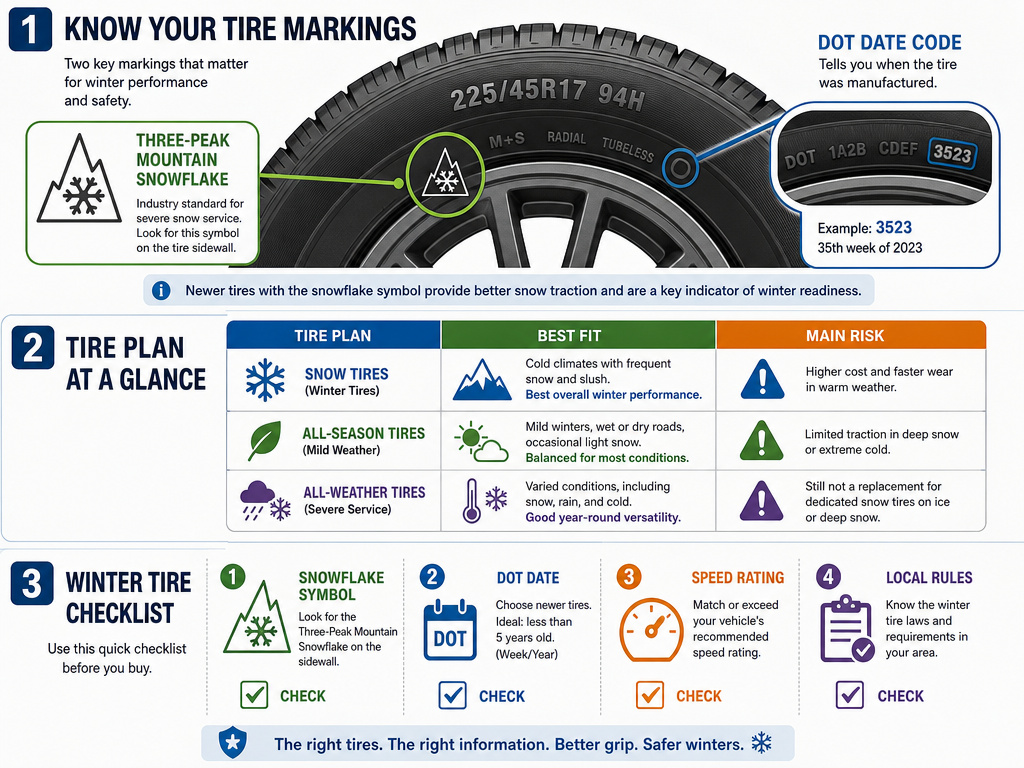
Which tire plan fits your winter? Start with the surface you hit most. Then check the sidewall. Then decide whether you want a second wheel set.
| Tire plan | Best fit | Main risk |
|---|---|---|
| Winter tires | Cold snow and ice | Warm wear and storage |
| All-season | Mild winters | Less winter grip |
| Studded | Frequent glare ice | Legal limits and noise |
Start by looking for winter tires that carry the Three-Peak Mountain Snowflake symbol. Check current reviews and availability for models that fit your needs. Then match your size and load index, the tire’s weight rating.
I wouldn’t trust a tire that only has a Mud and Snow mark. The snowflake symbol is the one I check first.
When comparing all-weather vs. Winter tires, keep the snowflake test in view. Some owners study minus sizing winter tires, a narrower size that improves deep snow bite.
- Check the DOT date code, the tire’s production date stamp. Porsche says tires shouldn’t be older than 6 years.
- Check the snowflake symbol. It proves ASTM F1805 snow traction testing in the US and Canada.
- Check the speed rating, the maximum speed the tire is certified to hold. Ford allows a lower rating, but vehicle speed must stay inside the tire limit.
- Check local rules. Some areas restrict studded tires.
Do winter tires lower your insurance?
Insurance discounts for using winter tires are not a guarantee and vary by provider and location. However, some regions offer incentives that can indirectly affect costs. For example, the government of Manitoba offers low-interest loans for winter tires, which can help with the upfront purchase. More broadly, using proper winter tires is a demonstrable safety measure. Since insurance premiums are based on risk, demonstrating that you’ve taken steps to reduce your risk of a winter collision could be a point in your favor when discussing rates with your agent. It’s a practical question to ask your insurer directly, as any potential discount would be part of their specific policy offerings.
Frequently Asked Questions
Do winter tires make a difference?
Yes. Certified winter tires carry the Three-Peak Mountain Snowflake symbol and meet ASTM F1805 snow traction testing in the US and Canada. That testing focuses on snow grip, not just wet-road comfort.
What are the downsides of winter tires?
Soft compounds wear faster on warm pavement. Steering can feel mushy in summer heat. You also need storage space and seasonal mounting.
What tires should you avoid in winter?
Avoid summer-only tires below the maker cold limit. Kia and Porsche give 45 F as the warning line. Ford and GM give 40 F for reduced summer tire capability.
What happens if I use winter tires all year round?
You lose tread life and steering response. The tire hums more. The brakes feel less stable. The soft rubber wears quickly on hot roads.
The Bottom Line
Winter tires pros and cons get clearer when you follow temperature instead of a date. If your area sees repeated nights below the temperature your vehicle manufacturer specifies, start the swap. Kia and Porsche recommend action at 45°F, while Ford and GM recommend it at around 40°F. If you use high-performance summer tires, treat 20 F as a damage warning and warm the tires indoors for at least 24 hours before mounting.
One step can save you the whole debate: read the DOT date code now. Porsche says tires shouldn’t be older than 6 years. A new-looking tire can still be old rubber.
If you only drive in light snow, all-season tires pass. If your commute includes ice, winter tires that display the Three-Peak Mountain Snowflake symbol are the safer choice. Tire age matters more than tread depth. I’d rather carry a soft tire through a mild summer than explain a lost rear end on a cold bridge.
