
Why EV Tires Wear Out Faster? 5 Causes and Fixes
This post contains affiliate links. As an Amazon Associate, we earn from qualifying purchases.
Why EV tires wear out faster: battery weight and instant torque load and scrub the tread. Add rough driving, low pressure, and misalignment, and the wear rate climbs. The fix is load-rated tires, smooth inputs, monthly pressure checks, and regular rotations.
Battery weight presses the whole contact patch into the road at every stop, corner, and acceleration. Instant torque then asks the rubber to translate that pressure into motion before the tread has time to roll evenly. That pair sets the basic wear story, but pressure, alignment, and tire choice decide how early the bill arrives.
The rest sorts the causes and the documented numbers. It also gives you a maintenance checklist that keeps an EV from burning through a set too early.
Key Takeaways
- Battery mass and instant torque are the two mechanical reasons EVs load and scrub tires more than many gas cars.
- Check pressure monthly; Michelin warns TPMS (tire pressure monitoring system) only alerts after a significant drop, while smaller drops still hurt range and handling.
- Rotate more often than you think, because even wear is the cheapest way to protect all four tires.
- Match load index before the width and diameter; a standard-load tire can fail to carry the EV’s curb weight properly.
- Replace by age and wear; energy.gov.au says tires should generally be replaced every 5 to 6 years even without wear.
Why EV Tires Wear Out Faster? The Two Mechanical Reasons
Battery mass and electric torque do the physical work. That pair sets the basic wear story.
Battery packs add mass low and high, increasing normal load on the contact patch. Electric motors send torque to the wheels with little lag, so tread can scrub during hard launches and fast cornering. The result is higher heat, more slip, and faster compound breakdown than many lighter, slower-revving vehicles produce.
Weight Is a Constant Load
A battery pack sits in the floor, so the car carries extra mass through every turn, bump, and stop. That mass pushes the tread into the road. It also pushes the sidewall into the rim when you hit a pothole.
I keep seeing owners blame the compound when the car simply carries more weight. The tire is doing a heavier job at the same size. If you want to understand the damage pattern, learn to read tire wear patterns.
Boring work still works.
Instant Torque Is a Slip Event
An electric motor can send torque to the wheels before the tire has time to grip evenly. A short chirp at a stoplight tells you the tread is scrubbing. A rear-drive EV can show that even harder because the drive wheels also carry much of the mass.
Michelin says EVs are heavier and deliver torque more immediately than combustion vehicles, and both accelerate tread wear. Energy.gov.au says fast turns, heavy braking, and rapid acceleration can increase tire wear. That is the simple version. The practical version is that your right foot has more authority over tire life than it did in many older cars.
Do EV Tires Really Wear 20 to 50 Percent Faster?
20 to 50 percent is a number often quoted, with Tire Technology International citing manufacturer estimates of 20 to 50 percent more abrasion on EVs than comparable ICE vehicles. However, a 2026 peer-reviewed review calls the evidence for higher BEV wear inconclusive, and a UNECE test summary says vehicle type alone does not necessarily lead to significant differences in abrasion.
| Claim Source | What It Says | What It Means for Owners |
|---|---|---|
| Tire Technology International | EVs may show 20 to 50 percent more abrasion | Treat EV wear as a real risk |
| Chen 2026 review | Evidence is inconclusive | Your driving style can move the number |
| UNECE test summary | Vehicle type alone leaves abrasion unsettled | Tire spec and maintenance matter |
The number is useful.
The disagreement matters because it changes the advice. Don’t assume every EV destroys tires at the same rate. A gentle driver with correct pressure can beat a harsh driver with the same battery pack.
I treat 20 to 50 percent as a warning sign. Your pressure, alignment, and driving style can swing the result more than the drivetrain badge.
One industry consideration is that greater battery range often adds weight. That is a weight story. It also explains why efficiency and tread life pull in opposite directions. If your car came with factory tires, the same debate shows up when owners ask about why original tires wear out quickly.
What Wear Patterns Do EVs Create?
A rear-drive EV pulls out of a steep driveway, and the rear tires do most of the arguing with physics. The fronts can look fine for months.
On heavy rear-drive EVs, I have seen rear tires show visible shoulder wear relatively early. The fronts can still look nearly new. Instant torque and curb weight both do the work here. The tell is visual: the rear shoulder goes matte and squared, while the center still has fresh sipes.
Look at the shoulders.
- Rear shoulder wear points to torque and load, especially on rear-drive or performance-oriented EVs.
- Outer edge wear points to underinflation, because Michelin says underinflation increases wear on the edges.
- Center wear points to overinflation, which puts more load on the middle of the tread.
- One-side wear points to alignment, and Michelin says misalignment consequences are amplified on EVs.
Energy.gov.au says rough or off-road surfaces wear tires faster. That matters more on an EV because the tire is already carrying extra mass. The practical goal is to learn how to make EV tires last longer without turning the car into a driving test. If your EV has torque vectoring or dual motors, the wear can be less obvious, but the same pressure and alignment rules still apply.
Can Regular Maintenance Slow the Wear?
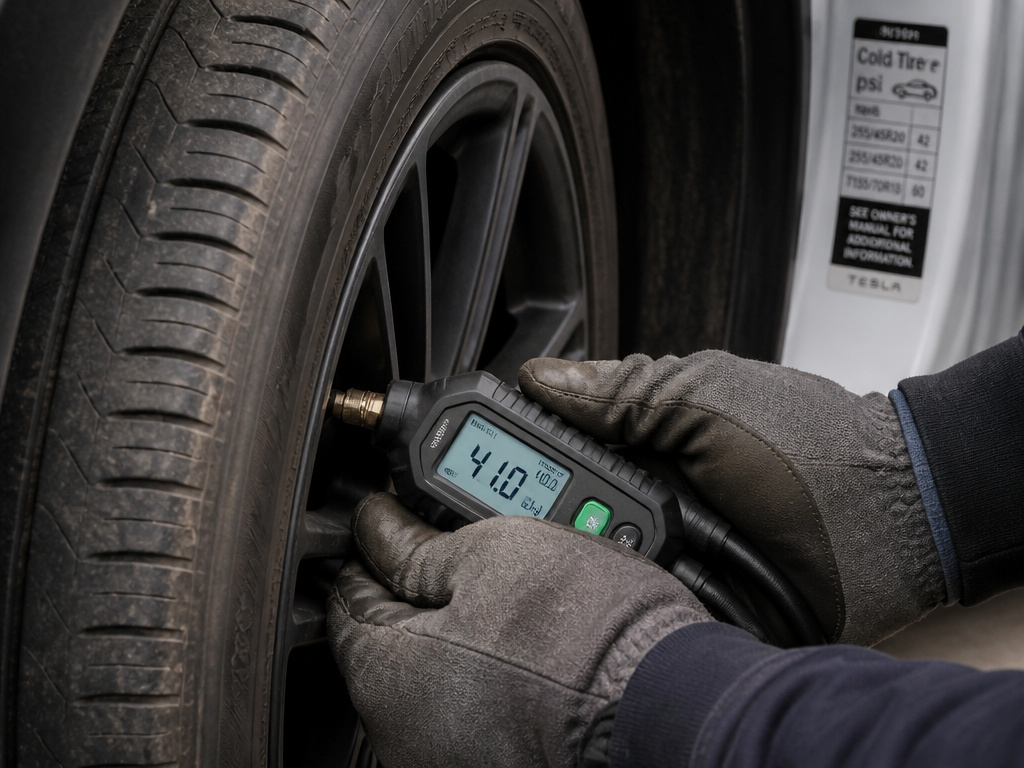
Yes, but the boring parts matter. The energy.gov.au electric vehicle servicing page lists practical tire checks: monitor air pressure, rotate tires, check tread depth, and inspect for cracks, punctures, or bulges.
Before you start: a hot brake rotor can burn skin after a fast stop, so let the car cool before touching wheels. A jack stand can slip on a soft shoulder, so use level ground and rated stands. A tire pressure gauge on a hot tire can read higher than the cold door sticker, so check before driving.
Do the boring checks.
Start with the car’s EV tire pressure recommendations on the door jamb. Then set a rotation habit, and rotate EV tires more often than a gas car owner might expect. If you skip alignment, you learn how misalignment wears tires through uneven tread. It also changes the decision on when to replace tires, because age can matter before tread does.
The 5-Step Tire Check That Saves Money
- Check cold pressure monthly. Use the door-jamb sticker instead of the maximum pressure on the tire sidewall. Michelin says TPMS only alerts after a significant drop, while smaller drops still hurt range and handling.
- Rotate at the shorter of the owner’s manual interval or 5,000 to 7,500 miles. Skipping rotation causes one axle to wear faster, and the uneven tires will feel less stable in rain sooner.
- Inspect tread before indicators show. energy.gov.au says replace tires before tread wear indicators become visible. Waiting until they show removes your margin. By that point, wet grip is already reduced.
- Check alignment annually and after impacts. Michelin says have alignment checked at least annually and after any impact. A bent rim or pothole hit can turn a touring tire into a one-side tire.
- Replace by age. Rubber hardens. Grip can drop before tread depth does.
| Symptom | Likely Cause | First Fix |
|---|---|---|
| Outer edges worn | Underinflation | Reset to door-jamb cold PSI |
| Center worn | Overinflation | Reset to door-jamb cold PSI |
| One side worn | Misalignment | Alignment check |
| Rear shoulder squared | Torque and load | Rotate, smooth launches, check load index |
Regenerative braking reduces wear on brake pads and discs, but energy.gov.au says the braking system still needs regular inspection and maintenance. That is brake news. Tire wear still follows weight, torque, pressure, and alignment. The same page also notes that suspension components need regular inspection and periodic maintenance, just like all cars.
One more note: tire wear and battery degradation are separate topics. Energy.gov.au says frequent use of fast or ultrafast chargers at 50 kW or above may cause marginally faster battery degradation. That battery note sits outside the tire answer.
Are EV-Specific Tires Worth the Premium?
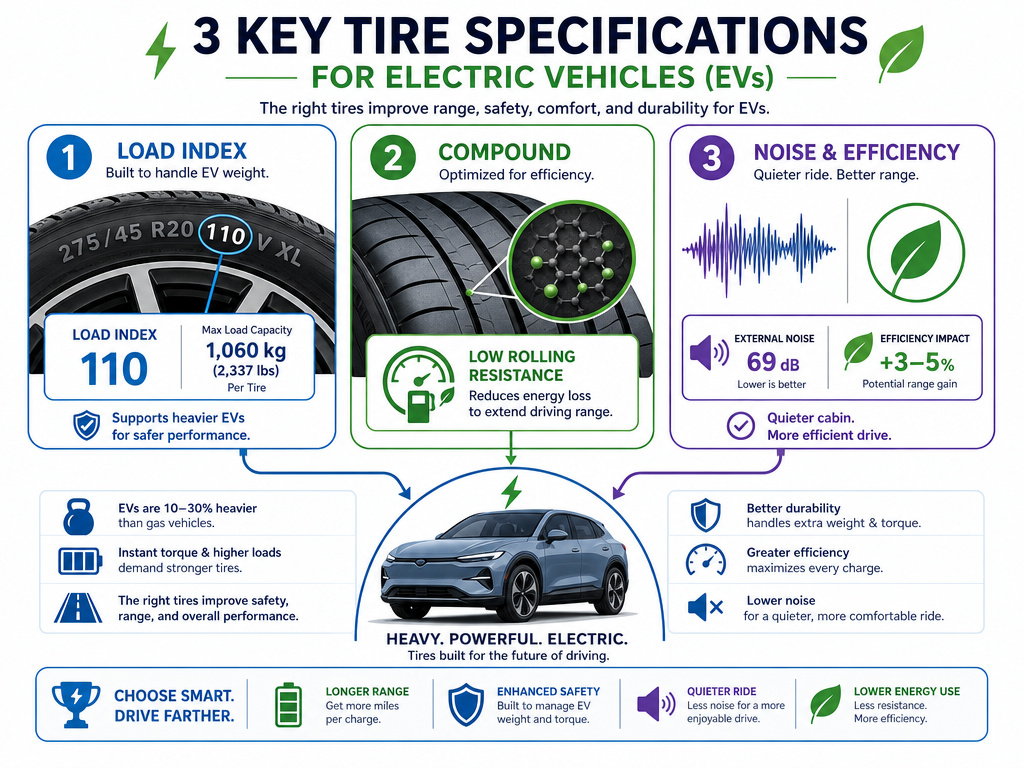
For most owners, yes. I think EV-specific tires are worth the premium because the heavy vehicle and instant torque shorten the life of standard tires. But I don’t let the badge decide. I check load index, rolling resistance, and tread-life claims.
Michelin says choose tires with compounds engineered for the extra demands of EV use. That is the right starting point. The wrong move is swapping to a standard-load version of the same size.
A standard-load tire can sit several load-index points below the HL (high load) or XL (extra load) version. On a 4,500 lb EV, that margin is the whole point. A standard-load tire can overheat sooner on that kind of weight.
For a daily-driver EV, I would start with a Michelin e. Primacy or Continental EcoContact 6 in the exact load index your door sticker calls for. If the car came with Pirelli Elect tires, don’t treat a non-EV touring tire as an automatic equivalent. Check availability of the same load rating before you order. Check it, don’t assume it.
Check the sidewall.
Load Index Beats Marketing Copy
- Load index matters first. The tire must carry the car’s mass while matching the diameter.
- Compound matters second. Low-resistance designs and quieter compounds can trade grip and tread life against each other.
- Noise and efficiency matter third. EV-focused tread designs can reduce cabin noise, but ultra-low rolling resistance claims deserve scrutiny.
If you care about efficiency, study how tires affect electric vehicle range before you trust a badge. The trade-offs of low rolling resistance tires vary by driver. In my own comparison of independent range-impact tests, the gap is measurable but often smaller than advertised. That is real, but it is smaller than the ads imply.
Tire pressure moved range more than tire brand in most of the data I compared. A set running significantly under the recommended pressure can cost more in range and wear than any premium-tire advantage gains back.
The C&EN (Chemical & Engineering News) electric car tire article describes the industry’s attempt to reconcile heavier cars, higher torque, and rubber life. If you want the standards-side paperwork, the vehicle tyre abrasion standards report is a public file for raw test background.
Does regenerative braking wear tires faster
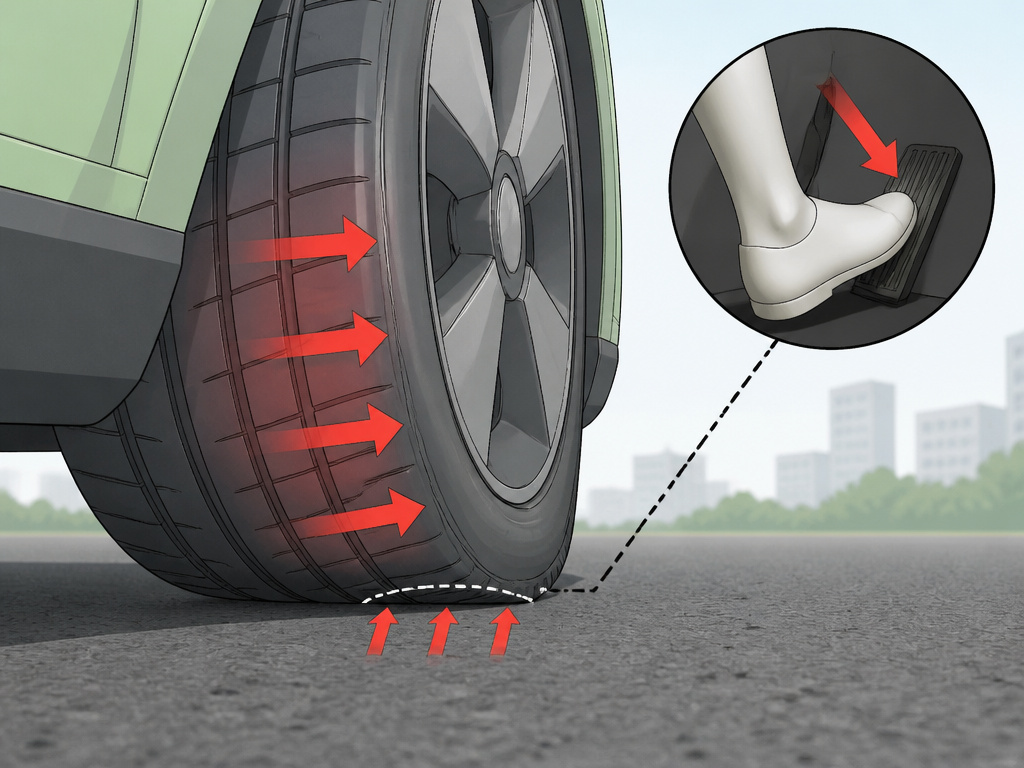
Regenerative braking reduces wear on brake pads and discs. However, the fundamental forces at work still affect your tires. Fast turns, heavy braking, and rapid acceleration can increase tire wear. The instant torque delivery of an EV can place additional strain on tires and result in loss of traction if you accelerate too quickly. Driving smoothly, particularly on acceleration, is key to managing wear. While the braking system still needs regular inspection, your driving style with regenerative braking engaged influences how quickly the rubber meets the road.
Are EV tires made from different rubber
Tires may wear out faster on electric cars due to their heavier weight and immediate torque. To handle these extra demands, choose tires with compounds engineered for EV use. The consequences of misalignment are also amplified due to the higher wear rate, so have alignment checked regularly. For any car, rough surfaces will wear tires faster. Regular rotation helps ensure even wear across all four tires. Replace tires before the tread wear indicators become visible and look for cracks, punctures, or bulges during checks.
Frequently Asked Questions
Why do EV tires wear so fast?
Because battery weight increases normal load, and instant torque can scrub tread during acceleration. Driving style, pressure, and alignment can make the wear worse.
How long do EV tires typically last?
There is no universal mileage number. Many EV-specific tires warranty around 40,000 miles or less in my notes, but tread life depends on weight, driving style, and rotation. Energy.gov.au says tires should generally be replaced every 5 to 6 years even without wear.
Why do tires wear out so fast on Tesla?
The same physics applies to heavy, high-torque EVs. If a Tesla wears tires quickly, check pressure, alignment, and driving style before blaming the badge alone.
Should EV tires always be EV-specific?
They don’t always need to be EV-specific, but they should match the car’s load capacity. A touring tire can work if it meets the vehicle’s load index and wear expectations. An EV-specific tire is a better default when the car is heavy and torque-rich.
Does regenerative braking save tire life?
It reduces wear on brake pads and discs. It leaves the tire tread to handle the car’s weight and torque.
The Bottom Line
The first step this week is simple: check your cold tire pressure against the door-jamb sticker, then look at the load index on the sidewall. If the rear shoulders look squared at 15,000 to 20,000 miles, book a rotation and alignment check before you buy tires.
This all changes if you drive gently, keep the pressure right, and rotate on schedule. In that case, a touring tire can outperform an EV badge that promises more than it can prove.
Why EV tires wear out faster has a simple physical answer. Weight loads the tread. Torque scrubs it. Neglect finishes the job.
